Blog

Function of the Human Spine

Spine Anatomy & Function 101

If you're reading this, you either have a history of back and neck pain, or you're interested in learning more about how your spine works to hopefully prevent future episodes of back pain.

It never fails, every time I conduct a new patient examination and review x-ray findings, patients will tell me that their previous doctors never explained their problems to them.

This is unacceptable.

So many people get x-rays, MRI's, CT scans and all without ever really understanding what's happening.

So if you've ever looked at your images and had a discussion of ligaments, muscles and bones and you still didn't get it – you're not alone.

The purpose of this article is to help you understand a little more about the anatomy and function of the human spine.

The reality is, the more you know about your body and how it works, the more active role you can take in it's healing process.

The Vertebral Column

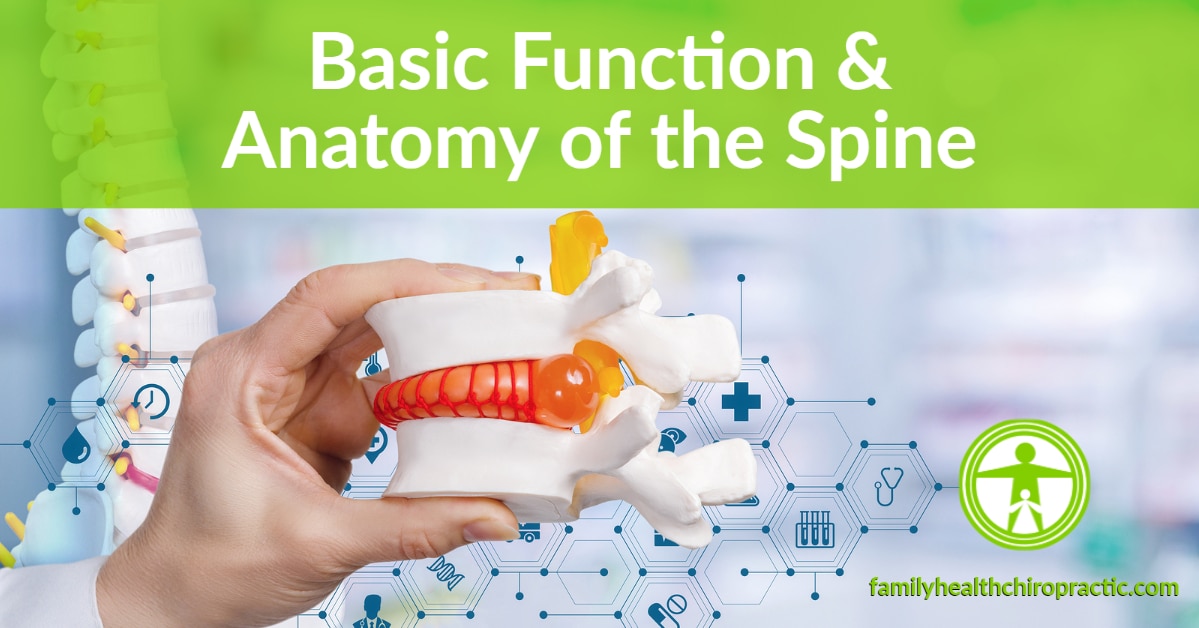
The spine, or vertebral column, is made up of individual bone segments called vertebrae superimposed, one on top of the other, and spaced apart by small, shock-absorbing, spongelike structures called intervertebral discs.

The purpose of the spine is to support the body’s weight, protect the spinal cord, and support two-legged human function in standing, sitting, walking, and all other activities of daily life.

I like to think of the spine as a chain or series of building blocks (units if you prefer) stacked in a column.

A total of 33 vertebrae form the spine. They are divided into sections based on the spinal curves they form.

The four sections are the sacrum and coccyx (tail bone), the lumbar spine (lower back), the thoracic spine (mid and upper back), and the cervical spine (neck).

I tend to think of the sacrum and coccyx independently since their individual vertebrae are fused and have no disc-like shock-absorbing structures interspaced between them.

The sacrum forms the solid base for the spine, where it intersects with the pelvic bones to form the pelvis, also referred to as the pelvic girdle.

This entire complex, made up of very strong bones, is vitally important as the foundation that supports the weight of the upper body and spreads that weight across into the legs.

The Vertebral Column

The Vertebrae

Each bony segment that makes up your spine is called a vertebrae.

As we discussed previously, each vertebrae is stacked one on top of the other which makes up the entire spinal column.

The front part of the vertebrae is considered the body and is primarily a support, weight-bearing, flexible structure .

The back part of the vertebrae is a ring-like structure that forms a hollow space housing where the spinal cord passes through.

This is why the spine and chiropractic care is so important.

When the vertebrae are not optimally aligned, the spinal cord is going to not be optimally aligned and problems and occur.

The back part of the vertebrae also consists of two structures called facet joints. Facet joints, like any other joint have a cartilage surface and are susceptible to wear and tear that may lead to degenerative changes such as arthritis.

Additionally, vertebrae attach to ligaments and muscles that connect and anchor them from above and below.

Ligaments serve as cable-like structures that hold bones together.

The Vertebrae

The Spinal Cord & Nerves

Let's now talk about the spinal cord and nerves. The spinal cord is simply an extension of the brain.

The nerves that exit your spinal cord are additional extensions that venture out and connect to all other major tissues and organs of your body.

This is the real reason why Chiropractic Adjustments are so important for your overall health.

We all know that the brain is the central processing system that runs the entire body.

We also know that every electrical signal in your body is generated by the brains coordination of nearly every physiological reaction.

These include signals that relay information about temperature, touch, pain, movement, awareness, digestion, breath, or heart rate.

The bundle of nerves that sends these signals to and from the brain constitutes the spinal cord.

Think of the spinal cord as a highway of nerves that runs north and south, encased in and protected by the middle of the vertebral column (the spine).

The spinal cord, together with the brain, form the central nervous system (CNS).

The CNS is vital for every function in your body. Quite simply, the CNS is your life.

In addition to the highway of nerves that run through the spine via the spinal cord, numerous exits along the way allows the spinal cord to connect to every body structure.

These exits occur at every level of the spine between each vertebral segment and resemble small holes that allow the nerves to pass in and out of the spinal cord.

These little holes are termed intervertebral foramina and are specific to each level of the spine, such as between C5 and C6 or L4 and L5.

The cervical spine (neck) has exit holes (foramina) to the left and right that provide signals to the arms, while in the lumbar spine the exit holes provide a nerve pathway to the legs.

Keep in mind that these exit points also transmit signals to and from every organ in the body including the heart and lungs.

The points at which the nerves branch off the spinal cord and exit to the outside of the spine are termed the peripheral nerve roots, which together form the peripheral nervous system (PNS).

As we will eventually explore, it is at these exit hole points that so many problems arise, as the peripheral nerve roots are prone to compression and stretching by various spine structures (disc, ligaments, bone spurs). Nerves under constant pressure wreak havoc on our body in many ways.

That is one reason why spine health must be maintained — or in most cases, reestablished.

The Spinal Cord and Nerves

The Spinal Discs

Discs probably receive more attention than any other structure in the spine.

Most people learn about them in their damaged state — “bulging discs, ruptured discs, herniated discs.”

Discs are hydrodynamic, elastic structures spaced between two vertebrae, separating them and acting as shock absorbers.

Visually, they look like washers that space the vertebrae apart.

Several metaphors describe a disc, such as a tough jelly donut with a gooey inside, surrounded by a tough, fibrous, circular layer on the outside.

The gooey gel inside constitutes the nucleus pulposus, while the fibrous layered collagen sheets that envelop it constitute the annulus.

The nucleus gel of the disc is a blend of fibers, sugars, and acids. Its purpose is to absorb water and give it a spongelike function.

For the gel to maintain its hydrodynamic, water-absorbing function, it must receive nutrients like all other cells in the body.

In the early years of life, the gel is provided with nutrients via a blood flow through the vertebral segments above and below.

However, in the years of maturity, the vertebral bodies’ growth plates close, cutting off the critical blood supply to the discs.

From this point on, the gel matrix can only receive nutrients via a process that involves alternating compression and relaxation.

This pump-like effect allows nutrients to flow in and out of the central nucleus matrix from the surrounding annular ring layers and vertebral ends.

When the inner gel matrix is hydrated, it functions much like a tire with an internal pressure that separates the outer threads.

Think about how important it is for tires to stay inflated to effectively grip the road and how quickly the outer treads wear out when driven on low pressure, especially on curvy roads that require a great deal of turning.

When deflated they are sure to pop a flat.

The interior disc matrix functions in a similar manner.

It requires an internal pressure to spread the collagen fibers of the annulus outward so that those fibers can stay elongated and maintain their tensile strength to absorb shock and separate the vertebrae.

Of course, there are other variables that we will cover in the disc pathology section; but that, in a nutshell, is how discs work.

Imagine what happens to your discs if they don’t receive the mandatory alternating compression and relaxation, spongelike action that is essential for their health and function.

For example, if you sit all day long you do just that by squishing them constantly with no room for decompression.

Now imagine you combine excessive sitting and slouching with lots of bending and twisting.

You now have a deflated tire that is going to overstretch and possibly tear. Welcome to the world of bulging and herniated discs.

Make sense?

Spine Discs

The Spinal Ligaments

Ligaments are cable-like structures that connect bone to bone.

They are slightly elastic and can stretch just a bit, but not too much, or they lose their stiffness and fail.

They also have a positional role (proprioception) in that their nerve endings send signals to the brain when they are stretched, alerting supporting muscle groups to contract to provide additional support to the surrounding joints.

They are critical for the structural integrity of every joint in the body.

Ligaments are especially important in the spine because of its long, narrow, vertical length and the many movable segments (vertebrae) that must be controlled.

Imagine building a skyscraper without support beams connecting the main components.

The whole thing would come crashing down.

The spine analogy is similar, and every ligament has an important role to keep motion in check.

If even one ligament fails, the entire system is compromised, resulting in an imbalance of weight and force that has severe consequences on the spinal structures (discs, joints, other ligaments).

Because the spine is capable of moving in multiple directions, it has ligaments that attach to its vertebrae at various levels and angles to give it greater support.

For example, thick, strong ligaments run the entire length of the back portion of the vertebrae (posterior longitudinal ligament) and function to keep forward bending in check while the opposite ligament groups on the front side (anterior longitudinal ligament) function to keep backward bending in control (Figure 4).

For every direction there is a ligament that functions to keep that movement in check.

The most significant point to make about ligaments is that prolonged bad postures and movements can overstretch them to the point they fail.

When that happens, the ligament can no longer impart stiffness to its connecting bones, and that disrupts the entire balance of forces across the joint.

This is where muscles come in to reestablish support.

The spinal ligaments

The Core Spinal Muscles

Let’s first establish a definition for the core, since it is often misunderstood and thought of as the midsection and the surrounding abdominal muscles.

It is really much more than abs of steel!

The core includes the chest, back, and abdomen as well as all of its bone structures including the spine, rib cage, and pelvic and shoulder girdles.

It is the link between the upper and lower body including, all of the muscles that span this distance.

The core muscles work together as an integrated system, similar to the way musicians complement one another in an orchestra.

They are essential to keeping us upright, resisting compression, and supporting our body weight.

They provide the framework for postural alignment that is required for every movement, from pushing and pulling to squatting and bending.

One of their main jobs is to keep the spine stable and supported so that the powerful hip and leg muscles can directly transfer the force they produce into the shoulders and arms (and vice versa).

Visualize a tennis server whose power is initiated by bending the hips and knees, then recoiling quickly upward and transferring force through the core into the shoulders and arms, eventually completing a powerful snap at the wrist.

Even the simplest of tasks like walking require that the core muscles work together to complete this energy transfer mechanism.

As we look at the core from the front, side, and back, we can break up the muscles into groups, but we always stress that they work together.

The degree to which each muscle contracts and imparts stiffness to their corresponding joint(s) will determine the total amount of stability in the spine.

Obviously, the core has many muscles groups that are all significant.

There are many muscles that make up the core they are all important to be working daily.

Core Spine Muscles

The Spine Curves (Posture)

Finally, we must appreciate the spine with all of its individual vertebral segments is not in fact vertical but made up of curves.

When viewed in the erect position these curves constitute the human body posture (Figure 8).

As mentioned earlier, the spine has three curves that correspond to the cervical (neck), thoracic (mid back), and lumbar (lower back) spine.

The spine curves are developed in the infancy period of life and are influenced through muscle contractions that pull and mold the spine as well as the angular shape of the discs.

In a healthy spine the curves bisect our center of gravity and balance each other.

They are essential for all aspects of two-legged human function. Because of their arch-like structural design, they impart strength to the spine that helps it overcome the compressive forces of gravity with minimal energy expenditure.

From an engineering perspective, the spine functions much like a suspension bridge that is designed to support massive amounts of weight.

Unfortunately, the spinal curves are directly impacted by prolonged poor posture and repeated bad movements (YOUR BEHAVIOR!) that can change the angle of the curves, often flattening them out or exaggerating them.

The low back and neck are particularly prone to flattening with age as the spine structures wear down from bad positioning.

Think about how many years you may have been sitting slouched or texting with your head looking down, or bending over poorly (Figure 8).

In these situations the spine ligaments, discs, and joints are all susceptible to overstress and often fail.

Muscles turn off and stop doing their jobs and the spine can no longer stay erect and properly absorb shock and load.

The entire core unit is compromised and therefore the ability to move efficiently, to overcome gravity without damage, and to do all other functions of human movement decline.

It is a perpetual negative feedback loop that corrodes and wears down the body.

Fortunately, the reverse is also true.

Doing the right things: the right exercises, the right movements in daily life, and the right postures can rebuild the core and take stress off of the spine.

And that is what we need to learn!

Spine Curves
Function of the Human Spine2026-04-26T11:13:30-05:00

How Chiropractic Can Help with Coronavirus Related Stress

Oh, The Struggle…

From back pain and migraines, to asthma, shingles, sharts and depression: the physical toll that coronavirus-related stress takes on your body is real.

Fortunately, Chiropractic can help!

Back in January I wrote about how the world was going to become infected with fear and how I worried more about that, then the actual virus.

Turns out, the virus that causes COVID-19 isn't as bad as it could have been, yet its devastation is certainly plenty.

Suicide is up according to a few states and several organizations are concerned over the relationship with social isolation/distancing, sheltering in place, unemployment and a potential psychological pandemic.

Slowly, we are starting to see the impact of the constant stress of living in the new age of coronavirus.

Since January, most Americans have been living in a sea of stress hormones.

We are not designed for the constant application of these chemicals.

For any of you who've continued to get your adjustments, I want you to know that chiropractic adjustments have a positive influence on stress pathways in the body.

How Cortisol (Stress) Impacts the Body

There are many ways that cortisol negatively impacts our body.

Blood Sugar Imbalance and Diabetes
Under stressful conditions, cortisol provides the body with glucose by tapping into protein stores via gluconeogenesis in the liver. This energy can help an individual fight or flee a stressor.

However, elevated cortisol over the long term consistently produces glucose, leading to increased blood sugar levels.

Weight Gain and Obesity
Repeated elevation of cortisol can lead to weight gain.

One way is via visceral fat storage. Visceral fat is also considered “deadly fat”.

A second way goes back to the blood sugar-insulin problem.

Consistently high blood glucose levels along with insulin suppression lead to cells that are starved of glucose.

But those cells are crying out for energy, and one way to regulate is to send hunger signals to the brain.

This can lead to overeating. And, of course, unused glucose is eventually stored as body fat.

Immune System Suppression
Cortisol functions to reduce inflammation in the body, which is good, but over time, these efforts to reduce inflammation also suppress the immune system.

Chronic inflammation, caused by lifestyle factors such as poor diet and stress, helps to keep cortisol levels soaring, wreaking havoc on the immune system.

An unchecked immune system responding to unabated inflammation can lead to myriad problems: an increased susceptibility to colds and other illnesses, an increased risk of cancer, the tendency to develop food allergies, an increased risk of an assortment of gastrointestinal issues (because a healthy intestine is dependent on a healthy immune system), and possibly an increased risk of autoimmune disease.

Gastrointestinal Problems
Cortisol activates the sympathetic nervous system, causing all of the physiologic responses previously described.

As a rule, the parasympathetic nervous system must then be suppressed, since the two systems cannot operate simultaneously.

The parasympathetic nervous system is stimulated during quiet activities such as eating, which is important because for the body to best use food energy, enzymes and hormones controlling digestion and absorption must be working at their peak performance.

Imagine what goes on in a cortisol-flooded, stressed-out body when food is consumed: Digestion and absorption are compromised, indigestion develops, and the mucosal lining becomes irritated and inflamed.

This may sound familiar.

Ulcers are more common during stressful times, and many people with irritable bowel syndrome and colitis report improvement in their symptoms when they master stress management.

And, of course, the resulting mucosal inflammation leads to the increased production of cortisol, and the cycle continues as the body becomes increasingly taxed.

Cardiovascular Disease
As we’ve seen, cortisol constricts blood vessels and increases blood pressure to enhance the delivery of oxygenated blood.

This is advantageous for fight-or-flight situations but not perpetually.

Over time, such arterial constriction and high blood pressure can lead to vessel damage and plaque buildup—the perfect scenario for a heart attack.

This may explain why stressed-out type A (and the newly recognized type D) personalities are at significantly greater risk for heart disease than the more relaxed type B personalities.

Fertility Problems
Elevated cortisol relating to prolonged stress can lend itself to erectile dysfunction or the disruption of normal ovulation and menstrual cycles.

Furthermore, the androgenic sex hormones are produced in the same glands as cortisol and epinephrine, so excess cortisol production may hamper optimal production of these sex hormones.

Other Issues
Long-term stress and elevated cortisol may also be linked to insomnia, chronic fatigue syndrome, thyroid disorders, dementia, depression, and other conditions.

Chiropractic Influences Stress Chemicals

Chiropractic adjustments influence the brain and spinal cord.

The brain and spinal cord process all stress both internally and externally.

A key aspect in managing the stress of uncertainty and life’s variables comes from the management and care of the body’s regulatory system.

Chiropractic adjustments help hit the reset button on the central nervous system and reduce stress hormones.

A strong nervous system helps alleviate the burden of mental and physical stress.

According to research published in the Journal of Orthopedic and Sports Physical Therapy, a chiropractic adjustment reduced specific hormones in the body, which carried stress while allowing the subjects who received an adjustment to circulate more calming chemistry throughout the blood stream.

Some of the researchers in the study compared receiving a spinal adjustment to hitting ‘control-alt-delete’ on a computer.

The intimate connection between the spine and the central nervous system translates into a reset of the autonomic nervous system when healing adjustments occur.

The outcome produces a calming effect throughout the body.

Many people only associate Chiropractic with pain relief but the truth is, chiropractic adjustments produce healing in the body and side effects of healing usually arrive in the form of positive outcomes as stress and pain both dissipate.

Chiropractic allows the body to operate at maximum capacity, reducing stress hormones that rob life and vitality.

A reduction in physical and mental stress translates into increased levels of calming chemicals in the brain.

What To Do

Chiropractic adjustments essentially hit the rest button on the central nervous system, reducing dangerous stress hormones and helping alleviate the burden of mental and physical stress on the entire body.

With stress hormones at an all time high, and more drugs being prescribed to mask the symptoms, the need for chiropractic and stress-relieving lifestyle changes (aka exercise, talk-therapy, meditation) have never been more important.

Because of the intimate connection between the spine and the central nervous system, every adjustment helps to balance the autonomic nervous system.

As a result, a calming effect occurs throughout the body.

While many people seek chiropractic care because of their pain, reducing their stress is a major bonus and side effect that comes with every adjustment.

Additional Stress Reducing Strategies:

  1. Move Your Body – Any movement is good, but I'd suggest my Daily Mobility Drill.
  2. Breathe Deeply – Practice deep breathing 2-3x/day for 10 breaths at a time.
  3. Get Some Sun – Do little things that increase daily exposure (breathe deeply while sitting outside)
  4. Shower in Cold Water – Although it seems counterintuitive, cold showers are beneficial for both your mind and your body.
  5. Find a Talk Therapist – Ask our front desk for referrals :)
  6. Consider stress reducing adaptogenic herbs such as NuAdapt and TruAdapt.
  7. Get Chiropractic Adjustments!
How Chiropractic Can Help with Coronavirus Related Stress2026-04-26T11:13:30-05:00

It’s Never Too Late to Lift Yourself Up

It's Never to Late to Lift

Research shows that weight lifting is one of the best forms of medicine older adults can take to optimize their health. [1, 2, 3]

Aging is all too often associated with frailty, weakness and a number of physiologic and functional declines that can contribute to increased disability and a poor quality of life.

How many times have you heard someone say, “Getting old sucks.” or “I'm just getting old.”

While it's easy to say such statements and believe it to be so – it's just not true.

For every person who says, “My bones are just old and weak.” or “I'm too old to do that.” there's another person out there, the same age – doing the same things that supposed “old people” shouldn't be doing.

You see, getting old doesn't suck.

All getting old does is shed light on our vulnerabilities and years of physical neglect.

The older you are, the more time has passed to allow you to see things the things that have been missing in your life.

Getting old is a blessing, and with it comes experience, knowledge and understanding.

What people should say is, “Maybe it's time I do something different?”

Many of the contributing factors that we associate with “aging” are the loss of muscle mass and strength.

Current research has demonstrated that strength-training exercises have the ability to combat weakness and frailty and their debilitating consequences.

This means you can prevent and even reverse the effects of what we accept as aging.

Done regularly (e.g., 2 to 3 days per week), and just like chiropractic adjustments, weight lifting builds muscle strength, preserves bone density, independence, and vitality with age.

In addition, strength training also has the ability to reduce the risk of osteoporosis and the signs and symptoms of numerous chronic diseases such as heart disease, arthritis, and type 2 diabetes, while also improving sleep and reducing depression.

The Deadlift

While there are many weight-lifting and strength training exercises you could do, one move you should always include is the deadlift.

The deadlift is a simple-looking movement yet acts as a full body workout.

From a squatting position, you grab a weighted barbell and then stand while you lift the bar with straight arms.

The barbell rises to about mid-thigh level. You hold for a second and return to the starting position.

It's a short, quick movement, but much happens during that time.

The deadlift is a highly functional exercise that carries over to many everyday movements.

For instance, deadlifts can increase lower-body strength and power, which improves mobility, balance, and stability.

Deadlifts are also great for working your hamstrings and core, particularly the gluteal muscles in the buttocks.

These are all the muscles that help you to pick up things, lift and carry items, and protect your body from strains and injury.

Worried about poor posture or hurting yourself?

Deadlifts strengthen a weak lower back that can cause stooped shoulders.

They also can improve grip strength, and some research has suggested that performing compound movements like deadlifts may increase bone density.

If you don't have access to a barbell, holding a dumbbell or a kettlebell in each hand also works.

You don't need to do many deadlifts to feel the results.

A typical approach is three sets of five to eight reps with a break in between. A higher number of reps can cause your form to break down and lead you to round your back.

Three Phases of Lifting

The deadlift consists of three phases: the starting position, upward movement, and downward movement.

Starting position. Begin with the barbell on the floor. Stand with your feet slightly wider than shoulder-width apart, with your toes under the bar. Squat down, keeping your chest up to help maintain a neutral spine position. Make sure you don't round your back and that you squat and not just bending over. Grasp the bar with an overhand grip, with your arms just outside your thighs. Pull your shoulders down and back, so your chest sticks out. Brace your core to help stabilize and protect your spine during the movement.

Upward movement. With your core engaged, push through your heels to begin the lift. Engage your back and abdominal muscles, and keep your shoulders pulled back to avoid rounding the shoulders. Stand and pull the bar up with straight arms, keeping the bar close to your body as it moves upward. The bar should rise to about mid-thigh level and should always stay in contact with your legs and not lift away.

Downward movement. Hold the lift briefly, then slowly lower the bar toward the ground while maintaining a straight back. Bend your knees so the bar and your hips lower at the same speed. Finish with the bar on the floor, so the weight comes to a dead stop. You should end in the original starting position. This completes one rep. You can immediately go into another rep, or reset your position from the beginning.

Check Your Mobility

Check your mobility and flexibility before weight lifting!

Of course, if you are new to weight lifting or strength training or maybe it's been 20 years since you've lifted… you're probably going to need to work on your flexibility and mobility.

The main reason why people hurt themselves during a deadlift is because they lack flexibility in the hips and ankles to do deadlifts correctly.

So make sure you do the proper prep work before lifting, otherwise you risk putting undue stress on your lower back.

A quick test is to see how close you can come to touching your toes with straight legs.

If you have trouble, then it would be wise to first work on flexibility of your back muscles before attempting deadlifts.

To do this, I'd suggest starting with a straight-leg lift exercise:

  • Lying flat with one knee bent, one leg straight, tighten your abs and raise the straightened leg off the floor.
  • Tighten the muscle on the top of your thigh as you slowly lift your leg, keeping your knee straight.
  • Lower it and repeat several times with each leg.

What Can You Do?

Start lifting weights or improve your “lifting” technique today.

Older people who have never taken part in sustained exercise program have the same ability to build muscle mass as highly trained master athletes of a similar age.

Research shows that even those who are entirely unaccustomed to exercise can benefit from lifting weight or weight training. [4]

Obviously a long term commitment to good health and exercise is the best approach to achieve whole-body health, but even starting later on in life will help delay age-related frailty and muscle weakness.

It’s Never Too Late to Lift Yourself Up2026-04-26T11:13:31-05:00

7 Reasons You Get Horrible Headaches

7 Reasons Why You Get Horrible Headaches

If you've ever experienced a really bad headache, then you completely understand what it feels like to have to go through appointments, work conversations and spend time with friends or family while suffering.

It's absolutely horrible!

Headaches can cause aching, throbbing and stabbing pain that can all be quite debilitating.

Not all headaches are the same and some of the most common classifications include:

But regardless of what type of headache you have, you may be able to reduce their frequency by identifying what brings them on.

Here's a look at the most common triggers for each of these kinds of headaches.

Stress

I know it's easy for everyone to blame their problems on stress.

But the truth is, emotional and physical stress play a strong underlying role in nearly every chronic health condition you can think of.

Seventy-five to 90 percent of primary care visits have been reported to be stress related.

Stress is such a major problem that it's one of the top reasons why people work with me in my Functional Medicine practice.

Stress not only impacts us emotionally, but it causes tight muscles in the shoulders and neck, which is a primary reason behind tension headaches.

Tension headaches start in the muscles. When tension headaches become frequent, the pain in shoulder and neck muscles is felt by the brain as pain in the head.

Stress is also a common trigger for migraines.

Whether your stress is emotional or physical, the amount of cortisol that's released causes a cascade of chemical events that almost certainly triggers migraine headaches.

Diet

Contrary to what most people think… it's more likely that we under eat than over eat.

Hunger itself can trigger a migraine or tension headache.

And when it comes down to it, you can be eating a whole lot of food, but that doesn't mean you're nurturing your body.

The United States is one of the most overfed countries in the world, but at the same time, malnourished.

This is because highly processed, industrialized foods provide little to no nutrients.

But eating certain foods may trigger migraines.

It could be just one type of food — like beans or nuts — or many foods, such as avocados, bananas, cheese, chocolate, citrus, herring, dairy products, and onions.

Processed foods with nitrites, nitrates, yellow food dyes, or monosodium glutamate can be especially problematic.

For these reasons, if you're experiencing daily headaches, then I'd suggest a 30 Day Paleo Reset or Elimination diet to see if they go away.

Alcohol Intake

Alcohol is a common cause of migraine and cluster headaches.

For some people, a few ounces of red wine are all it takes to provoke a headache, although any kind of alcohol can be a trigger.

It's not clear if the alcohol itself is to blame or if another component in the drink causes the problem.

Alcohol intolerance is also a sign of liver dysfunctions and nutrient depletion.

So if you find that you always have a headache after drinking some beer or wine, you might have nutritional deficiencies that are causing your problems.

Environment

Cluster headaches seem to be seasonal and often happen in the spring or fall.

This suggests that cluster headaches and migraines could be caused by something in the environment, but we can't tell exactly what it is.

Other environmental factors such as bright light, smoke, humidity, intense scents, or cold weather are associated with migraine headaches.

Hormones

Changes in estrogen levels are associated with migraines in women, and women suffer from migraines more often than men.

Menstrual cycles may be tied to migraine in younger women.

Varying estrogen levels during perimenopause can sometimes start migraines in women who never experienced them before.

Estrogen therapy and birth control may also be a migraine trigger.

Sleep Disturbance

A lack of sleep is associated with migraines and tension headaches.

We don't know why, but we do know there's a correlation and that sleep can lead to pain relief.

Sometimes people just feel better after taking a nap and this is a strong indicator of inadequate sleep.

Spine & Joint Health

Research shows that chiropractic adjustments – one of the primary treatments provided by doctors of chiropractic – may be an effective treatment option for tension headaches and headaches that originate in the neck.

A 2014 report in the Journal of Manipulative and Physiological Therapeutics (JMPT) found that interventions commonly used in chiropractic care improved outcomes for the treatment of acute and chronic neck pain and increased benefit was shown in several instances.

Also, a 2011 JMPT study found that chiropractic care, including spinal manipulation, improves migraine and cervicogenic headaches.

What Can You Do?

Understanding your headache triggers can help you avoid getting headaches in the future.

But identifying triggers can be tricky, especially if you have more than one (like several kinds of food).

We recommend keeping a journal to note the day, time, symptoms, and circumstances surrounding your headache (what have you eaten? where did it happen?).

If avoiding triggers isn't enough to keep headaches at bay, then consider getting your spine analyzed by a Doctor of Chiropractic.

While prescription medications are certainly an option, it's one that doesn't come without risk and side effects.

Other pill-free treatments (acupuncture, meditation, biofeedback, relaxation therapy) might also help.

7 Reasons You Get Horrible Headaches2026-04-26T11:13:31-05:00

5 Stretches to Do Before Getting Out of Bed

Preparing Our Muscles and Joints for the Day

These days, we're likely not jumping out of bed as much as we used to, especially considering that most of us work from home.

But we shouldn't be jumping out of bed first things in the morning, especially when our muscles are stiff and joints creaky.

This is why it's best to warm up and stretch before ever touching the floor.

Stretching before getting out of bed can help wake up the body and improve the circulation.

It can also turn on the parasympathetic system – the ‘rest and digest' system — which puts us in a more relaxed state right when we get out of bed, helping set the tone for a calm morning and day.

How to start?

Before stretching, you should think about warming up your muscles to improve blood flow and get them more pliable.

While lying down, start by flexing your lower limbs and putting your knees and feet in the air. With your knees in the air, raise and lower your feet; roll your ankles and move them back and forth.

Next, sit up and slowly look left and then right. Roll your shoulders around; work your elbows by holding both arms in front of you and flexing arms by doing biceps curls; flex your wrists up and down; open and close your hands several times.

Now that you're warmed up a bit, you're ready to proceed with a stretch routine below; advised by Harvard Health.

Note, you're going to want to hold each stretch for 30 to 60 seconds if possible and don't bounce.

When you finish stretching, you'll feel great :)

Stretching not only improves circulation to your tissues, but lubricates the joints, helps you maintain your range of motion and stimulates the production of feel good chemicals.

Full Body Stretch

Lie on your back with both legs extended. Hold the band shoulder-distance apart with both hands by your hips. Lift the strap up toward the ceiling, over your head and down toward the bed behind you.

full-body-stretch-family-health-chiropractic

Single Knee Pull

Lie on your back with your legs extended. Bend your left knee. Grasp the back of your left thigh and pull your knee toward your chest. Flex your right foot and press the thigh and calf of that leg down toward the bed to feel a stretch in the front of your right hip and top of your right thigh. Return to the starting position and repeat with the other leg.

single-knee-pull-familyhealthchiropractic

Side Lying Quad Stretch

Lie on your right side with your legs stacked and extended. Rest your right arm under your head. Bend your left knee and bring your heel toward your left buttock, reaching back with your left hand to grasp your foot. Feel the stretch in the front of your thigh and hip. Turn onto your left side and repeat the exercise.

side-lying-quad-stretch

Child's Pose

Position yourself on all fours, knees hip-width apart, big toes touching, and head and neck in neutral alignment. Slowly drop your buttocks back toward your heels as you extend your hands in front of you and rest your forehead on the bed. Feel the stretch down your arms, shoulders, and back.

childs-pose-austin-chiropractor

Cobra

Lie facedown with your legs extended and toes pointed. Place your hands just below your shoulders, palms down, and press your palms against the bed to slowly lift your head, shoulders, and chest. Feel the stretch down the front of your torso and across your chest.

cobra-austin-chiropractor

cobra-austin-chiropractic

5 Stretches to Do Before Getting Out of Bed2026-04-26T11:13:31-05:00

All About Nasty Nagging Neck Pain

Do you suffer from Nasty Nagging Neck Pain?

Neck pain afflicts almost all of us sooner or later.

This article might not help if you just woke up with neck pain today and you're searching for something to help right away.

For this situation, I'd say slap some heat on it, maybe do a little stretching, and you’ll probably be fine in a few days.

But what if your pain is a 10 out of 10 and you can't move your neck at all?

Or maybe it’s the seventh crick in your neck this year.

Or maybe you’ve had low-grade constantchronic neck stiffness  ever since that car accident in 2018.

If this is you, then maybe you do need to read this article and learn a little more about what the problem could actually be.

Plus… knowing more about what could be causing your pain, can actually help to lower your pain levels [1, 2], compared to physical therapy, drugs and surgeries which often don't help to resolve our pain. [3]

Neck Pain, Neck Cricks and Pinched Nerves

Let's get right into it and discuss the differences between neck pain, cricks and pinched nerves.

“Crick” is an informal term and really falls into a sub-type of neck pain.

A “crick in the neck” usually feels like something in a joint is catching or sticking or locking when you try to move.

Most people would say that the “crick” in their neck is not necessarily painful, but annoyingly uncomfortable.

That said, we shouldn't ever underestimate the amount of discomfort that can come from a neck crick.

In other words, not all pain is painful and it's entirely possible to suffer deeply without hurting.

A feeling of stuckness can be just as bad as severe pain.

Just like a pebble in your shoe would eventually make you go crazy, a crick in your neck will nag and irritate you to the point of serious mental health hazard.

I have seen people showing every sign of severe chronic psychological distress, unable to function well mentally because their neck will not stop harassing them.

In fact, I would argue that long standing irritating pain causes more emotional distress and dysfunction than pure pain.

This is where it's important to differentiate the type of pain you're experiencing such as:

  • Jarred/Mechanical discomfort but not painful
  • Dull or Achy pain
  • Sharp, Shooting, Stabbing pain
  • Burning, Itching pain or Tearing pain

Jarred funky movement discomfort is what we would consider a true “crick in the neck”. Whereas Dull, achy pain is what you feel when you work out or when you have tightness in the muscles and ligaments. And then sharp, shooting, stabbing pain is definitely a sign of tissue damage and inflammation.

So identifying the quality and type of pain you're experiencing is something we need to consider.

What about nerves?

Could it be a pinched nerve? Probably not.

This is one of the most common and understandable concerns that people have about pain near any part of their spine.

The pain of pinched neck nerves is much less common than other kinds of neck pain.

Nerves make people nervous. And they should because they're super important, but it's just not likely that the pain you're experiencing is coming from a pinched nerve.

Could it be a nerve? people often ask me. Is this a nerve problem? It's probably a pinched nerve right? Is something pinching my nerves? Something must be pinching a nerve!

The idea of a pinched nerve root is deeply embedded in the public consciousness and it's just wrong.

It's surprisingly difficult to actually pinch a nerve and if you do – you most likely would not be able to use your limbs or function very much.

So if you can move your arms and neck, it's probably not a pinched nerve.

Why Neck Pain Persists

“Sensitization” is the tendency of the nervous system to start firing alarms and then over-react to stimuli. [4]

As a general rule, the longer any kind of pain lasts, the more likely sensitization is to become a factor, and even to take over and become the main problem.

This means that the actual problem or cause of the initial pain could be long gone, but now the alarm system is continuously activated.

Sensitization can complicate any chronic pain problem, and as my career lengthens I find myself dealing with it more and more.

It's also unfortunate that most of my patients come to be after they've tried all the things. And at this point, their problem is chronic.

There is great variety in acute pain, but chronic pain is often defined by sensitization, regardless of how it all started.

How do we know that neck pain can be the beginning of sensitization?

Could the neck pain just be ordinary neck pain at first, and then sensitization sets in over time as a complication … and then spreads, like an infection?

Yes, it’s possible.

But most people who end up with sensitization can recall subtle, early symptoms of sensitization dating all the way back to the beginning of their troubles.

Neck pain was the main problem and other clues were overlooked or filed under “odd,” too vague and minor to interpret.

But surely the chicken does come first!

In this other worst case scenario, sensitization didn’t start it, but it is the main reason that your neck keeps hurting — even if it never progresses to causing widespread symptoms.

Probably most chronic pain gets complicated by sensitization eventually, if not all of it, and some chronic cases are chronic not because there’s still something wrong with your neck tissues after all these years, but simply because your brain has set up a permanent ban on full neck movement (and pain is the main way the brain does that).

This is why every chronic pain patient needs to know about sensitization.

To sum up, central sensitization is involved in two kinds of worst case scenarios for neck pain:

  1. Neck pain may simply be the first, worst symptom of sensitization (along with, perhaps, back and/or abdominal pain).
  2. Neck pain may become chronic due to sensitization that develops as a reaction to some original problem, a permanent case of “false alarm” that stays confined to the neck.

What's Causing My Neck Pain?

So how do you really know if something is really wrong with your neck and causing all that pain?

Although it’s rare, once in a while neck pain may be a warning sign of cancer, infection, autoimmune disease, or some kind of structural problem like abnormal spine alignment, a spinal cord injury or a threat to an important blood vessel.

Fortunately, most of these situations cause hard-to-miss signs and symptoms other than pain and are likely to be diagnosed correctly and promptly by someone who understands spine bio-mechanics and physiology.

If you are aware of the “red flags,” you can get checked out when the time is right — but avoid excessive worry before that.

The rule of thumb is that you should start a more thorough medical investigation only when three conditions are met:

  1. Neck pain that's been bothering you for more than 6 weeks
  2. Neck pain that is severe and/or not improving, or actually getting worse
  3. There is at least one other “red flag” (see below)

Red Flags of Neck Pain

  • Light tapping on the spine causes pain
  • Weight loss without dieting
  • Mystery fevers and chills
  • You have a fierce headache
  • Severe throbbing pain that doesn't go away
  • Loss of muscle function, weakness and numbness
  • Unexplained dizziness/nausea and vomiting

Common Causes of Neck Pain

Out of all the possibilities, factors and causes of neck pain, here is a short list of the most common.

Neck Curvature and Spine Alignment Matter

In two separate cervical spine investigations, McAviney and colleagues [5] and Harrison et al. [6], compared the cervical lordosis (curvature of the neck) in chronic neck pain populations to that in healthy participants without a history of neck pain or cervical spine trauma.

Here's what they found:

  • Statistically, persons whose cervical spine curves were below 20° were twice as likely to be in the chronic neck pain group. This finding was not age or gender dependent strengthening these findings.
  • Participants with a straightened or reversed cervical curvatures were 18 TIMES more likely to be in the chronic neck pain group as compared to the non-pain group.
  • Thus, a cervical lordosis less than 20° can be considered a type of cervical spine subluxation that causes neck pain.

Spine Arthritis or Degenerative Joint Disease

It's important to understand that there is no clear pattern associated with spine arthritis and neck pain. However, if the joints are wearing down, it's certainly possible for the pain we experience day to day to be coming from these worn out joints.

Degeneration isn’t completely irrelevant to pain!

Degenerative features visible on MRI are more prevalent in older adults with pain compared to those without. [7]  It’s just not nearly as strong a link as everyone assumes, and that is very important to know.

Herniated or Bulging Discs

What most people think they know about discs in their spine is that they painfully herniate or “slip” out of their normal position.

Discs don't really “slip”, but they can swell (disc bulge) and or tear (disc herniation).

But herniations do not normally cause the symptoms of chronic neck pain.

Instead, they mostly cause “nerve root pain” in the shoulders and arms, or a distinctive combo of pain plus other neurological symptoms like weakness and tingling.

So the main herniation myth is that disc herniations are a major cause of chronic neck pain. They are not.

Although a real problem, they don’t have much to do with most neck pain cases, even chronic neck pain.

A 2015 study found disc bulges in most (90%) of the 1200 people they examined, without any pain! [8]

Even young people had bulges with an incredible 75% of people in their 20s!

And yet many neck pain patients will be over confidently told that these disc bulges are the source of their pain. It's just not true.

Finally, both disc bulges and herniations often heal when given enough time. [9] They may not heal perfectly (for instance, the disc might remain vulnerable to reinjury, like a ligament sprain) — but they do heal, and fairly quickly.

Muscle Injuries Cause More Neck Pain than Disc Injuries

Muscle tissue is the elephant in this room.

We know that muscle fatigue and tension are both among the only clearly identified risk factors for neck pain. [10, 11]

By weight, there’s more muscle tissue than anything else in the neck, and it’s complex, active, sensitive tissue.

It’s a suspect even when it’s not actually injured (strained) or misbehaving (spasm).

Muscle pain probably accounts for the majority of stubborn moderate neck pain, especially the kind of neck pain associated with cricks.

All About Nasty Nagging Neck Pain2026-04-26T11:13:31-05:00

Don’t Sit With Back Pain

Back Problems Can Be Aggravated from Sitting 

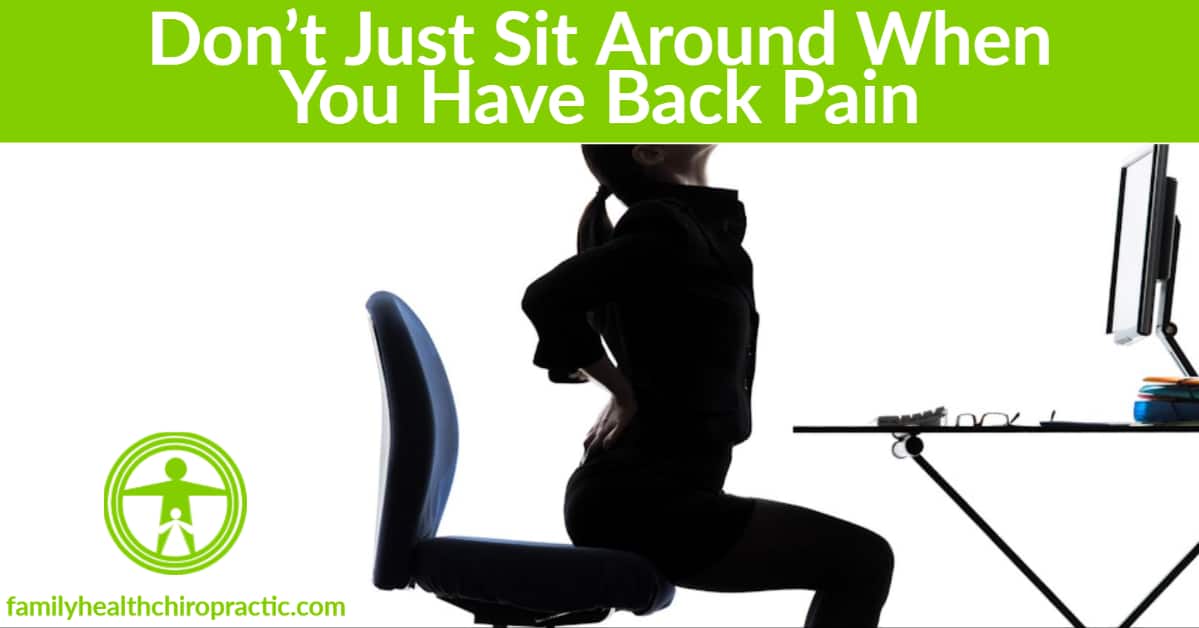
Sitting down might be a way to relax after a long day, but if you have back pain or spinal column problems, sitting can increase your state of pain.

Sitting can aggravate certain spine conditions more than relieving it.

One of these conditions is degenerative disc disease. The spinal discs act as pads between the vertebrae in your back.

When we lose flexibility, if we are dehydrated or if we move in the wrong fashion, a disc can become herniated, meaning it develops a bulge that can pinch a nearby spinal nerve, causing pain.

There are several studies that have measured the amount of pressure on the discs in various positions. [1, 2, 3]

Not surprisingly, the pressure is lowest when you're lying down and highest when you're sitting down, and even worse when you sit with poor posture!

Disc problems can cause back pain alone, but when the pain moves into the legs, this may be the nerve pain known as sciatica.

Sciatica occurs when a herniated disc pinches one of your sciatic nerves. True sciatica is when you have pain that connects from the lower back into each leg and goes through the knee.

People with sciatica typically report a burning pain that involves the lower back, the leg, and sometimes the foot.

Although the specific reason for back pain is hard to identify, muscle spasms and weakness are probably the most common cause.

While there isn't proof from medical studies that sitting leads to more spasms, people often report tighter and more painful back muscles with prolonged sitting. This is likely why people experience stiffness and pain from long periods of driving.

Not all back conditions are made worse from sitting.

If you find that you feel better when you sit, there's a good chance that you have a condition called spinal stenosis.

In cases where the arthritis is severe enough to pinch nerves going to the buttocks and legs, people often report that the pain is better when sitting than standing.

This is because when you sit, you bend forward a little bit at the lower back, and this may spread out the arthritic bones enough to relieve the pain temporarily.

Pain relief may also occur when you lean forward while using a shopping cart or a walker.

When Should You Get Your Back Pain Checked Out?

In most cases, you should be able to manage back pain by yourself.

I would certainly start by modifying your activity and begin the process of improving your flexibility and mobility.

However, you should see a doctor if the pain isn't improving even after you've modified your activity for a week or two.

It's important to keep in mind that healing takes time and most injuries can take up to four to six weeks to see improvement.

Of course, if your pain is severe enough or if you have lost function such as muscle strength or bowel/bladder control, you should see a doctor right away.

How to Relieve Back Pain from Sitting

If you're experiencing back pain when sitting, your impulse may be to lie down and then try to slowly progress back to sitting.

But this is the wrong approach.

You should lie down to relieve the pain, but the goal should not be to return to sitting, but rather to regain your ability to stand and move.

So the goal of overcoming back pain that gets worse from sitting it to not feel better when you're on the chair, but to start moving.

Walking is better than sitting.

Doing a Yoga class and not hurting is better than sitting and not hurting.

So remember, Movement is The Best Medicine when it comes to relieving pain.

Regular physical activity can make the back stronger to reduce future episodes of pain.

Exercises should focus on increasing strength and improving range of motion — as well as ensuring balance on both sides of the body, as some back pain can start when one side of the body is stronger than the other.

In addition, whenever possible, avoid prolonged sitting.

If you sit at a desk in the office all day, get up periodically — at least every 20-30 minutes — and walk around.

Walk to get a drink of water or to pick up your mail.

Specifically, there are two exercises to try out when you're experiencing pain.

Back Extensions – The First Exercise to Try

back extension for back pain when sitting

The first exercise I would recommend anyone with back pain to do is the back extension exercise.

If your pain is severe, then start by simply laying on the floor and resting on your elbows for 10 seconds, then relax. Repeat 15 times every three hours.

If you're able to fully extend up onto your hands, then I would suggest pushing all the way up, holding for 1 second and then going back down to the starting position for 1 second. You would repeat 15 times every 3 hours and do this for 3 days.

If after 3 days of doing back extensions, you're not better, then start performing the opposite (back flexion exercises).

It's also important to not combine these two movements. So you would only want to be performing extensions and avoid any flexion movement (bending forward to stretch your back or bending forward to tie your shoes).

Back Flexion Exercise – The Second Exercise to Try

back flexion

If Back Extension exercises don't help or reduce your back pain and you are sure you've done it for at least 3 days and avoided flexion movements, then the next step is to try Back Flexion Exercises.

To do this exercise, you would lie on your back with both knees bent.

Pull one knee toward your chest and hold it for 5 to 10 seconds. Return to the starting position. Repeat with the other leg. Do this 15 times with each leg every 3 hours for 3 days.

Final Thoughts 

Sitting down can absolutely worsen back pain.

If you find that you're having back pain from sitting, then modify your work station or try to start moving more throughout the day.

If your pain doesn't improve, then consider the back extension or back flexion exercises I shared here.

In addition, you should incorporate other simple exercises including stretching on your own, Yoga and/or Pilates.

These exercises build not only strength, but also flexibility.

Finally, if you're doing all the things and you're still hurting, you should consider getting checked by a chiropractor or at the very least get xrays to make sure you're not dealing with something more serious.

Don’t Sit With Back Pain2026-04-26T11:13:31-05:00

Stress Management

Why Stress is Underestimated 

Stress can take many forms. Some people experience it directly as anxiety, frustration or confusion.

Others only vaguely notice that the daily commute leaves them less energetic or hectic times at work make make them sleep less well.

And it’s not just the mind that suffers from chronically high stress.

Stress is bad for everything.

When you live a very stressful life, you die sooner. [1]

For your physique and fitness, chronic stress has been documented in research to have the following negative effects compared to low stress conditions.

  • Reduced energy expenditure.
  • Increased appetite.
  • Comfort food cravings.
  • Poorer carb tolerance and impaired nutrient partitioning.
  • Up to twofold lower strength development.
  • Up to twofold slower recovery post-exercise.
  • Reduced muscle growth.
  • A roughly twofold increase in injury risk.

As such, it’s not an exaggeration that poor stress management can make a twofold difference in the results from your diet and exercise programs.

So here are 5 tips to master your stress level and take control of your life.

1. Handle Stress with Active vs. Passive coping 

In the psychological literature, coping strategies to deal with stress are classified as either passive (avoidant) or active (facing).

Many people spend their lives being passive and so too they deal with stress.

Passive coping means not dealing directly with situations or emotions.

Instead, people reach out to others (social diversion) or engage in different activities that ignore the stressor and provide short-term relief such as self-medicating through food, alcohol or instantly gratifying and distracting activities like watching television (task diversion).

Active coping generally results in better stress management.

Surprise: procrastination and ignoring the problem generally don’t make it go away.

Active coping means addressing or eliminating the situations or emotions themselves (problem- focused) or manage the resultant emotions (emotion-focused).

You’ll often hear psychologists emphasize emotion-focused coping: accepting responsibility, thinking of the bright side, seeking social support, that kind of thing.

That can all be useful, but it’s at its core still just a band-aid approach. Problem-focused coping generally works significantly better than emotion-focused coping.

Simply put, you need to address the root cause of your problem with actions, not thoughts.

  • Got into a fight with your partner? Talk to him or her.
  • Run into an obstacle at work? Fix it.
  • Car problems? Call your mechanic or garage right now.

Dealing with the problem immediately and directly takes advantage of the stress. Acute stress is good.

It energizes you and motivates you to solve your stressful problems.

It’s only when the stress becomes chronic that you get problems.

Don’t let it fester.

2. ‘Work hard, play hard’ Does Help with Stress

Stress is unavoidable and indeed it needn’t be avoided altogether.

It simply needs to be managed.

An effective stress management technique is organizing your day into high and low stress phases.

Stress should have a circadian rhythm.

Most people do have phases in their lives, but these phases are called the workweek, where they are chronically stressed if not depressed and weekends/holidays, where the ‘relaxation’ looks an awful lot like hibernation.

Research on both animals and high-level athletes shows that they suffer much less from stress than the average person, because they are generally more calm (parasympathetic dominance) but they get more aroused (sympathetic dominance) in times of stress, like exercise. For a good read on the subject, check out Why Zebras Don't Get Ulcers.

So they experience strong but transient episodes of stress and thereafter let the body recover.

The stress is episodic, not chronic.

This is perfect in terms of General Adaptation Syndrome.

If you have a regular 9-to-5ish job, this generally means that the first part of your day should be the high stress part and your training should be during this part of the day.

When you get home, relax.

Turn off your mobile or at least turn off its internet connection.

When I was an intern at MD Anderson, I was literally the only one in my group who didn't carry a smartphone. I was also one of the few without symptoms of burnout.

Self-employed people have to be even more conscious of their lifestyle rhythm, because the office is generally also your home.

It helps to have a separate room in your house where you work.

Other than that, it’s highly individual (self-employed people tend to be eccentric), so you have to experiment.

And don’t just nod. Actually experiment with it.

Try working until you fatigue and then doing something else.

Try relaxing upon waking up and working at night.

It’s generally not a good idea to work all the way up until bedtime, as arousal can disrupt sleep quality and onset.

Note that you can also have several phases of productivity in a day.

You could, for example, have a productivity phase in the morning and in the evening with do-whatever- you-want phases in the afternoon and before going to bed.

3. Mindfulness Training for Stress Management

Mindfulness training is one of the few scientifically established tools that can actually help you cope with the negative feelings of stress.

The most popular form of mindfulness training is meditation, but there’s no need for any of the spiritual stuff.

Most of the studies on mindfulness training have very poor methodological quality, e.g. no control group, lack of blinding, no randomization, etc., but that still leaves dozens of convincing studies.

Meditation effectively resets your mood state.

A digital analogy is clearing out your brain’s cache.

Other benefits of meditation are much less documented, but the reduction in anxiety and depression have strong scientific backing.

Mindfulness meditation comes down to simply focusing intensely on something that does not evoke any emotional response, like a cube or a chair, for several minutes.

It sounds easy, but it’s really not and will take consistent practice.

For example, try going for a walk and focusing on every present moment. You'll find that your thoughts start thinking backwards and forwards and it's very hard to simply focus on what's in front of you.

It’s easier to do in a quiet, un-stimulating environment or with ear plugs, with your eyes closed, in a relaxed position (bonus points if you do it in lotus position).

If you don’t like ‘the hippie stuff’, it’s good to know that mindfulness training is no more effective than other relaxation therapies.

Being with friends, watching a relaxing TV series or getting a massage can all achieve the purpose of making you relaxed.

However, there is some evidence that mindfulness training can make you more mindful as a person in general and improve your ability to allocate attention.

Mindfulness training may increase our ability to observe and reflect without anxiety or judgement, improving our ability to make rational decisions.

While meditation is inherently a passive coping strategy, meditation can make active coping more successful.

It can help to meditate before you tackle a problem so you can deal with it in a rational manner.

There’s strong evidence that mindfulness training can improve our ability to deal with distress in both clinical and non-clinical settings, resulting in significant improvements in our mental and physical health, including mixed support for the treatment of eating disorders.

4. Expose Yourself to Nature for Stress

This is yet another piece of hippie sounding advice with good scientific backing.

Exposure to nature significantly reduces stress in various settings.

Here's a few other articles to meditate on or read on a nice patch of grass:

Exercise in nature is perceived as less effortful.

Even cancer is less common in greener areas.

Getting into nature is of course great, but it’s not always practical. Fortunately, even something as simple as having some indoor plants can significantly reduce your stress level.

So buy some plants.

See if you can take a more scenic route to your work or the gym, even if it’s a slight detour.

And try to go out into nature more often when life is stressful.

5. Be Flexible to Reduce Stress

Life often doesn’t pan out as planned and things don’t go the way you want them to.

And that’s how you experience stress.

Often though, this stress is needless neuroticism and you have options that are just as good as your original plan.

You just need to let go of your original plan.

For example, one of my patients had planned for their first bodybuilding show, but in a different state.

He booked the show, a flight and a hotel, had his whole contest prep planned out and asked for a holiday that week at work.

A few weeks later, however, his boss told him he couldn’t really go on holiday after all and they needed him in a different state for a short but important assignment.

Fighting his boss didn’t prove fruitful.

He even thought about suing and changing jobs. He had to do that show. Fortunately though, the solution was far simpler: change the show, not the work.

There was a similar bodybuilding show in the state he was required to be in for work that week. His work wasn’t a difficult assignment and wouldn’t interfere with his peak week.

He’d have to cancel the other show, hotel and flight and book new ones, but the overall cost was only about a hundred dollars, far less than the bonus he’d get from the extra assignment.

Don’t get fixated on the original plan.

Being flexible in how you cope with problems makes you more resistant to stress.

When things don’t go the way you want them to, rather than forcing through your plan at all cost or abandoning it altogether, reassess: what is my goal and what are my options?

There is always going to be options, you just have to meditate on it :)

Final Thoughts 

Stress is not going anywhere. It's always going to be an issue.

What matters is how you learn do deal with your stress and whether or not you're improving your ability to deal with it.

Even Chiropractic Adjustments have been shown to reduce circulating levels of cortisol (stress hormone) in the body.

This is because the spine is the root of the nervous system and adjustments not only help to relieve tension in the muscles and joints, but calm the fight or flight reaction by activating the parasympathetic system.

Stress Management2026-04-26T11:13:31-05:00

How Do Chiropractic Adjustments Work?

Should I See A Chiropractor?

Every year, Millions of people in the U.S. see chiropractors for relief of headaches; back pain, shoulder, foot and neck pain.

People also seek the guidance of a chiropractor when they experience numbness and tingling or a loss of strength in the arms, hands and legs.

Overall, 62% of adults in the U.S. have had neck or back pain significant enough that they sought treatment from a health care professional at some point in their lifetime.

And according to a Gallup survey conducted by Palmer College of Chiropractic, among patients who sought health care for neck or back pain, 47% saw a medical doctor and 53% sought treatment from a chiropractor.

The estimated number of people who seek chiropractic care is in the tens of millions.

One of the primary reasons why people choose a chiropractor is because it's a safe, drug less approach to care.

Let's talk about some benefits of chiropractic adjustments and what chiropractic adjustments actually do.

Benefits of a Chiropractic Adjustment

There is overwhelming research to suggest that chiropractic works well for many conditions.

Chiropractic Helps with Low Back and Neck Pain

One study involving chiropractic patients with neck pain found that 96 percent of respondents indicated that they were either “Very satisfied” or “Satisfied” with the chiropractic care they received, and that 98 percent said that they “Definitely would” or were “Very likely” to choose chiropractic care again if they experienced a similar problem.

Another study published in the Journal of Manipulative and Physiological Therapeutics found patients with chronic low-back pain treated by chiropractors showed greater improvement and satisfaction one month following treatment compared to patients treated by family physicians.

Chiropractic Helps with Sciatica

Compared to most medical treatments, few interventions can initiate back pain relief and healing like chiropractic adjustments can. The European Spine Journal published findings from a clinical trial uncovering how chiropractic adjustments resulted in a 72 percent success rate in treating sciatica-related symptoms. This can be compared to a 20 percent success rate from treatment with physical therapy, and a 50 percent success rate from corticosteroid injections.

Chiropractic Helps with Headaches

Second only to back pain, headaches — both tension headaches and migraine headaches — are one of the most common conditions regularly managed by chiropractors. There are over 230 peer-reviewed articles referenced chiropractic’s ability to help cure, prevent and ease the burden of headaches and migraines in people all across the globe!

Chiropractic Helps with Colic, Acid Reflux and Ear Infections in Children

A 2011 systematic review published in the journal Explore — which included a review of 26 articles in total, including three clinical trials and four cohort studies — found that chiropractic adjustments helped greatly reduce colic symptoms.

In addition, any case studies have been documented that describe how children suffering from ailments including otitis media (or ear infections) or acid reflux have experienced complete to near-complete resolution after just a few visits with a chiropractor.

Chiropractic Helps with Neurological Conditions

Exciting research is currently being conducted via upright MRI scans showing how upper cervical adjustments affect various brain-based conditions. What we have seen so far is quite remarkable. Not only are MRI scans revealing that cerebral spinal fluid and blood flow are markedly increased after a chiropractic adjustment, researchers are observing that cerebellar invagination (when the cerebellum drops down below the skull line) is being reversed and brain plaquing (common in multiple sclerosis patients) is disappearing!

Chiropractic Helps to Prevent Surgery

While it's not 100%, chiropractic has long been heralded by natural health care providers as a natural method to prevent back surgery. In fact, the Journal of the American Medical Association just recently published its low back pain guidelines and suggested that people suffering from back pain first try chiropractic before resorting to surgery.

Chiropractic Helps Improve Athletic Performance

There’s good reason why for years professional athletes — including Michael Phelps, Jerry Rice and Joe Montana — have made a point to regularly be treated by chiropractors. In fact, over 50 percent of NFL teams have a chiropractor on staff, this way the players always have access to adjustments, stretches and exercises when needed.

What Are Chiropractic Adjustments?

The Definition of Chiropractic

There are a number of chiropractic definitions depending on who you ask.

According to the World Federation of Chiropractic, the meaning of chiropractic medicine is:

A health profession concerned with the diagnosis, treatment and prevention of mechanical disorders of the musculoskeletal system, and the effects of these disorders on the function of the nervous system and general health. There is an emphasis on manual treatments including spinal adjustment and other joint and soft-tissue manipulation.

Here’s another chiropractic definition, this time according to the Association of Chiropractic Colleges:

Chiropractic is a healthcare discipline that emphasizes the inherent recuperative power of the body to heal itself without the use of drugs or surgery. The practice of chiropractic focuses on the relationship between structure (primarily the spine) and function (as coordinated by the nervous system) and how that relationship affects the preservation and restoration of health. In addition, doctors of chiropractic recognize the value and responsibility of working in cooperation with other health care practitioners when in the best interest of the patient.

Indeed, chiropractic can be a complementary medicine since most chiropractors are used to working with medical doctors to get people pain-free and prevent future injuries.

The Definition of a Chiropractic Adjustment

Most of the benefits associated with chiropractic care are due to patients receiving specific chiropractic adjustments.

Chiropractic adjustments work by helping to place your body in the proper position that then allows the body to heal itself.

Because the nervous system controls every cell and organ in your body, chiropractors focus their attention on the health of the spine being properly aligned.

If the spine shifts out of its proper place, then adjustments are used to help bring the spine back into alignment.

A Chiropractic Adjustment Influences the Spine, Spinal Cord and Brain

Over the past ten years several research groups have demonstrated that spinal adjustments can change various aspects of nervous system function, including muscle reflexes, reaction time, and the speed at which the brain processes information.

Much of this research has demonstrated that when chiropractors apply an adjustive thrust to the spine, it stimulates specific tissues around the spine that feed valuable information the brain.

Chiropractors have known for over a hundred years that movement is important, and now we better understand why that is.

It’s not just because exercise is good for you, which of course it is.

But movement feeds the brain with information about what is going on in your body.

You cannot see inside your body and you don’t watch everything you do.

So your brain relies on all sorts of information arriving from all around your body to have a clear picture of what is going on and to make the right decisions about how best to respond.

When your spinal segments are not in properly alignment or moving as they should, the different or excessive information that the brain receives may act as background noise in the system, making it harder for the brain to accurately perceive what is going on and respond appropriately.

spine health bad

But out of all the research that has been done on chiropractic adjustments, the most interesting thing that came from all these experiments is that chiropractic care, adjusting the spine to restore spinal function, actually changes the way the brain functions.

Final Thoughts on Chiropractic Adjustments

Final Thoughts on Chiropractic Benefits

Chiropractic adjustments work by helping to place your body in the proper position that then allows the body to heal itself.

One of the key focuses of chiropractic care is realigning the spine and thereby reducing pressure placed on sensitive nerves, which can contribute to dysfunction of the central nervous system.

Chiropractic can be a complementary medical approach to mainstream medicine as well, and it’s been proven to be one of the safest approaches to naturally and holistically treating patients with a wide range of symptoms or conditions, including: back or neck pain, sciatica, scoliosis, frozen shoulder, acid reflux or digestive issues, headaches, high blood pressure, injuries and neuromusculoskeletal complaints that may require surgery.

How Do Chiropractic Adjustments Work?2026-04-26T11:13:31-05:00

Why Getting Sick is Good and How Fevers Matter

To Get Sick, is Human

Why are we so shocked and upset when we, or someone we love, comes down with a sickness?

Why are so many people scared of bacteria and viruses and get so panicked about germs, they start doing crazy things like buying up all the face masks?

A strong, healthy body is responsive to its environment.

When you experience a cough, a runny nose, achiness, fever and chills – these are all signs that your body has detected a pathogenic (harmful) invader and it is responding appropriately.

Each of these is a mechanism that your body has evolved to fight infection.

For example, a sneeze is the body’s way of expelling, or, pushing out, an irritant.

Vomiting is a way to clear our digestive system from something harmful.

Fever initiates a cascade of events that leads to seeking and destroying viruses.

Today, we now know that there are two major kinds of diseases: infectious and non-infectious.

Infectious diseases are caused by pathogens such as bacteria, viruses, fungi and parasites.

These pathogens can enter the body through the air we breathe, the food and drink we consume or through openings in the skin, such as cuts.

Not every pathogen that enters the body results in illness because our bodies come equipped with immune systems to fight off foreign agents.

That is of course, if you've done the right homework to build a healthy immune system – one that is responsive and that hasn't been blunted by any external (i.e. antibiotics or fever reducers) means.

Why A Fever is Important

Fevers are more than just a symptom of illness or infection.

Fevers result in an elevated body temperature that sets in motion a series of mechanisms that regulate our immune system.

To halt or interfere with this process is like interrupting calculus class when you're just about to learn the most important step in solving the equation.

When we are healthy, our body temperature tends to hover around 98.6°F (37°C ).

But when our bodies are faced with an infection such as a virus, our body temperature should go up and we experience fever.

A low grade fever would be 100°F, whereas a high grade fever is anything greater than 103.5°F.

When we have the flu, for instance, we may come down with a mild to high and somewhat uncomfortable fever (anything between 100° – 103.5°F) which can be nerve wrecking.

As a general rule, when your fever is higher than 103.5° for longer than 30 minutes, then consider using a mild fever reducer.

What's important to understand here is that fevers aren't always a bad sign; but a good indication that your immune system is doing its job.

It's also important to understand that fevers are simply a byproduct of getting sick, but a direct safety mechanism of the immune system.

An elevated body temperature triggers cellular mechanisms that ensure the immune system takes appropriate action against the offending virus or bacteria.

But if you interfere with this process, then you are preventing your immune system from learning and even causing a greater risk for future infections.

Our Body has Temperature-Immune Sensors

A signaling pathway called Nuclear Factor kappa B (NF-κB) plays an important role in the body's inflammation response in the context of infection or disease.

NF-κB are proteins that help to regulate gene expression and the production of certain immune cells.

These proteins respond to the presence of viral or bacterial molecules in the body, and that is when they start switching relevant genes related to the immune response on and off at a cellular level.

Dysregulated NF-κB activity has been linked with the presence of autoimmune diseases such as psoriasis, Crohn's disease, and arthritis.

Researchers note that NF-κB activity tends to slow our body temperature lowers. But when body temperature is elevated over the usual 98.6°F, it tends to become more intense.

This is why fevers tends to spike at night.

With a lower than average body temperature at night, the viruses tend to come out and play. But during the day, overall body temperature is elevated and the opposite is true.

Now our biological clocks regulate our internal temperature and determine mild fluctuations — of about 1.5°C (34.7°F) at a time — during wakefulness and sleep.

So,  the lower body temperature during sleep might provide an explanation into how shift work, jet lag, or sleep disorders also cause increased inflammatory disease and dysfunctions.

This is also why sleep disturbance is linked to decreased immunity!

Fever Reducers Blunt Immunity

As we've already discussed, fever isn’t an illness – but a biological defense mechanism.

It’s the body’s attempt to fight illness.

So when we treat fever with antipyretics, such acetaminophen (Tylenol) or ibuprofen, we severely blunt an important part of our immune response.

Although it might seem counter intuitive, several studies have now shown that antipyretics increase the severity of infections.

I can't say this enough: it's time to get over our fear of fever.

Nobel Prizes, animal studies and human studies have all demonstrated the positive effects of fever.

These studies were even performed in children!

And the results have been consistent:

  • Antipyretics prolonged the excretion of salmonella bacteria in people suffering from this intestinal infection.
  • Children with bloodstream infections (sepsis) or pneumonia were more likely to die if their temperatures were lower.
  • Antipyretics prolonged symptoms in patients infected with influenza.
  • Antipyretics prolonged viral shedding and worsened symptoms in volunteers experimentally infected with a common cold virus called rhinovirus (PDF).
  • Antipyretics delayed the resolution of symptoms in children with chickenpox.

Consistent with these clinical observations, recent studies have shown that at higher temperatures, white blood cells (neutrophils), B cells, and T cells work better.

Why does that matter?

Neutrophils kill bacteria. B-cells make antibodies that neutralize viruses and bacteria. And T cells kill virus-infected cells.

Why Are We So Fever Phobic?

Given all of this information, why are we so intent on treating fever?

Why are we so fever-phobic?

The most common reason is that we feel more comfortable when our temperature is normal.

But feeling more comfortable is not necessarily better when you're body is raging war internally.

I don't know about you, but I wouldn't be so calm if someone in my neighborhood was going around murdering everyone! I certainly wouldn't want to shut down the defense system.

We assume that if we lessen fever than we have lessened the degree of illness, but the opposite appears to be true.

Another reason is the fear that high fevers can cause brain damage—a concern that hasn’t held up to scientific scrutiny.

Just so you know, brain damage from a fever generally will not occur unless the fever is over 107.6°F (42°C). And untreated fevers caused by infection will seldom go over 105°F (40.6°C).

Another reason is the idea that treating fever will prevent febrile seizures, a phenomenon that while frightening, doesn’t cause permanent harm. As it turns out, fever reducers don't even prevent febrile seizures.

But probably the most common reason for treating fever is that we feel more comfortable when our temperatures are normal.

Fever increases the basic metabolic rate, causing us to breathe faster and our hearts to beat faster.

When we have fever all we want to do is lie in bed and drink fluids, which is exactly what we should be doing instead of going to work or school and infecting others.

Fever is a sign that we should isolate ourselves from the herd, not medicating ourselves so we can go back and join the party.

Pharmaceutical companies haven’t helped with this either.

With ads like “Let’s get that temperature down!” or “Just what the doctor ordered,” we are constantly bombarded with the notion that fever is bad and must be reduced or eliminated.

In closing, Hippocrates, who lived around 400 B.C., had it right.

He believed that a fever was essential to healing and it cooked whatever was causing our problems.

Then, in 1899, the German company Bayer invented aspirin. And all of a sudden it became important to treat fever, popularized by the advice, “Take two aspirin and call me in the morning.”

In retrospect, we should have listened to Hippocrates.

Why Getting Sick is Good and How Fevers Matter2026-04-26T11:13:31-05:00
Go to Top