
Carpal Tunnel Relief in Austin, TX
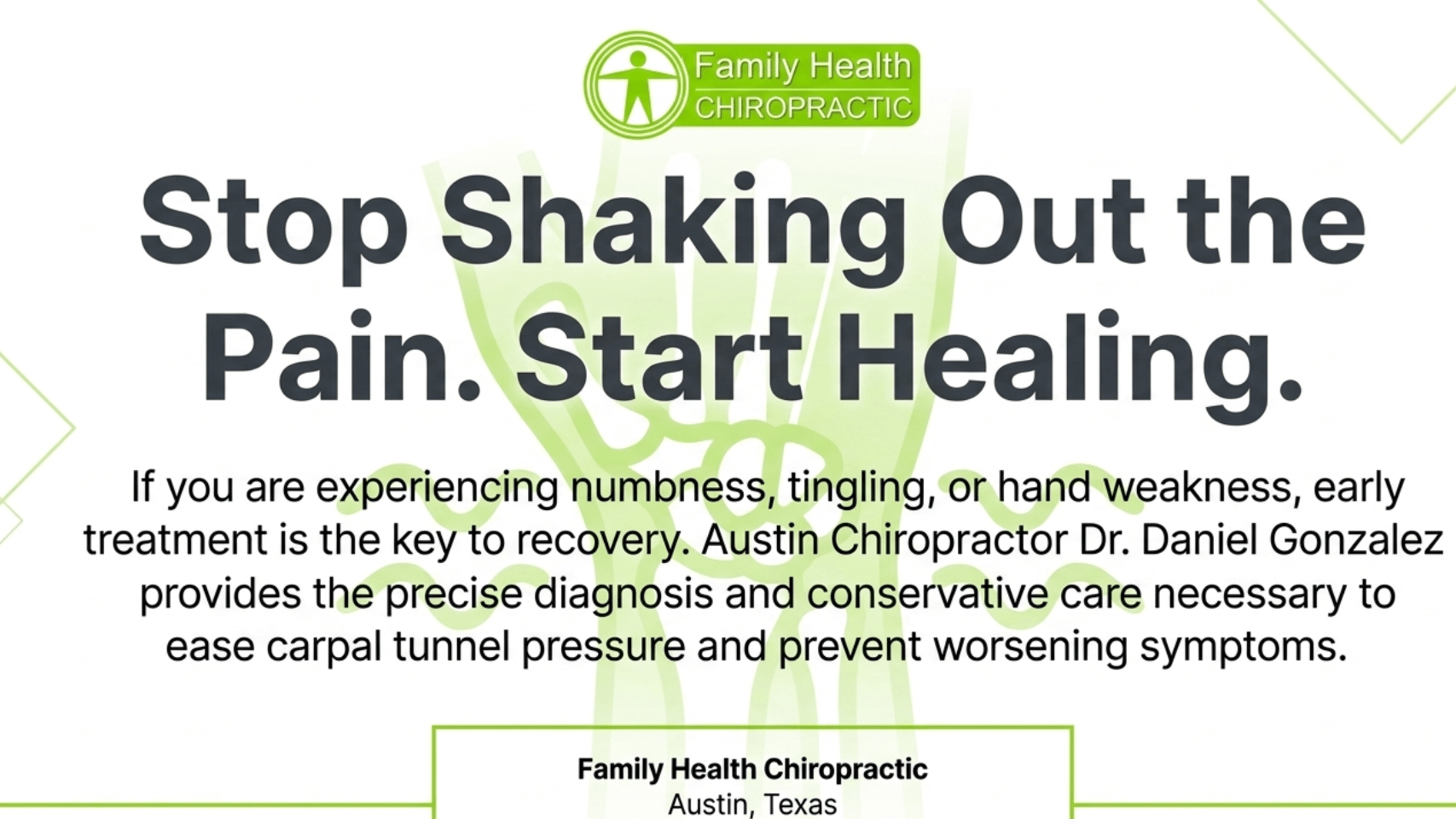
Carpal tunnel syndrome develops when the median nerve is compressed as it passes through the wrist, causing pain, numbness, and tingling in the hand. Identifying the cause early makes conservative care more effective and can help you avoid worsening symptoms.
CARPAL TUNNEL CARE IN AUSTIN
Understanding and Treating Carpal Tunnel Syndrome
A clear look at what carpal tunnel syndrome is, what commonly causes it, and how conservative care in Austin may help.
What It Is
Carpal tunnel syndrome happens when the median nerve is compressed as it passes through the carpal tunnel, a narrow passageway of bones and ligaments on the palm side of the wrist. The median nerve controls sensation and movement in the thumb and most of the fingers, so pressure on it produces pain, numbness, tingling, and weakness in the hand.
Symptoms often start gradually and may come and go before becoming more constant. Because early carpal tunnel syndrome frequently responds to conservative care, prompt evaluation gives you the best chance to relieve symptoms and avoid nerve damage over time.
Common Symptoms
- Tingling or numbness in the thumb, index, middle, and ring fingers, but not the little finger
- An electric-shock sensation in the fingers that may travel up the forearm
- Symptoms that flare while holding a phone, steering wheel, or book, or that wake you at night
- A frequent urge to shake out the hand to relieve the sensation
- Weakness or a tendency to drop objects due to reduced grip and thumb control
- Numbness that becomes more constant as the condition progresses
Common Causes
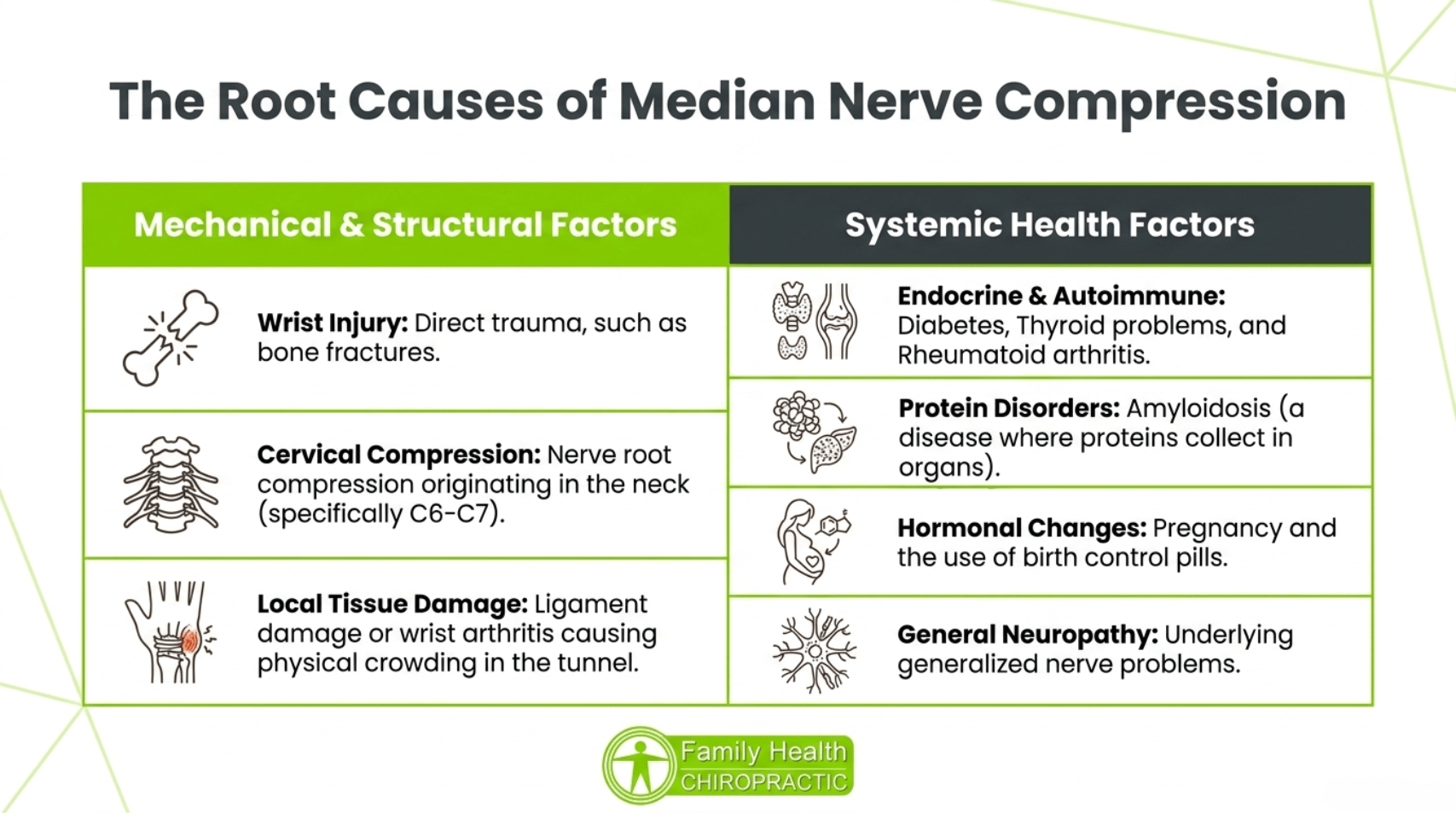
- Repetitive hand and wrist activities such as typing, texting, or assembly work
- Wrist injury, such as a fracture, that narrows the carpal tunnel
- Arthritis or ligament changes that crowd the median nerve
- Nerve irritation higher up, including cervical nerve root involvement in the neck
- Health conditions such as diabetes, thyroid problems, or rheumatoid arthritis
- Fluid retention from pregnancy, which can raise pressure in the wrist
How We Can Help in Austin
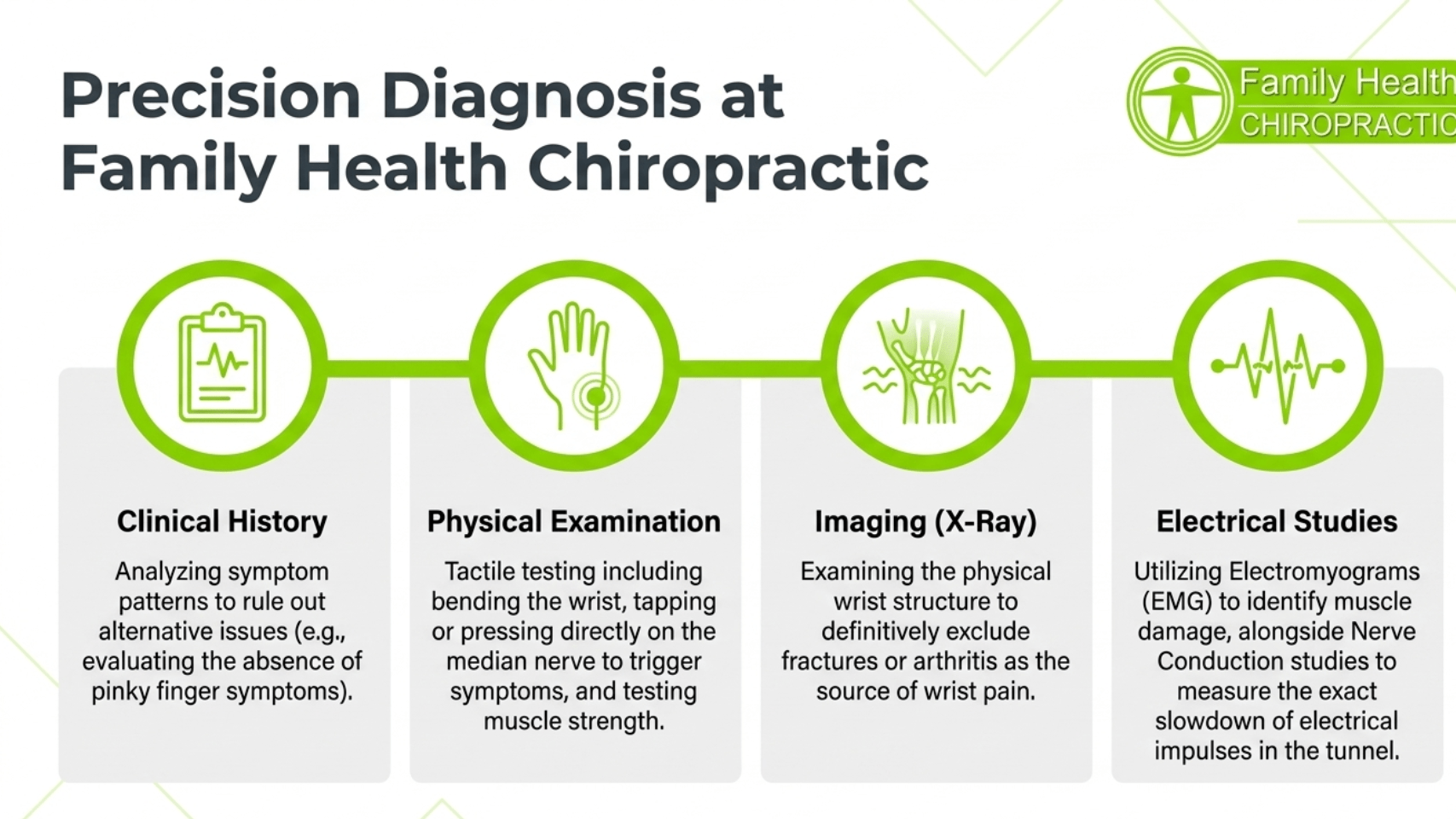
We begin with a careful history and physical examination, testing sensation and grip strength and checking whether your symptoms fit the pattern of median nerve compression or point to a source in the neck. This helps us determine the true cause and recommend the right care or referral.
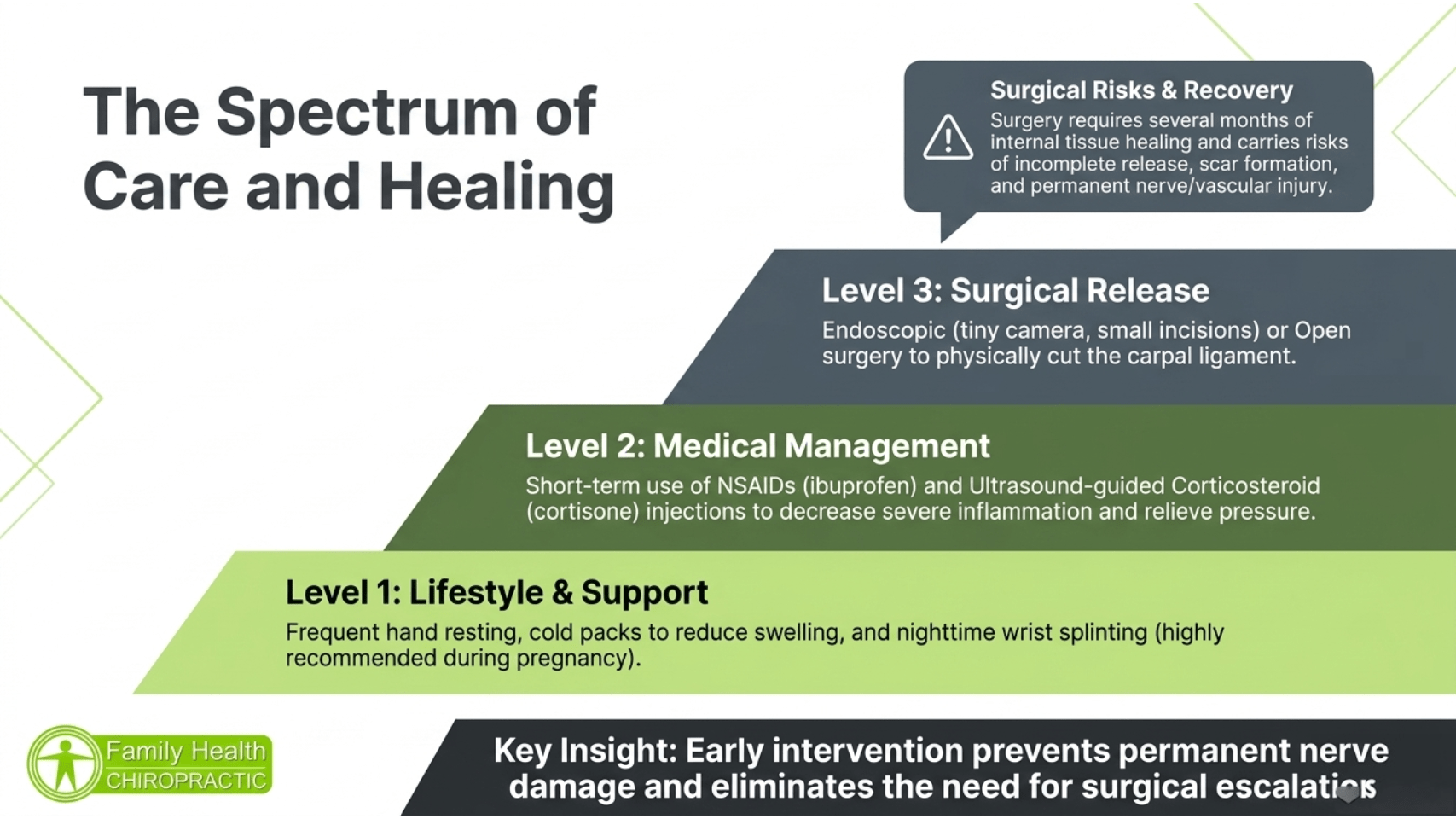
For mild to moderate carpal tunnel syndrome, conservative care is a reasonable first step. A randomized trial in The Journal of Pain (2015, PMID 26281946) found that manual physical therapy produced pain and function outcomes similar to surgery at six and twelve months, with better results in the short term. A Cochrane systematic review (Cochrane Database of Systematic Reviews, 2024, PMID 38189479) notes that the advantage of surgery over non-surgical care is unclear, so the decision should weigh the benefits and risks. Based on your exam, our care may include activity guidance, wrist support recommendations, soft tissue and nerve mobilization techniques, and attention to the neck when it is involved.
Related Care
Learn more about our approach to chiropractic care in Austin, or explore our broader chiropractic and wellness services.
GET RELIEF IN AUSTIN
Get Your Carpal Tunnel Evaluated in Austin
Same-week appointments are often available. Call 512-347-8881 or request a time online.
Frequently Asked Questions
Can a chiropractor help with carpal tunnel syndrome?
For mild to moderate cases, conservative care is a reasonable first step. A randomized trial in The Journal of Pain (2015, PMID 26281946) found manual physical therapy produced pain and function outcomes similar to surgery at six and twelve months, with better short-term results. We confirm the cause with an exam first and refer when surgery is the better option.
What are the early signs of carpal tunnel syndrome?
Early signs include tingling or numbness in the thumb, index, middle, and ring fingers, symptoms that flare at night or while holding a phone or steering wheel, and a frequent urge to shake out the hand. Catching it early makes conservative care more effective.
Do I need surgery for carpal tunnel syndrome?
Not always. A Cochrane review (2024, PMID 38189479) notes the advantage of surgery over non-surgical care is unclear, so the decision should weigh benefits and risks. Many people with mild to moderate symptoms improve with conservative care, though severe or worsening cases may need surgical evaluation.
What can I do at home for carpal tunnel symptoms?
Taking breaks from repetitive hand activities, adjusting your keyboard and desk setup, wearing a wrist splint at night, and doing gentle nerve and tendon glides can help. We provide specific guidance based on your exam findings.
Do you treat carpal tunnel syndrome in the Austin area?
Yes, we see patients with carpal tunnel symptoms from Austin and nearby communities including West Lake Hills, Rollingwood, Bee Cave, and Lakeway. Call 512-347-8881 or request a time online.