Blog

Achilles Tendon Pain: Causes, Symptoms and Treatment

Achilles tendon pain occurs from injuries sustained by the Achilles tendon.

The Achilles tendon is the largest and strongest tendon in the body. Located in the back of the heel, the Achilles tendon connects the heel bone to the calf muscle. Named after the Greek god Achilles, it helps you walk, run and jump by raising the heel off the ground. Ultimately, the Achilles tendon influences everyday activities including high performance movements during athletic and recreational play.

Achilles tendon injuries affect between 250,000 and 1 million people per year in the United States. [1] Most are middle-aged males in their third or fourth decade of life. [2] Two-thirds of all Achilles tendon injuries involve athletes  and 1 in 20 recreational runners will develop Achilles tendinopathy. [3] Not surprisingly, a higher risk has been identified in other sports that involve running or jumping. The estimated incidence of Achilles tendinopathy is: running sports, 53%; soccer, 11%; dance, 9%; gymnastics, 5%; racquet sports, 2%; football, 1%. [4]

In this article, I'll share the most common causes of Achilles tendon pain and potential treatments to consider.

Causes of Achilles Tendon Pain

The primary causes of Achilles tendon pain include:

  • Achilles tendinitis – inflammation of the Achilles tendon itself
  • Achilles tendinosis – when the tendon starts to break down due to unresolved tendinitis
  • Achilles tendon rupture – when the tendon tears or breaks down

Achilles tendinitis is when a tendon becomes irritated or inflamed. Tendinitis is usually the first sign of an Achilles tendon injury and it’s critical to treat the Achilles tendinitis before it progresses to tendinosis.

There are two types of Achilles tendinitis

  1. Noninsertional Achilles tendinitis – The fibers in the middle of the tendon start to break down, swell and thicken. This type of Achilles tendinitis affects people who are younger and more active.
  2. Insertional Achilles tendinitis – This type affects the lower part of the heel, where the tendon connects, or inserts, to the heel bone. It can affect anyone, even people who aren’t active. But it most commonly affects people who overuse the tendon, such as long-distance runners.

Risk factors

A number of factors may increase your risk of Achilles tendinitis, including:

  • Your sex. Achilles tendinitis occurs most commonly in men.
  • Age. Achilles tendinitis is more common as you age.
  • Physical problems. A naturally flat arch in your foot can put more strain on the Achilles tendon. Obesity and tight calf muscles also can increase tendon strain.
  • Training choices. Running in worn-out shoes can increase your risk of Achilles tendinitis. Tendon pain occurs more frequently in cold weather than in warm weather, and running on hilly terrain also can predispose you to Achilles injury.
  • Medical conditions. People who have psoriasis or high blood pressure are at higher risk of developing Achilles tendinitis.
  • Medications. Certain types of antibiotics, called fluoroquinolones, have been associated with higher rates of Achilles tendinitis.

Symptoms of Achilles Tendon Pain

Symptoms of Achilles tendon pain will usually affect the lower leg above the heel.

Patients often experience:

  • Heel pain and/or ankle pain
  • Stiffness or tenderness in the tendon
  • Leg weakness
  • Swelling around the Achilles tendon

You may notice more discomfort:

  • After you are active or the day after exercising
  • As you climb stairs or go uphill
  • In the morning, with improvement throughout the day

Complaints include pain or tenderness in the tendon or heel that intensifies with activity, especially walking or running. Patients also report difficulty when attempting to stand on their toes or walking steps- especially when walking down stairs. Morning pain and stiffness are very common.

achilles tendon pain

Mid tendon pain suggests non-insertional tendinitis, whereas posterior calcaneal pain suggests insertional tendinitis. It is also entirely possible that the tendon is healthy and you simply have calcaneal bursitis.

Those with insertional tendinopathy may demonstrate evidence of bony enlargement or spurring on the posterior calcaneus as well.

Treatment for Achilles Tendon Pain

Nonoperative or nonsurgical treatments should always be considered first!

“Traditional” treatments such as rest, therapy modalities, orthotics, and NSAIDs have all failed to demonstrate benefit for Achilles tendinopathy patients. [5]

Passive modalities including ultrasound, electrical stimulation, and low-level laser also lack support. [6][7]

The current standard of care for Achilles tendinopathy includes a combination of rest, eccentric rehabilitation, and correction of mechanical faults.

Studies have demonstrated excellent results in up to 85% of patients undergoing appropriate conservative care. [8]

Initially, you may need to limit or stop activities that are causing “damaging” type pain such as sharp, shooting, burning or tearing pain. Significant strains may also require the use of supports including crutches or a boot. Runners may need to switch to swimming, cycling, or other activities that limit stress to the Achilles tendon and allow it to heal. Patients should avoid shoes with an excessively rigid heel tab to reduce irritation.

Soft tissue manipulation, stretching, and myofascial release techniques are necessary to promote flexibility of the calf muscles as well.

Stretching of the calf muscles should be performed with the knee straight to address the gastrocnemius and with the knee bent to lengthen the soleus.

Achilles Tendon Pain and Chiropractic Care

Achilles tendon pain is common in athletes and active people.

If you have Achilles tendon pain, a Chiropractor can help to diagnose the type of Achilles injury, identify potential causes of your injury and recommend the appropriate treatments.

Your chiropractor will recommend several different types of treatment, including:

Manual Therapy or IASTM

Manual Therapy and Instrument Assisted Soft Tissue Mobilization (IASTM) are extremely effective for breaking up scar tissue and improving issues with soft tissues. Treatment can do a lot to improve the health of your tendon and the surrounding tissues to avoid further complications. It will also do a lot to help relieve the pain you are experiencing.

Chiropractic Adjustments

Many times, the issues with your Achilles tendon are the result of misalignment in other parts of your body. When your joints are misaligned it tends to put extra stress on your feet and Achilles tendons. To minimize the stress on your joints, your chiropractor will adjust your spine and other joints to ensure proper alignment.

Get Help for Your Achilles Tendonitis

If you are experiencing heel pain, please get in touch with our chiropractic team. We can help to alleviate your pain and help you avoid experiencing further problems with your Achilles tendon.

Achilles Tendon Pain: Causes, Symptoms and Treatment2026-04-26T11:13:28-05:00

AC Shoulder Joint Pain: Causes, Symptoms and Treatment

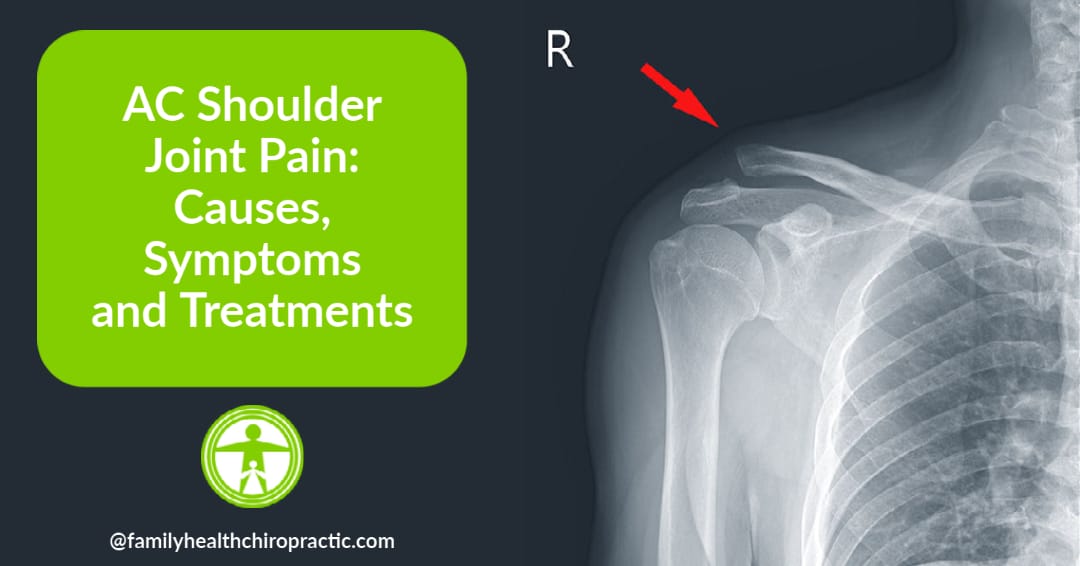
The AC joint or acromioclavicular joint is where the acromion (a part of the shoulder blade) connects to the clavicle (collar bone) at the top of the shoulder.

The AC joint helps to maintain the proper position of the shoulder as well as control motion and strength. It is stabilized by a capsule and ligaments, and injury occurs when these structures are damaged.

When the capsule and ligaments are injured, the joint can become unstable and painful, and shoulder function can be affected.

This type of injury is referred to as an “AC joint sprain” or a “separation.”

These injuries typically occur after a sudden fall onto the shoulder  or overuse (repeated lifting of heavy weights or objects overhead with poor mechanics).

The AC joint is also a common place that arthritis develops, which can become painful when irritated.

In this article I'll share a few tests, exercises and treatments that could help with AC joint injuries.

AC shoulder joint pain


Causes of AC Joint Shoulder Pain

Sudden AC joint injuries (“sprains” or “separations”) typically occur by one of the following ways:

  • A fall onto the shoulder or blunt force trauma
  • Lifting weights or heavy objects using poor biomechanics

Alternatively, AC joint arthritis typically occurs slowly over time as a result of overuse and can become flared resulting in short bouts of pain.

Acromioclavicular (AC) joint injuries are the most common reason for medical consults following an acute shoulder injury, yet remain a frequently overlooked problem due to diagnostic bias toward other shoulder problems. [1] [2]

Pain from an acromioclavicular injury can be from the joint capsule itself, or any number of four ligaments (superior, inferior, anterior and posterior ligaments).

In general, ligament sprain injuries are graded based on the degree of tissue damage:

  • Grade 1 (mild strain with no fiber disruption)
  • Grade 2 (partial fiber disruption)
  • Grade 3 (complete ligamentous rupture).

AC joint injuries are categorized based upon the following Rockwood classification:

  • Type I – mild, unseparated sprain of the AC ligaments with no disruption of the coracoclavicular ligaments.
  • Type II – complete disruption of the AC ligaments with joint separation (less than 4 mm or 40% difference) and sprained but intact coracoclavicular ligaments.
  • Type III – complete disruption of AC and coracoclavicular ligaments with joint separation and inferior displacement of the shoulder complex.
  • Type IV – complete disruption of AC and coracoclavicular ligaments with posterior displacement of the clavicle through the fibers of the trapezius, and detachment of deltoid and trapezius muscles from the distal clavicle.
  • Type V – complete disruption of the AC and coracoclavicular ligaments with significant inferior displacement of the shoulder complex from the clavicle as compared to a typical Type III injury.
  • Type VI – complete disruption of the AC and coracoclavicular ligaments, and the clavicle has dislocated inferiorly, below the coracoid process.

It's estimated that AC joint injuries are responsible for 40-50% of all athletic shoulder injuries and males are affected five times more often than females.

Symptoms of AC Joint Shoulder Pain

The classic presentation of AC joint pain involves pain and swelling on the superior (top) aspect of the shoulder following acute trauma.

Initially, symptoms are often generalized to the trapezius and entire shoulder region but become progressively more localized to the AC joint as acute swelling improves.

Symptoms may intensify with specific movements, including bench pressing, dips, or when the individual rolls onto the affected side at night.

Range of motion testing will be painful and limited, particularly in abduction (moves the limb laterally away from the midline of the body).

For a review of self-assessment tests, watch this video:

Treatment for AC Joint Shoulder Pain

AC joint injuries result in sport-specific and activities of daily living disabilities, ranging from 1 to 10 weeks.

Passive mobility exercises should be initiated early and gradually progress into full active ROM.

The goal of strengthening is to maximize stability of the AC joint and return to your prior level of activity.

Strength training should begin with closed chain scapular stabilization exercises, progressing to isotonic strengthening, and eventually sport-specific training. Pain tolerance should dictate progression during the flexibility and strengthening phases of care.

There are 3 levels of physical therapeutic or corrective exercises to consider. In this article, I'm going to share the first.

Codman's Pendulum Exercise

codmans-pendulum-exercise

Starting Position

Begin by bending forward until the spine is at a 45 degree angle to the floor. Support upper body with opposite arm on sturdy chair without wheels. Maintain a straight spine and do not round low back. Arm should hang directly below shoulder. Grasp a light dumbbell or weight (1-5lbs.).

Movement

Initiate slight forward and back movement with shoulder, trying to minimize any tension in arm. Arm should swing like a pendulum. Keep movement range of motion small. Repeat for prescribed duration and sets. Then repeat, this time initiate slight inward and outward movement with shoulder, trying to minimize any tension in arm. Repeat for prescribed duration and sets. Lastly, initiate small clockwise movement with shoulder, trying to minimize any tension in arm. Keep movement range of motion small. Follow this by counter clockwise movement. Repeat for prescribed duration and sets. Alternate sides as directed.

Seated Flexion seated flexion

Starting Position

Begin by sitting alongside a table with a towel between the hand and table.

Movement

Slowly slide hand directly forward, simultaneously flex trunk forward while sliding hand as far forward until end of shoulder flexion range of motion. Slowly return to starting position by slowly sliding the hand back and sitting up slowly. Repeat for prescribed number of repetitions before switching sides.

Assisted Flexion

assisted flexion

Starting Position

Begin lying down on your back. A pillow may be placed under head for support. Grasp a dowel with the uninvolved hand while placing the other end against the hand of the involved side.

Movement

Slowly lift arm upward as tolerated. Allow dowel to gently assist arm flexion to 180°. Maintain a neutral spine position paying close attention not to arch your low back. Slowly return to start position. Repeat for recommended sets and repetitions.

Isometric Internal and External Rotation

internal-rotation

Starting Position

Begin by standing next to a firm object or a doorway. Maintain good posture, so that spine is straight with shoulders back and head up. Bend arm with elbow at side and place back of hand against door frame.

Movement

While maintaining good posture, exert pressure with back of hand against the firm object or door frame until muscle contraction is felt in shoulder. Keep elbow next to side during entire movement. Hold for 5-10 seconds or for recommended duration. Repeat for prescribed repetitions and sets.

external-rotation

Starting Position

Begin by standing next to a firm object or doorway. Maintain good posture, so that spine is straight with shoulders back and head up. Bend arm with elbow at side and lightly grasp the firm object or door frame.

Movement

While maintaining good posture, exert pressure with hand against the firm object or door frame until muscle contraction is felt in shoulder. Keep elbow next to side during entire movement. Hold for 5-10 seconds or for recommended duration. Repeat for prescribed repetitions and sets.

AC Joint Shoulder Pain and Chiropractic Care

Chiropractic has been proven to be very effective for AC joint pain. A chiropractor can perform shoulder or AC adjustments which involves manipulation of the shoulder girdle.

While it can be a little uncomfortable for the patient, it is one of the best ways to quickly decrease the pain. After the procedure, a chiropractor may recommend icing as well as corrective exercises similar to the ones presented in this article.

AC Shoulder Joint Pain: Causes, Symptoms and Treatment2026-04-26T11:13:28-05:00

Keep Your Spine Moving

Did you know that even the ancient Greeks knew that movement and physical exercise was good for your brain?

Modern scientists have now shown that movement is one of the keys to promoting a healthy brain. [1]

Movement has been shown to help people with dementia, depression, and even ADHD. [2] [3] [4]

It’s even been shown to change the structure of your brain and improve your concentration and how fast you can think and react. [5]

Why Spinal Movement is So Important

Scientists now know that it’s not just physical exercise that’s important for your brain, but how your spine moves is also very important for keeping your brain healthy.

If we look at spinal movement in a very simplistic way, there are really three things we want our spine to be able to do on a regular basis.

Sometimes, for example, when we are running, we want our spinal bones to move together in a way that spreads and absorbs the impact forces generated by running.

By moving well together, the impact forces are shared equally across the spinal bones, and no damage takes place.

But other times, for example when we are lifting heavy objects, we want our spine to stiffen up to protect us. Without all the bones stiffening up like this we could injure ourselves while lifting heavy objects.

So how does our spine sometimes move and sometimes stiffen up?

Well, it’s the brain and central nervous system that does this for us by activating our spinal muscles.

The brain activates the correct muscles around the spine and skull in the correct order with perfect timing, to either allow for optimal movement, for example during running, or to allow for the spine to stiffen up, for example during heavy lifting.

Now there is one more thing we need from our spines, and that is for it to reflexively respond during times we’re experiencing some postural challenges.

In these cases, we need our brains to reflexively switch on and off the correct spinal muscles very, very fast so that we can maintain balance and stop ourselves from falling over.

Chiropractic Care Helps to Keep Your Spine Moving

Scientists have shown that chiropractic adjustments can have a big effect on how well your spine moves. [7] [8]

And they’ve also shown that chiropractic adjustments can help your brain to process information more quickly, know where your body is in space, and control the way your muscles work. [9] [10]

One potential reason why a healthy spine is so important for your brain is that researchers believe that when one of your spinal segments doesn’t move properly, it changes the way your brain perceives and responds to all other sensory information that enters your nervous system.

In other words, spinal function seems to be one factor your brain uses to help process and integrate all of the information from your environment. [11]

This is why chiropractors are so interested in making sure your spine is functioning properly.

They believe that if your spine isn’t moving in a normal or ideal way, it changes the way your brain controls your body.

New research has recently shown that chiropractors are very good at figuring out which segments in your spine are most restricted or stiff. [12] [13] [14]

They can then adjust your spine using specific spinal adjustments to help restore normal movement patterns in your spine, with the aim of helping your brain to better control your body

Regular Chiropractic Works Better Over Time

So, if you want to make sure your brain is getting the stimulation it needs to stay healthy, see your chiropractor so they can help you to keep your spine moving as best as it can.

And in between your chiropractic adjustments keep your spine moving well by staying active or doing yoga or other stretching exercises.

Remember that if you look after your spine, your brain will love you for it!!

Keep Your Spine Moving2026-04-26T11:13:28-05:00

Chiropractic Care and High Blood Pressure

Do you ever feel so busy or so stressed out that you just know if someone does something to irritate you anymore, you're going to lose your shit over it and say or do something you'll regret?

Modern life was hectic before the pandemic, but juggling work and family, endless emails, text messages and a constant barrage of bad news all mixed in with the pandemic has made it that much worse.

When we get stressed out, our blood pressure rises and we can develop hypertension because of it.

And when things get too much for us, we sometimes forget to pay enough attention to looking after ourselves and we may eat and drink too much and not do enough exercise. If this goes on for too long it can have an impact on our health. In particular, it can lead to high blood pressure. [1]

High blood pressure, or hypertension, is the most important risk factor for premature death, accounting for half of all deaths caused by cardiovascular disease and 13.5 percent of all deaths each year.

It affects 26 percent of the population worldwide, and one-third of the population in the U.S.

Nine in ten Americans are expected to develop high blood pressure by the age of sixty-five.

With this in mind, it’s no exaggeration to suggest that keeping your blood pressure under control is one of the most important things you can do to extend your lifespan.

For people with high blood pressure, usually the best thing they can do to help themselves is to make changes to their lifestyle, like optimizing nutrient intake and paying attention to foods they eat, increasing physical fitness, drinking less alcohol, and practicing stress reduction strategies. [2] And these lifestyle modifications often work as well as, or better than, taking blood pressure drugs. [3]

Chiropractic Care Helps with Blood Pressure

One other healthcare option that some people turn to when they have high blood pressure is chiropractic care. This may be because of a study that reported startling results that was published in the Journal of Human Hypertension and gained a lot of exposure. [4]

In this study, researchers did a randomized controlled trial with 50 patients with early stage high blood pressure. Half of them received specific chiropractic care that focused on the top of their neck for 8 weeks, and the other half received sham care, or pretend chiropractic care.

The researchers were interested in seeing whether the group that received real chiropractic care had a significant reduction in blood pressure compared to the control group.

After 8 weeks, the patients that received the real chiropractic care showed a significant drop in blood pressure compared to those that received
pretend chiropractic care. The average decrease in blood pressure for the real adjustment group, was an extraordinary 17 mmHg for systolic blood pressure and 10 mmHg for their diastolic blood pressure.

This improvement in blood pressure is similar to what happens when 2 different blood pressure drugs are given together!

What's important to remember is that a chiropractor isn't trying to treat high blood pressure. Instead, they’re trying to improve spinal function, with the aim of improving your brain’s ability to regulate what’s going on in your body.

And for some people, especially those individuals with major spine misalignments, this can in turn positively influence their blood pressure.

Another randomized controlled trial published on July 15th, 2021 in the journal Spine, found that a single session of chiropractic care improved cardiac autonomic control in patients with musculoskeletal pain. [5]

In this particular study, while no changes were reported in blood pressure, chiropractic adjustments alone were able to influence the sympathetic (fight/flight response) activity to the heart.

Once again, chiropractic adjustments are demonstrated to influence the human brain and nervous system in profound ways.

How Diet Can Help with Blood Pressure

As mentioned above, there are several reasons that lead to someone developing high blood pressure, and diet is certainly one of them.

Here’s what to pay attention to regarding diet:

  • Sugar. Increased consumption of sugar, especially sugar-sweetened soft drinks like soda, is associated with high blood pressure, and reducing sugar intake has been shown to lower blood pressure. [6]
  • Potassium. High dietary intake of potassium is associated with lower blood pressure. In fact, many researchers believe that the protective effects of potassium are one of the major reasons why hunter-gatherers like the Kalahari Bushmen and traditional pygmies of Sub-Saharan Africa have such a low incidence of high blood pressure. In Paleolithic diets, the average daily intake of potassium was approximately 10,500 mg/d. In comparison, the average American consumes about 2,800 mg/d. [7]
  • Cold-water fish. In my Functional Medicine practice, I always suggest that patients consume at least 1 pound of fatty fish per week. There are numerous health benefits of EPA and DHA, the polyunsaturated fats found in cold-water fish. Studies have shown that DHA, in particular, is very effective at reducing blood pressure. You don’t need to take a fish oil supplement to get this benefit; eating cold-water fish three times a week is just as effective as taking a high-dose fish oil supplement, and the protein in the fish may also have a blood-pressure lowering effect. [8]
  • Magnesium. A high dietary intake of magnesium has been shown to reduce blood pressure, though its effect is not as strong as what is observed with potassium. Nuts, seeds, spinach, beet greens, and chocolate are the highest food sources of magnesium on a Paleo diet. Magnesium’s effect on blood pressure is magnified when combined with increased potassium intake. In fact, increasing potassium and magnesium intake together while moderately reducing sodium intake can lower blood pressure as much as a single medication. [9]

What about salt?

We’ve been told for years that a high salt intake is one of the primary risk factors for high blood pressure and cardiovascular disease, but it’s time to shake up this old myth.

Though some studies do suggest that restricting salt can lower blood pressure, the evidence supporting a connection between salt intake and cardiovascular disease is weak at best.

How Lifestyle Factors Can Help with Blood Pressure

There are a number of lifestyle factors that can help with blood pressure problems.

Here's a few to consider:

  • Weight loss. Excess body fat can raise blood pressure, and reducing it can lower blood pressure.
  • Exercise. Endurance exercise, strength training, high-intensity interval training and simply moving around more during the day (outside of a distinct exercise period) have all been shown to significantly reduce blood pressure.
  • Sleep. Both short sleep duration and poor sleep quality increase the risk that you’ll develop high blood pressure. Correcting sleep apnea has been shown to reduce blood pressure.
  • Sunlight. Exposure to ultraviolet light (via sunshine or tanning beds) increases the production of a chemical in our bodies called nitric oxide. Nitric oxide is a powerful vasodilator; it helps our blood vessels to relax, which in turn lowers blood pressure.
  • Meditation. Several studies have shown that meditation can be effective for lowering blood pressure, possibly via its relaxing effects on the nervous system.
  • Deep breathing. Deep breathing is part of many traditional practices such as yoga, qi gong and certain forms of meditation. Even short periods of deep breathing have been shown to modestly lower blood pressure, and using deep-breathing techniques over weeks to months may lead to long-term reductions in blood pressure. Research suggests that three to four fifteen-minute sessions per week of deep breathing are sufficient to have this effect.
  • Biofeedback. Biofeedback, the process of becoming aware of the body’s physiological functions, has been shown to effectively reduce blood pressure, with no side effects or risks.

Chiropractors are Uniquely Positioned to Help with High Blood Pressure

When it comes to reducing blood pressure, there are many steps you can take. This includes attention to your diet and lifestyle habits as well as weight loss and maintaining good levels of physical activity are critical factors in lowering blood pressure.

Getting enough sleep, not smoking and drinking alcohol in moderation are also important lifestyle modifications that can help relieve high blood pressure.

Chiropractic treatments is a viable option for people who would like a non-invasive treatment to lower their blood pressure levels.

The treatments focus on adjustments to the spine and other joints that may be affecting circulation, nerve pain or muscle tension – three factors that are vital in determining your blood pressure levels.

A chiropractor will also use various methods such as deep tissue massage, stretching and acupuncture to target muscle tension, poor lymph circulation and the effects of stress on your body.

The first step in successfully reducing your blood pressure is to take a look at what medications you are taking and find out how they can be adapted or changed into dietary changes and lifestyle habits such as losing weight, eating healthier foods, getting enough sleep every night, not smoking cigarettes or drinking alcohol in moderation.

If all of this sounds too complicated and overwhelming for you right now because it feels like there's nothing more frustrating than dealing with high blood pressure (which for many people means heart attacks and strokes), let us help!

Chiropractic Care and High Blood Pressure2026-04-26T11:13:28-05:00

How Chiropractic Adjustments Improve Strength

Everyone knows that exercise is one of the best things you can do for your health. But when it comes to exercise, most people ignore the hard stuff – such as lifting weights or resistance exercise.

According to researchers, only 6% of adults do the recommended minimum amount of at least two muscle-strengthening workouts each week. This is worrisome because neglecting resistance training or workouts that build strength and muscle is increases your risk of:

Fact is, strength training increases your metabolism, lowers body fat and protects you from some of the leading causes of early death and disability.

Most people accept the loss of muscle, bone and all the downsides that follow as a natural part of aging. But studies show you can slow and delay these processes by years or even decades with a muscle strengthening program that works your entire body. Scientists at the Buck Institute for Research on Aging found that doing just two resistance-training sessions each week can reverse the age-related cellular damage that contributes to sarcopenia and functional impairment.

And if you're getting chiropractic care and regular chiropractic adjustments, the good news is that over the last few years, a number of studies have demonstrated that when you get adjusted, it can actually help to make you stronger!

Chiropractic Adjustments Influence Strength

First, why would scientists be interested in how chiropractic adjustments can change the way your brain controls your muscles?

The answer is pretty simple.

Over the last few years, a number of studies have shown that when you get adjusted by a chiropractor it can make you stronger.

One study reported in a group of students who received chiropractic care, that they were actually able to produce 16% more force in their leg muscle after a chiropractor had gently checked and adjusted any dysfunctional spinal segments. [1]

Interestingly, the increases in strength were specific to those individuals who were actually adjusted, compared to the control group which involved moving the spine, but not manipulating it.

The same group of researchers followed up with another study involving elite Tae Kwon Do athletes, and again showed that even in a group of highly trained athletes, a single session of chiropractic care improved strength and helped to stop their muscles from getting tired. [2]

They have also studied the effects of chiropractic care in a group of patients who have had a stroke and lost the strength in their muscles. In this study they found that chiropractic adjustments helped these stroke patients to regain the strength in their muscles. [3]

Chiropractic Adjustments Improve Brain to Muscle Communication

In a new study by the same team of researchers, they wanted to see if chiropractic care resulted in an increase in the way the brain could drive the muscle in the subject’s arms. [4]

To do this, they measured the participant’s bicep’s muscle strength, and then measured something that’s called ‘central inhibition’, before and after a single session of chiropractic care, or just moving their heads around as a control intervention.

This ‘central inhibition’ measure is a bit like the brain’s handbrake to the muscle. And there are two ways the brain can increase the way your muscle contracts.

  • It can either press the gas pedal
  • Or it can release the ‘hand brake’ to that muscle

It’s a little bit more complicated than this of course, because the brain has many ‘gas pedals’ and ‘hand brakes’ to every single muscle in your body.

But the scientists wanted to know if a particular type of handbrake changed after these subjects got chiropractic adjustments.

The technical term for the method they used to record this was ‘TMS twitch interpolation technique’ and it allows them to explore the way the participants brains are driving their arm muscles… in other words it measured the degree to which their brain was pulling the handbrake to that particular muscle.

What they found was that there was a difference in the degree of central inhibition to the bicep’s muscle only after they were adjusted, compared to when they did the control movement of the neck.

There was less inhibition, suggesting the brain had released the handbrake to the muscle after they got adjusted.

So, this may be one of the reasons why the previous studies showed that chiropractic care could increase strength, because maybe chiropractic care is reducing the central inhibition to your muscles, or in other words, releasing the handbrake to your muscles making it easier for your brain to move your muscles and produce more strength.

Chiropractic Adjustments Enhance Muscle Efficiency

So, if you feel like you’ve got a handbrake in your muscles or in your brain, maybe you should go see a chiropractor and see if they can help your brain release the handbrake so that your brain can more efficiently control your muscles and perhaps even help you to get that jam jar open.

How Chiropractic Adjustments Improve Strength2026-04-26T11:13:28-05:00

Chiropractic Adjustments Influence the Immune System

As the coronavirus spread throughout the globe, some of the most important questions people began asking included:

  • What can I do to boost my immune system?
  • What am I doing that suppresses my immune system?

These questions and many others like them became a center point of our daily conversations which ultimately led to what many have referred to as an infodemic or too much information being shared.

The Coronavirus disease (COVID-19) is the first pandemic in history in which technology and social media were used on a massive scale to keep people safe, informed, productive and connected.

As an  Austin based chiropractor, functional medicine doctor and avid researcher in physiology including neurology, immunology, nutrition and optimizing states of human health, it was certainly frustrating to see the amount of misinformation being shared.

It's also equally frustrating when you know that there's a lot of strong, helpful information that was not being shared.

In this article, I'd like to discuss how chiropractic care is meant to help you function at your best, including the function of your immune system.

Immune System Basics

We have all figured out by now that there are certain factors that can help to slow the spread of viruses that cause COVID-19. This includes the well established concepts of public hygiene including washing hands with soap, sneezing or coughing into your elbow, or staying home if you know that you've got a bug causing problems in your body.

However, what we should also recognize is that your immune system is not simply out to fight viruses and bacteria, but to help your body learn and adapt to its environment.

Rather than thinking of the immune system as a war machine, we should think of it as a network of advanced diplomats, interested in creating “environmental peace” between our body and the external environment.

Research has clearly shown that your brain and central nervous system guide the way it responds to potential threats to your health. [1] Together, the brain and central nervous system detect and appropriately respond to anything that becomes a threat to you.

In short, the nervous system (brain and spinal cord) regulates innate immune responses through the release of neurotransmitters, neuropeptides and neurohormones. As long as your nervous system is firing on all cylinders, your immune system has the capacity to handle many infections it comes across.

The immune system is actually a sensory system itself, constantly providing information to the brain about what is occurring in your body (or its external environment), and the brain responds with an appropriate response. [2] [3] [4] [5] [6]

What does this all mean?

It means that we know your brain and immune system communicate and work together to launch an effective and appropriate immune response.

We also know that when your spine is not moving properly, it changes the way your brain can sense what is going on in an around your body, influencing how it actually controls the body. [7] [8] [9]

This suggests that a well-adjusted, optimally functioning spine could have an impact on your immune function!

How cool is that?

Chiropractic Adjustments Influence Immune Function

There are two specific studies that have summarized the research surrounding chiropractic care, spinal manipulation aka chiropractic adjustments and how they affect the immune system. [10] [11]

Please note – these are reviews, which means they are research studies of several research studies on the topic in question.

One of these review papers found 13 different studies that looked at spinal manipulation and the immune system. Most of the studies focused on cortisol, a stress hormone that plays a significant role in immune function and health.

The second paper found 8 studies that looked at spinal manipulation and a number of other immune modulating chemicals including cortisol.

In both review studies, the scientists found that spinal manipulation triggers the activation of the neuro-immuno-endocrine system. What the heck is that?

In other words, when you get chiropractic adjustments, it alters the way your nervous system works, which then has an impact on the way your immune system works.

BUT… and that's a big ole butt.. there is a big understanding that comes with these findings.

Although we know that chiropractic adjustments influence the immune system, we don't know if these chemical changes ultimately impact overall immunity.

We simply need more research on the subject.

Chiropractic Adjustments Influence Physiological Adaptation

We now have strong evidence suggesting that chiropractic adjustments influence the immune system, but we don't know if this has a real impact on the way the immune system fights off invading organisms.

As of right now, there are 2 “bottom-line conclusions” between chiropractic care and the immune system:

  1. Chiropractic adjustments have been shown in the medical literature to affect the levels of chemicals in your body that are important for a healthy immune response.
  2. We don't know yet if these chemical changes have an important impact on your overall immunity or not.

So while there's a strong link to suggest chiropractic adjustments can help with immunity by changing chemicals that are known to do so, we simply don't have specific research studies that have investigated whether or not these changes can prevent you from getting sick, shortening the duration of sickness, or reducing symptoms associated with illness.

What this means that when you get adjusted by a chiropractor, it certainly influences your brain and immune system in positive ways, that would all help you to adapt to your environment better.

Chiropractic Adjustments Influence the Immune System2026-04-26T11:13:29-05:00

3 Major Joints that Impact Mobility, Flexibility and Stability

If you're reading this, you've likely experienced pain at a joint or muscle.

Experts estimate that 80% of the population will experience back pain at some time in their lives.

Back pain can affect people of all ages – young and old – and is the 3rd most common reason for visiting a doctor.

Traditionally, we are quick to blame the affected body part and address it in a localized fashion.

If you have back pain, you'll want to focus on your low back. If you have neck pain, of course you're going to think you've got a neck joint problem. The same is true with bad knees, shoulders, ankles and wrists.

Unfortunately, it doesn't' work that way.

We all know that the ankle bone is connected to the knee bone, and the knee bone is connected to the hip bone.. etcetera etcetera.

So could it be possible that your nagging back problems are due to your ankles?

Could your chronic neck pain be due to your mid back or thoracic spine?

Absolutely. While treating the ‘painful’ body part can potentially improve your symptoms, not addressing the underlying dysfunction will simply lead to chronic pain.

In this article, I'm going to discuss 3 major joints that can cause dysfunctions in other parts of the body.

Mobility, Flexibility and Stability

If you don't already know it, human movement is extremely complex.

The simple act of walking requires every muscle in your body to either move or stabilize another body segment to deliver a ‘simple’ step.

Fortunately, there are biomechanical and physical medicine experts that have come up with various ways to analyze human movement and the dysfunctions it can be associated with.

Many of these experts suggest that the body could be seen as “just a stack of joints” with each having a main function that alternates between the need for flexibility, mobility and stability, starting from the bottom-up.

  • Mobility is the ability of your body and joints to move their full range of motion through space.
  • Flexibility is the maximum stretch tolerance or ability of a joint to be taken to end range of motion.
  • Stability is the ability of a joint to be controlled through movement or limit excessive movements of a body part.

If you have a joint or set of joints that lack the necessary mobility, the ‘stable’ joint or body part above or below will have to compensate and possibly result in pain and/or injury.

What this means is that your ankle mobility problems could be causing low back and hip pain.

Someone who has thoracic or mid back mobility issues can experience chronic neck and or shoulder pain.

So whether you are a professional athlete, weekend warrior, or avoid athletic activity at all costs, your flexibility, mobility and stability are all an inevitable part of life.

Prior to the COVID19 pandemic, we lacked the daily movement necessary to keep our joints healthy. Today, the sedentary lifestyles have become much more prevalent, creating an array of movement dysfunctions in the process.

The problem with movement dysfunctions is that they can often be masked by a lack of symptoms, but much like a tight pair of pants, it’s a matter of time before they break.

Unfortunately, it is not until pain shows its ugly face that people seek a remedy.

Although Chiropractic care is certainly effective at treating pain, it is also incredibly effective at preventing it.

Regardless of your current condition, pain or painless, I encourage you to learn how to identify your movement dysfunctions and treat them independently.

Ankle Mobility

The foot and ankle are the base of our entire body when standing.

Lack of mobility of the ankle, specifically dorsiflexion, can force the rest of the body to compensate in ways that can really interfere with movement.

Activities as simple as walking, sitting down, squatting, and jumping can be affected by a lack of mobility at the ankle.\

Causes of Poor Ankle Mobility

Like anything else, there are a number of factors that contribute to poor ankle mobility (specifically dorsiflexion). Here's a few to consider:

  • A lack of flexibility in the calf muscle. Wearing shoes with a raised heel (especially womens shoes) is a great way to cause this.
  • Former athletes who accumulated injuries over time. This includes rolling the ankle, spraining the ankle and/or joint capsule scar tissue buildup.
  • Any injury that resulted in you shifting your body weight more to one side than the other. Hip misalignments, shorter leg on one side and hamstring injuries can all contribute.

Testing Ankle Mobility

The Knee-To-Wall Dorsiflexion test is an easy way to assess your ankle mobility.

Simply get set up in a half kneeling position near a wall with your barefoot laying flat on the surface. Measure 4.5 inches for women and 5.5 inches for men from the wall to your big toe.

Then, while keeping your heel flat on the ground, try to move your knee directly forward over your toes in attempt to touch the wall. If your knee is unable to touch the wall, move your big toe towards the wall and try again until you find the exact distance that you can just touch the wall with your knee before your heel lifts.

Take a break and perform on the other side, record your score in terms of how far your big toe is from the wall in inches, centimeters, or fingers (whichever you prefer, just make note of it so you remember when it comes time for reassessment).

Some rules to remember with this assessment.

  • Make sure your heel stays on the ground.
  • Be mindful of your arch position, it is ok for your arch to lower a little bit, but don’t completely drop your arch so it is flat on the ground.

If you're a woman and your ankle dorsiflexion is less than 4.5 inches, you've got ankle dorsiflexion problems.

If you're a man and your ankle dorsiflexion is less than 5.5 inches, you've got ankle dorsiflexion problems.

Structures that Can Be Impacted by Poor Ankle Dorsiflexion:

Knee: To put it simply, the knee was made to bend and extend in one direction only. It has minimal rotational or side bending abilities. However, if the ankle is not moving as it should, the knee is left with the task of dissipating the stress that the ankle passed upwards. Obligating it to move in those ways it was not designed to move. A common example of this would be the infamous ‘knee valgus’, which undoubtedly could lead to injury.

Lumbar spine (low back): An easy way to visualize the interconnectedness of the ankle and the spine is by performing a squat. If the ankle’s dorsiflexion comes to a halt during the descending portion of a squat, meaning the knees are simply not allowed to continue moving forward, then the body will compensate by rounding the low back in order to maintain balance and reach further depth. Needless to say, this process done over and over will lead to back pain.

Hip Mobility

The hip is a complicated joint segment that is designed to be one of the most mobile joints in the body.

In order for the hip to function effectively, it also requires a high level of stability.

Unfortunately, as we age the hip tends to lose its mobility, and living a sedentary not only contributes to less mobility but a loss of stability, resulting in all sorts of issues.

Causes of Poor Hip Mobility

Again, a sedentary lifestyle is what typically leads to hip problems. The primary reason is that excessive sitting causes the muscles in and around our hip to become weak and inactivated. The progressive weakness and tightness of the muscles eventually causes hip dysfunctions.

A few other common causes include:

  • standing after long periods of sitting
  • hyper lordotic postures or tipped pelvis
  • leaning on one hip or leaning on one leg more than the other
  • sleeping on the same side every night
  • uneven leg lengths

Testing Hip Mobility

There are two tests that can help to identify a loss of hip mobility and flexibility: the Hip Flexion Test and Knee Flexion Test.

The Hip Flexion Test is done by simply laying on your back in a rested position. Next, pull one knee up to your chest and keep the opposite heel flat on the floor with a completely straight knee.

Align the kneecap with the heart and attempt to touch the raised thigh to the front of your torso.

If you cannot press the thigh into your torso and keep the opposite leg flat on the ground, you've got to work on your hip mobility, back and hamstring muscles.

hip flexion test

The Knee Flexion Test is done by laying on your stomach and reaching one hand back for the same side ankle.

Next, pull the foot towards your hips until it touches your glutes and keep both sides of your chest evenly pressed into the floor.

Do not allow your torso or hips to roll towards one side or the other.

Stay square and attempt to touch the heel to your hips.

If you cannot complete this movement, you need to work on your quadriceps and hip flexors.

Structures that Can Be Impacted by Poor Hip Mobility

Knee:This most commonly occurs due to lack of stability at the hip, from improper activation of the hip abductors, external rotators, and extensors. Furthermore, the low back can also be directly affected for the same reasons. Nonetheless, restoring hip mobility first is still paramount before addressing stability. The goal of addressing mobility first is to position the hip in correct alignment, allowing it to function adequately. Then, we can train stability by teaching the muscles to fire as needed.

Lumbar spine (low back): If the hip lacks flexion and internal rotation mobility, the spine will have to bend forward to make up for it. Try to touch your toes while keeping your back straight, do not worry, not succeeding is completely normal in this case. More than likely at some point during the movement, you had to bend your back to reach further down. Conversely, if the hip lacks extension and external rotation, the back will have to bend backward to account for the loss of mobility. Now place your hands on your hips and try to bend backward at the hip while keeping your back straight. Much like in the other example, your spine will have to bend backward to continue moving, which is also completely normal. With that being said, if the hip lacks adequate mobility while performing activities as common as walking, running, squatting, jumping, etc. the low back will have to compensate for it.

Thoracic (Mid Back) Mobility

The spine is divided into three sections: cervical (upper), thoracic (mid), and lumbar (lower).

Each has its own unique natural curvature that can also impact mobility, flexibility and stability.

The thoracic spine is most importantly involved in rotation, which is the way we generate power for throws and sprinting.

Many people have tightness in this area, which can have a huge impact on the way they move.

This joint complex is frequently under-evaluated and undervalued, considering its importance for posture and human movement.

Who has not spent hours slumped in a chair staring at a phone?

Unfortunately, sustaining the mid and upper back in a forward bent or ‘rounded’ posture for extended periods of time, for years on end, has potentially negative consequences.

Through time, the mid and upper back adapts to this position and adopts it.

Consequently, losing its mobility in the process.

Thoracic spine mobility is a precursor to optimal neck health, shoulder health, and so much more.

Yet, the average person is bound to be stiff and limited in this region and the rest of their mid back!

Testing Thoracic Mobility

The best way to assess for thoracic mobility is a Seated Thoracic Rotation test.

Sit cross-legged facing a door jam. Hold a dowel rod (pvc pipe, broom stick, etc) at chest height with your arms crossed.

Without leaning forward or bending the spine, twist to tap the rod on each side of the door jam.

If you can tap each side without leaning forward or lifting your arms off your chest, you pass.

If you cannot touch the dowel or rod to the door jam without leaning forward or lifting your arms, you've got thoracic mobility issues.

seated thoracic rotation

Another simple test is the Supine Overhead Reach test.

For this test, you simply lay on your back with your legs straight. Lift your arms straight overhead and then back towards the ground above you. Try to do this without arching your back or lifting your chest.

If you can lay your arms flat on the ground without arching or lifting your chest, you pass.

If you have to move your arms away from your head, your back arches or you have to lift your chest, you've got thoracic mobility issues.

supine overhead reach

Structures that Can Be Impacted by Poor Hip Mobility

Neck: With the mid and upper back in a ‘rounded’ position, the neck is forced to extend (bringing the chin up), in order to not stare directly at the ground. Not only could this posture stress the vertebrae in the neck, it also tenses the upper back muscles as they are tasked with maintaining the head looking up.

Neck:More often than not, a ‘rounded’ mid and upper back, will result in rounded shoulders as well. Consequently, the shoulder blades are now protracted (slide forward) and upwardly rotated (top of shoulder blade rotates towards spine, bottom rotates away from the spine). As you would expect, this affects the length and tension of different surrounding muscles. Additionally, the aforementioned motion of the shoulder blades (protraction and upward rotation) must occur during the act of raising your arm overhead. However, this motion has already occurred by maintaining the ‘rounded’ back posture. Try it for yourself, sit in and maintain a slumped posture and try to lift your arm above your head. Now sit upright and do it again. Your shoulder should have been able to move better when you were sitting upright. Like a domino effect, lack of mobility at the mid and upper back leads to lack of stability at the shoulder blade, subsequently causing lack of mobility at the shoulder. Evidently, this can cause pain and/or injury at the shoulder.

Lumbar spine (low back): Similar to the neck, with the mid and upper back ‘stuck’ in a ‘rounded’ position, it has lost its ability to fully extend (straighten). Therefore, the low back is now obligated to extend to maintain a ‘fake’ upright posture. This problem is aggravated by misalignments at the hip previously mentioned. No different than in the neck, this maintained posture also affects the lumbar vertebrae and places increased stress towards the low back muscles in order to maintain an over extended posture.

Closing Thoughts

Lacking mobility anywhere in the body can lead to breakdowns and compensations elsewhere in the body, potentially causing pain.

Treating the painful area in your body in a localized fashion can help reduce symptoms.

However, chances are this will only function as a temporary relief, as the dysfunctional area and culprit for your pain is left untreated.

Identifying and addressing mobility deficits in the body by utilizing the joint-by-joint approach is the first step to permanently fixing your pain.

3 Major Joints that Impact Mobility, Flexibility and Stability2026-04-26T11:13:29-05:00

Tight Hamstrings: Symptoms, Causes and Treatment

What to Know About Tight Hamstrings

Almost every patient that we evaluate for back pain in our chiropractic office has tight hamstrings.

This is because tight hamstrings cause stiffness and limit mobility.

The hamstrings are a group of muscles that can be viewed as the unsung heroes of the upper legs.

The three muscles in the back of the thigh allow us to bend our knees and pull our legs back as we walk.

They also assist the gluteal muscles, which are the powerhouses that propel us forward when getting up from a chair, leaping across a room, or climbing stairs.

The glutes (butt muscles) help us come to a stop from a run or walk and lower our bodies to sit down or squat.

Weak gluteal muscles wind up overburdening the hamstrings.

This is because there's a strong interplay between the glutes and our hamstrings. When the glutes are weak, which is common in the age of sitting too much, the hamstrings are continually overworked and overloaded, resulting in tight hamstrings.

Tight hamstrings can make it difficult to walk or stand comfortably, which in turn impacts our posture and activities of daily living.

In this article, we discuss symptoms, causes and a few treatments for tight hamstrings.

Symptoms of Tight Hamstrings

The hamstrings are a group of muscles that run down the back of the leg.

There are three muscles that make up what we refer to as “the hamstrings”:

  • biceps femoris
  • semitendinosus
  • semimembranosus

Together, these muscles support our ability to walk, run, and jump.

Some of the more obvious signs of tight hamstrings include:

  • cramping
  • pain
  • swelling
  • bruising
  • tenderness
  • redness

Having tight hamstrings can also increase the risk of injury.

Less common signs and symptoms would include:

  • pulled muscle (muscle strain or tendonitis)
  • weakness of the hamstring (ligament sprain)
  • weak hip flexors
  • constant back pain
  • knee pain or injuries
  • foot pain
hamstring muscles

What Causes Tight Hamstrings?

The most common cause of tight hamstrings is exertion or intense forms of exercise.

The tightness will usually occur after starting a new exercise routine or suddenly increasing workout intensity. In some cases, this can be completely normal due to lack of physical activity and training.

It could also be argued that tight hamstrings is most often caused by sedentarism or physical inactivity.

It is well documented that tight hamstrings occur after long periods of sitting or inactivity.

For example, sitting at a desk for two to three hours at a time will invariably lead to tightness.

In other cases, the tightness might be due to injury, possibly a recurring injury that makes the hamstrings more vulnerable to tightness.

Although it may seem as though tight hamstrings are due to tight muscles, the reality is, most of us with tight hamstrings have abnormal posture and alignment that causes these muscles to continuously overload.

This is where balancing our posterior chain (hamstrings and glutes) with a strong anterior core (abs) to maintain hip alignment becomes detrimental to overcoming tight hamstrings.

As with most mechanical problems, strength and good movement are the answer.

posterior chain muscles

What Treatments to Consider for Tight Hamstrings

Tight hamstrings are usually not a cause for concern but left unchecked, they can absolutely wreck your body posture and alignment.

We should always start with a strong foundation of maintaining good posture throughout the day, working on our flexibility and mobility and strengthening the muscles that support our body.

Strengthen The Posterior Chain

The posterior chain is the most influential muscle group in the body.

The posterior chain is quite simply the backside of the body including part of our core musculature.

Its primary muscles include the lower back, glutes, hamstrings and the calves. Other muscles include the trapezius, posterior deltoids and latissimus dorsi, transvere abdominus and diaphragm.

All these muscles play an essential role in our ability to move and stabilize, and therefore not only affect our day to day movements but also our athletic performance.

Therefore, to truly overcome your tight hamstrings, you'd want to make sure that you are activating and strengthening these muscles.

Some of the best exercises to maintain the health of these muscles include:

  • Weighted or Body Weight Squats
  • Deadlifts
  • Weighted or Body Weight Lunges
  • Extension based exercises
  • Hip Thrusters

Fix Your Posture & Alignment

Because the hamstrings attach to the top of the back of the pelvis when sitting, sitting itself contributes to tightness. The problem isn’t necessarily the inactivity, but a faulty position that we place our body in.

If the pelvis is tilted too far forwards, as is often the case when seated, this puts the hamstring in to a lengthened and weakened position. This inevitably results in us ‘feeling tight’, yet the muscle is actually long.

This is a very important concept to understand. When we feel tightness, the muscle itself may not be shortened or tight, but rather lengthened and inactive.

The solution therefore is to not stretch or lengthen the muscle further, but to change or correct our position and strengthen the muscle.

True Tightness or Shortened Muscles

Though the need to stretch hamstrings is not the most common cause of tightness, there absolutely occasions where we need to stretch our hamstrings.

In these cases, rather than just folding forward and grabbing your ankles, you'd want to focus on a low-load, long duration type of stretching.

This involves gently restoring muscle range using braces, beanbags, resistance bands, splints and pillows.

A few examples would include:

  • Lying hamstring stretch with a band
  • Seated hamstring stretch while on a chair
  • Downward Dog
  • Bended knee hamstring stretches
treating tight hamstrings

How Chiropractic Can Help

If you’ve ever gone for a run or a workout without stretching first, you can probably remember the feeling of your leg muscles tightening and being sore the next day.

Hamstring tightness is a common problem for many people.

Consistent tightness in the back of the legs is not only uncomfortable but can also make exercising extremely difficult.

However, many people stretch every day to relieve hamstring tension, only to see no results.

While this can be frustrating, it likely indicates that the problem does not lie in your muscle’s length.

Instead, there may be another underlying problem that needs to be identified and addressed.

Family Health Chiropractic utilizes Chiropractic BioPhysics (CBP), a chiropractic approach that diagnoses and treats the root of your pain, not just the symptom, with chiropractic adjustments.

If you are frustrated by hamstring tension, make an appointment with a our chiropractor to get help identifying the true issue.

Tight Hamstrings: Symptoms, Causes and Treatment2026-04-26T11:13:29-05:00

Myths About Good and Bad Posture

Good and Bad Posture

At some point – whether as a child or adult we were told by our own parents, teachers, or some other human interested in your health that our posture is bad.

“Stand up straight!”

“Stop hunching!”

“No slouching!” or “Stop looking down at your phone!”

Of course, as soon as someone brings it to our attention, it's followed by an inevitable jump to fix ourselves in what we would consider to be “Good Posture” – a head up, shoulders back, no hunching and our stomach tightened.

What's interesting is that the more we try to maintain good posture, we begin to realize that our efforts are short lived and to “someday” be able to hold this idea of good or perfect posture with perfect comfort is not practical.

Usually, “good posture” is nothing more than a pose – it's fake – and our ideas of good posture are really based on myth more than fact.

What I'm not saying here is that bad posture is nothing to worry about.

What I am saying is that our approach to improving posture may not be realistic and or it's not coming from the right place.

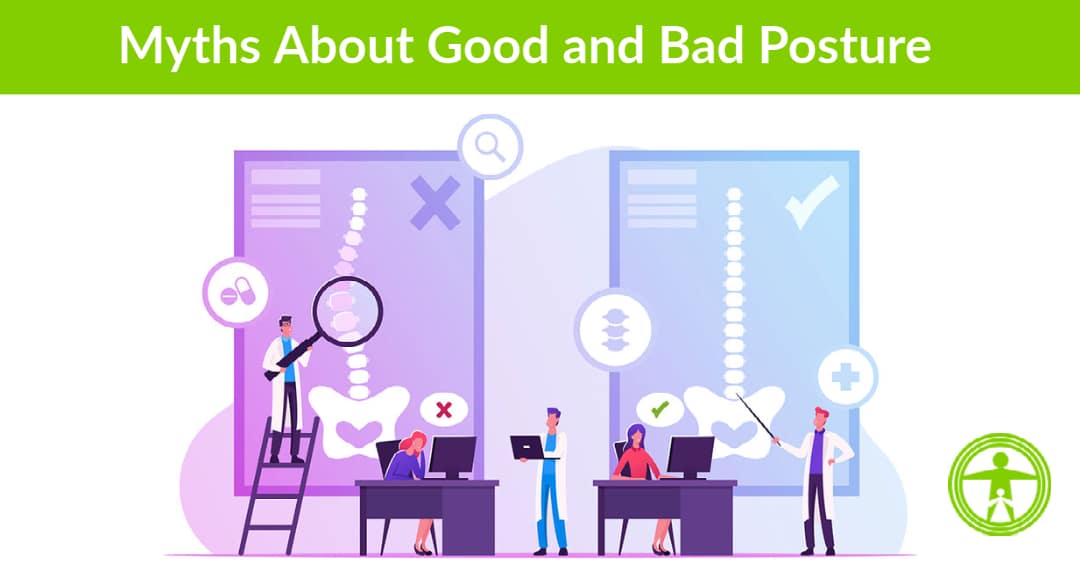
In this article, my goal is to bring up common myths and misconceptions surrounding posture and what we should do about it.

What is Good and Bad Posture?

Posture is defined as the way we hold ourselves in different positions, both dynamic and static, such as sitting, standing, and walking.

We often associate someone who holds good posture with an individual that exudes confidence or discipline; this is because it really is a sign of good health.

While we are all built differently, there are a few common traits that you can recognize as good or “normal” posture.

These include:

  • The spine creates an “S” curve from head to butt designed to absorb impact with daily activities
  • Extension based curves (backwards “c”) are in the neck and low back
  • A flexion based curve is in the mid-back
  • The skull is balanced directly over the shoulders- rather than jutting forward
  • Both shoulders are in line with the spine- not slouched forward
  • Chin is neutral so that your line of vision is naturally forward
  • No rotation in the spine at rest
  • Hips, knees, and ankles are all relatively aligned from top to bottom
  • There's more… truth is, there are a lot of moving parts to when it comes to posture!

Poor posture is much more than an aesthetic issue.

It also can put a major damper on your body’s normal function.

The biggest problem it can contribute to is the overall alignment of the spine.

Spine misalignment is a common issue that is overlooked that can manifest as a whole slew of symptoms, including pain, poor concentration or mood, injury, and so much more.

Poor spine alignment blocks normal nerve energy and every bodily function it helps regulate (hint: that’s just about everything).

In addition to spine misalignment, poor posture can also lead to chronic inflammation, pain, respiratory and circulatory issues.

These can cause or aggravate other pre-existing health conditions as well.

Correcting your posture, especially as we age, isn’t just about “sitting up straight” anymore.

It will most likely take the guidance of a trained professional to restore your posture and improve your health.

what is good and bad posture

Myth: Good Posture Requires Sitting or Standing Straight

This advice doesn't teach anyone proper body alignment much less help avoid injury.

If it did, we would all be perfectly symmetrical – but we’ve had it beaten into us that good posture requires being erect, we often consider it a position we should emulate.

When we think “straight” means “proper alignment,” we place ourselves in a fixed position.

Truth be told, optimal posture is dynamic – not fixed – to give us the ability to move in any direction without needing to adjust our bodies.

So when you ask your body to complete a task such as stand up straight, or pull the shoulders back, without telling it how to accomplish this, the body will use the muscles you use the most.

This reliance on strong muscles results in the prolonged use of muscles that are already strong, while weaker groups are neglected.

Over time, stronger muscles get stronger and tighter, while weaker muscles atrophy.

Instead of thinking of posture as a position, think of it as the balance of strength and mobility across the muscles and joints of your body.

Rather than trying to achieve good posture by sitting or standing up straight, start training the muscles, ligaments and tendons of your body to support overall healthy posture.

How Chiropractic Can Help

Chiropractic BioPhysics (CBP) is a specialized form of chiropractic care designed to address health issues related to spine misalignment at their root.

When the root cause of these issues is addressed with proper spinal alignment, the body can start healing and function without inhibition. Working with a CBP certified chiropractor can vastly improve quality of life.

Talk to a CBP chiropractor for tips on posture and a gentle, holistic treatment approach. Techniques for treatment might include manipulation, joint mobilization, soft tissue massage, an exercise program, pain modalities, and lots of education.

Poor posture and its effect on spinal alignment are often overlooked as one of the key issues for optimal health. Having a healthy, aligned nervous system can help every other system in the body work better and with more ease. Find a CBP practitioner to help you today.

Myth: Good Posture Means I Never Hunch or Slouch

If you never flexed your body into a hunched position, you’d never get to enjoy your body’s full range of motion.

Hopefully, the message you're picking up hear is that our body is dynamic and meant to go through “all the ranges of motion” that it possibly can.

This is why practicing flexibility and mobility are so important.

Through flexibility and mobility training, you can improve your posture or ability to get into various postures.

But when we don't improve our flexibility or mobility, our body gets stuck into a particular posture, which then causes damage to our tissues over time.

So don’t limit your body's ability to twist, move, and curl in certain ways; slouching actually employs this full range of motion into a flexed position, allowing you to move fluidly throughout the day while remaining comfortable in your body’s natural twists and turns.

All that said, if you find that you cannot move into a position opposite of that slouch, you've got issues than need to be addressed!

does good posture equal never slouching

Myth: Good Posture Will Look the Same for Everyone

There is No One Size fits all when it comes to Posture.

Modern posture beliefs is that it’s usually about being stuck in ONE position that can ultimately cause problems.

Irrational fears of “bad” posture lead many people to lock their body in their misconstrued ideal of what “good” posture looks like, often avoiding movement entirely.

Posture should really be considered “efficient” or “inefficient;” not necessarily “good” or “bad.”

In other words, we should ask if the posture we have is efficient enough to allow us to shift spontaneously and exert our full range of motion in any direction, or inefficient and contributing to a loss of range of motion, mobility or contributing to our dysfunctions.

How Chiropractic Can Help

Chiropractic BioPhysics (CBP) is a specialized form of chiropractic care designed to address health issues related to spine misalignment at their root.

When the root cause of these issues is addressed with proper spinal alignment, the body can start healing and function without inhibition. Working with a CBP certified chiropractor can vastly improve quality of life.

Talk to a CBP chiropractor for tips on posture and a gentle, holistic treatment approach. Techniques for treatment might include manipulation, joint mobilization, soft tissue massage, an exercise program, pain modalities, and lots of education.

Poor posture and its effect on spinal alignment are often overlooked as one of the key issues for optimal health. Having a healthy, aligned nervous system can help every other system in the body work better and with more ease. Find a CBP practitioner to help you today.

Myths About Good and Bad Posture2026-04-26T11:13:29-05:00

Can Chiropractic Help Arthritis in the Neck?

Understanding Arthritis of the Neck

Arthritis of the neck, also known as Cervical spondylosis is a form of osteoarthritis or abnormal wear and tear of the joints that make up your neck.

In other words, neck arthritis is a condition involving changes to the bones, discs, and joints of the neck.

These changes are caused by the abnormal wear-and-tear experienced throughout our life.

Certainly, the more time you spend on this planet (the older you are), the more wear and tear you accumulate. So while age is a common risk factor associated with neck arthritis, it's not necessarily normal.

The truth is – at any age, depending on how an individual is treating their body – the degeneration of discs and other cartilage, spurs or abnormal growths called osteophytes can form on the bones in the neck.

These abnormal growths can cause narrowing of spinal column or in the openings where spinal nerves exit, which then causes a conditions known as cervical spinal stenosis.

Cervical spondylosis (arthritis of the neck) most often causes neck pain and stiffness.

Although cervical spondylosis is rarely progressive, corrective chiropractic adjustments and exercises should be the first step towards resolving symptoms.

Of course, in certain extreme cases, cervical spinal surgery would be indicated.

arthritis of the spine

What are Symptoms of Arthritis in the Neck

Neck arthritis develops very slowly over a period of many years.

This means that in the early stages of arthritis in the neck, symptoms are very mild and infrequent.

While it's great than an individual doesn't have symptoms of  neck pain, stiffness or nerve irritation, it also allows that individual to continue doing the activities that are contributing to the problem in the first place.

This is why we do not like to focus on symptoms, but base treatment recommendations on clinical examination, digital xrays and bodily function (movement and mobility).

The symptoms of spondylosis occur in several stages depending on the severity of its progression.

In early stages, symptoms include:

  • Neck stiffness that improves with activity
  • Decreased mobility of the neck
  • Intermittent sharp pain

In the more advanced stages of cervical spondylosis symptoms include:

  • Significant decrease in neck range of motion
  • Swelling around the joints of the neck
  • Pain that is worse in the morning
  • Pinched nerves (numbness/tingling in arms hands)
  • “Jarred” or “Guarded” sensations when moving neck
symptoms of neck arthritis

What Causes Arthritis of the Neck?

A common misconception about arthritis of the neck is that it is a normal age-related process.

This would mean that most people would exhibit the same level of cervical spondylosis at roughly the same age.

While neck arthritis does progress with time, it's not necessarily a normal process of aging.

There are other factors influencing the progression of cervical spondylosis.

Wolff’s Law states that bone will adapt to the load or stress placed upon it. This means that increased loading of bone tissue will promote increased density. This is why many individuals with osteopenia or osteoporosis utilize resistance training to stimulate bone growth.

However, when the stress or load on the bone is abnormally loaded, Wolff’s Law can contribute to the progression of cervical spondylosis.

Consider the following illustration:

A long thin board is placed on top of two blocks, one at either end. This makes a long bridge like span. If an increasing amount of bricks were to be stacked in the center of the board, it would naturally begin to sag. Common sense would suggest that a support will be needed in the center of the board for it to hold more and more bricks. This “buttressing” would make the board more rigid.

In the spine, a similar process plays out with cervical spondylosis.

As abnormal pressure builds up on the segments of the cervical spine, the increased demand requires more support. The wear and tear associated with increased stress around the joints of the neck will stimulate bone cells to produce a hardened tissue to help support the abnormal load.

This makes the spine more rigid, and cervical spondylosis begins to advance.

How does this process start in the average person?

Typically there is a physical trauma that starts the process. This may be a whiplash injury, car accidents, poor posture, or a jarring force to the neck and spine.

This jarring force will cause the alignment of the spine to be compromised.

Without proper alignment, the spine cannot move properly, and abnormal stress begins to build.

Loss of the cervical curve and spine misalignment are common underlying causes of cervical spondylosis.

This occurs when the alignment of the upper spine becomes compromised shifting the weight of the head away from its center of gravity.

As the weight of the head (weighs down on the neck, cervical spondylosis will slowly begin to develop.

How Can Chiropractic Help with Neck Arthritis?

Understanding how arthritis of the neck (cervical spondylosis) progresses is important for knowing what options you have to manage it.

When it comes to answering the question of whether or not chiropractic can help with arthritis, the answer is yes (at least according to the research).

A 2007 British Medical Journal paper titled Cervical Spondylosis and Neck Pain discussed several randomized controlled trials and systemic reviews demonstrating that corrective exercise, manual therapy and spinal manipulation appear to be “equally effective” as other forms of treatment, but without side effects.

In addition, if arthritis of the neck develops because of a loss of abnormal curvature in the spine (which it does), then restoring that abnormal curvature would be a possible treatment and even prevention strategy.

Corrective Chiropractic is the only non-surgical approach to correcting the curvature and biomechanics of the spine.

If you're looking for research that validates a corrective chiropractic approach to improving spine biomechanics, then visit this page for over 261 scientific references (at the time of writing this article) .

Sure, many patients try over the counter pain relievers such as NSAIDs, heat or ice packs, and/or topical pain creams. While these may provide temporary relief, a more long-lasting solution must target the underlying cause of cervical spondylosis – the structural alignment and mechanics of the spine.

Austin chiropractor Dr. Daniel has a unique focus within the chiropractic profession that focuses on detection and correction of cervical curvature and alignment.

Family Health Chiropractic focuses on the alignment, mechanics, and soft tissue integrity of the upper spine.

When the alignment of the cervical spine is restored and the weight of the head is more balanced over the body’s center of gravity, the additional stress placed on the neck is reduced.

can chiropractic help with neck arthritis
Can Chiropractic Help Arthritis in the Neck?2026-04-26T11:13:29-05:00
Go to Top