Blog

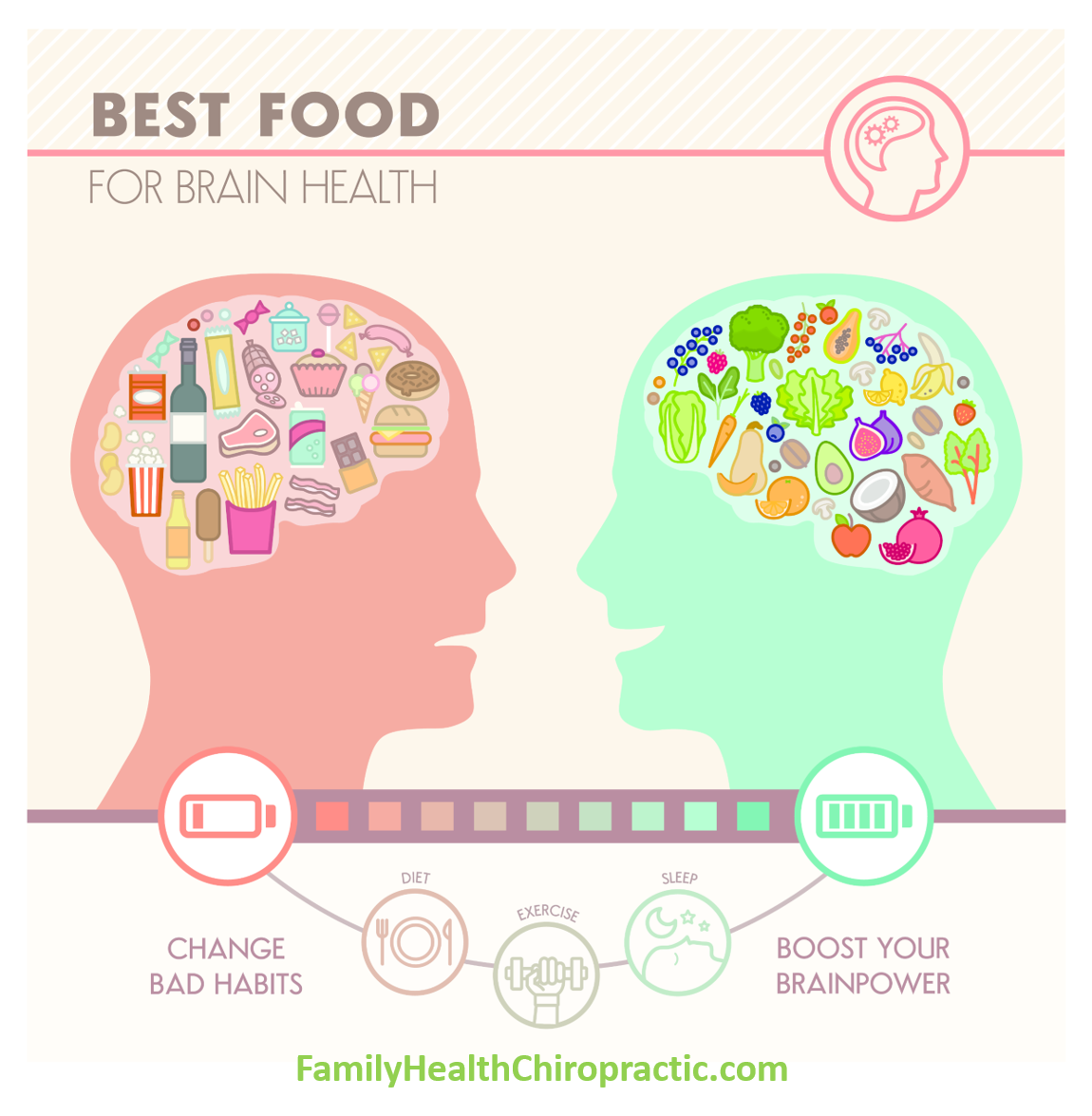
The Best and Worst Foods for Your Brain

Many of you who are interested in optimizing your health likely spend a large part of your thinking on diet and exercise. However, there is something more important than diet and exercise for optimizing your health that is almost always largely neglected. It is the most important system in the body and literally controls every aspect of your life. It’s what allows your body to digest the healthy food and signals the body to produce hormones and create cells to build muscle from your exercise.

It’s your brain and nervous system.

I've always been interested in neurology, the brain and the power of our mind. Of course the idea of developing the mind isn’t new to science or medicine. Working the mind and developing the brain has always been a cornerstone in anyone interested in excelling personally. In this article I discuss foods and activities that will boost your brain for maximum performance.

Foods Can and Do Effect Your Brain

Your brain is the most protected organ in the body, and that includes being shielded from your diet. Your blood is already highly regulated, but add to that another layer of protection known as the blood-brain barrier and your brain is like its own little fortress. This barrier strictly controls which of the blood’s contents can access the brain's distinct environment.

Scientists now know that several conditions, most notably Type 2 Diabetes, are associated with cognitive decline. Inflammatory cytokines (inflammatory cell messengers) can cross the blood-brain barrier or induce their own production within the brain. Insulin receptors, also found in the brain, can be altered by metabolic syndromes as well. Both of these outcomes impair cognitive function and cause cognitive decline.

So if you want to be less prone to disease and more well-rounded, you have even more reason now to eat for your brain. Let’s begin by discussing foods that you should avoid

Brain Foods to Avoid

Syrups. This is the serial killer (or soda killer if you will) of this category specifically because of high fructose corn syrup (HFCS). It's so ubiquitous in prepackaged foods that roughly 10 to 12 percent of people's daily calories come from this added fructose. Getting too much of this syrup in your diet interferes with telling your brain that you’re full and should stop eating—a genius way to get people to feel the need to buy a super-sized version for a dollar extra. The food industry’s been pumping more and more HFCS into foods since the 1970s because it’s cheap, mixes easily into beverages, and enhances flavor and shelf life. The result: We eat 1,000 times more HFCS now than when Nixon was president—on average 63 pounds a year!

The bottom line: Getting the obvious, and not so obvious, sweeteners out of your diet will save you hundreds of calories a day—and remove a substance that could be flipping metabolic switches without your permission.

Say no to soda and other sweetened drinks. The calories alone are enough reason to stop sipping liquid candy: A single 18-ounce soda, sweet iced tea, or fruit drink can pack 200 or more calories — courtesy of the 15 teaspoons of full sugar like sweetener, usually HFCS, these beverages contain. Also, If you’re breaking a serious soda habit, DO NOT transition to an artificially-sweetened, 0-calorie version. A Harvard Nurse study found that people who drank 1 diet soda per day had an increase of 48% Leukemia, Non-Hodgkins disease and Multiple Myeloma cancers. Just stick to water, unsweetened iced tea, tea or black coffee.

Read labels to find hidden HFCS. Check the ingredients lists of all the processed foods you buy for HFCS (as well as other sweeteners you don’t need, like rice syrup). You’ll find it in many breads, sweetened yogurts, and condiments. Only buy the brands without them, and certainly without them in the first five ingredients.

Enriched, bleached, or refined flour. All three words mean this flour has been stripped of its nutrients. Yes, even “enriched” just means some of the stripped nutrients have been put back. Instead, look for 100% whole grains. Why? These empty grains can pass through your intestines and into your blood at lightening speeds spiking your blood sugar and causing other unnecessary stress to your body — increasing blood pressure, scraping at your intestines and bowels, accumulating around your waist, need I say more.

For younger arteries, better bowel function, clearer skin, lower cancer and diabetes risk, and even healthier gums, switch out your white rolls for 100% whole grains. Exactly how eating whole grains may affect gum health isn't totally clear but we know it hurts them. And research on people with diabetes has found that lower blood sugar levels may mean lower gum disease risk, too.

Saturated fat. Especially the kind found in “commercially” raised meat, poultry skin, full-fat dairy foods, and palm and coconut. Please make note that saturated fats found in grass-fed, hormone free beef, poultry and dairy foods is not the same as commercially raised foods. Saturated fat that comes from unhealthy animals also increases small intestine cancer risk because of the bile acids your body uses to digest the fat. These acids can cause oxidative stress and subsequent cancer-causing damage to the DNA in the small intestine. And cancer of the small intestine may be extra hazardous because it could increase the risk of other forms of cancer, including colon and rectal cancers. So FYI, that juicy steak you’re planning on eating for dinner is probably chock full of this nasty fat. I’m not saying that you should completely eliminate red meat from your diet, I’m telling you to consume it in moderation and when you do eat it- make sure that it came from a healthy animal! Eating four ounces of red meat that also contains antibiotics and hormones on your typical day (that’s an average burger) ups your risk of fatal heart disease or cancer by almost 30%, versus people who eat only 4 ounces a week. So cutting that burger to once a week may mean a lot to you if you care about having enough blood to make your brain function, or avoid wrinkles, or erectile dysfunction. And processed meats—hot dogs, sausage, bologna, bacon—aren’t noticeably better for you than that quarter-pounder. So try cutting back on beef without giving up that meaty satisfaction.

What to do:

Do a swap. Instead of beef burgers, how about burgers made from skinless ground turkey or chicken or or Portobello mushrooms? The same study found that people who ate the most chicken and fish were 8% less likely to die than those who ate the least white “meat.” Just make sure your white-meat burgers are made from skinless breast meat. There’s a big difference. For instance, if the label just says “ground turkey,” it probably includes dark meat and skin. That jumps your saturated fat intake from 1 to 3% to as high as 17% — more than some lean ground beef! For a sophisticated change of pace, how about salmon burgers or broiled crab cakes? Love beans? Try recipes for lentil-almond burgers (on RealAge.com) or chickpea patties (great with a Middle Eastern yogurt sauce). Move to the meaty mushroom. Big, thick, and juicy, Portobello mushrooms rated as satisfying and tasty as beef in studies and make your arteries younger. Use in place of beef in stroganoff or throw ‘em on the barbecue for a “make yourself younger with great tasting ” burger. Remember there is no dividing line between great for you and great taste—yes it does take a few hours to learn how to make it taste great for you—but that few hours will be paid off in years of better sex, fewer wrinkles, and less disability

Cook it smarter. High-heat cooking methods, such as grilling, broiling, or pan frying, are what form cancerous HAAs (Heterocyclic aromatic amines). You can significantly reduce HAAs by marinating meat for an hour (heck use olive oil and balsalmic vinegar for even 15 minutes and reduce by 90%) before cooking, cooking it over medium heat and by using rosemary extract (available from several online companies, and shown to reduce the formation of HAAs by about 70% ) before cooking.

Trans fats, the ugly stuff still pumped into many snack foods and commercial desserts. Also known as hydrogenated oils, trans fats are artificially produced in the laboratory by adding extra hydrogen atoms to unsaturated vegetable oils. They have long been a favorite of the food industry for their increased shelf life over conventional oils. Unlike natural fats, however, trans fats have no nutritional value and drastically increase the risk of cardiovascular disease and death. Like saturated fats, they increase the body's levels of LDL (“bad”) cholesterol, but unlike those fats they also lower its levels of HDL (“good”) cholesterol.

New research shows that trans fat isn't just bad for your heart. It may increase your risk of colon cancer, too. In one study, people who ate the most trans fat — an average of 6.5 grams per day — were 86 percent more likely to have potentially precancerous colon polyps compared with those who consumed the least trans fat — about 3.6 grams or less per day. This is due to the fact that trans fats can mess with the colon's normal, healthy balance of bile and fatty acids and damage the mucus that protects this organ.

For heart health, the American Heart Association recommends that no more than 1 percent of your daily calories come from trans fat. That means if you eat 2,000 calories a day, no more than 2 grams should come from trans fat. Since trans fat is found mostly in packaged sweets, frozen dishes, and fried foods, steering clear of them will help. Also, one nasty trick that food manufacturers are allowed to do is advertise their products as having 0 grams of trans fats as long as their food contains .5 grams per serving! Yes… it’s entirely legal for them to do this.

So read labels carefully and cut down on anything that lists hydrogenated or partially hydrogenated oils among the ingredients, too — “hydrogenated” is a red flag for trans fat.

Summary of Foods to Avoid:

  1. Simple sugars and syrups. This includes brown sugar, dextrose, corn sweetener, fructose (as in high-fructose corn syrup), glucose, corn syrup, honey, invert sugar, maltose, lactose, malt syrup, molasses, evaporated cane sugar, raw sugar, and sucrose.
  2. Saturated fat. The kind found in meat, poultry skin, full-fat dairy foods, and palm and coconut oils that considerably increases your lousy LDL cholesterol, small intestine and colon cancer risk, as well as your belt size.
  3. Trans fats, the ugly stuff still pumped into many snack foods and commercial desserts. Also known as hydrogenated oils, trans fats have no nutritional value and drastically increase LDL (lousy) cholesterol, the risk of cardiovascular disease, colon cancer, and death.
  4. Enriched, bleached, or refined flour. All three words mean this flour's been stripped of its nutrients. These empty carbs can increase your risk of diabetes, hypertension, obesity, gum disease, arterial, intestinal, and bowel problems. Choose 100% whole grains instead.

Now that we have discussed what to avoid, what the heck are you supposed to eat?

Top Brain Foods to Include

Let’s start with the Mediterranean diet. People in their 70s who were the most active and adhered the best to a Mediterranean-style diet (mostly fruit, veggies, legumes, good fats, and fish) were more than 60% less likely to develop Alzheimer's than people who were the least active and Mediterranean-minded.

Spinach. Seriously, filling up on this green can keep your brain so sharp you’re the one who wins the million-dollar account, solves the global warming problem, and keeps doing the Saturday crossword puzzle in pen. Eating three or more servings of spinach and other leafy greens (such as kale and collard greens) slow mental decline due to aging by as much as 40 percent. Spelled out another way: Leafy greens can make your brain function more like the brain of someone who is 5 years younger! What makes these veggies so super for saving your smarts? Probably brain-friendly nutrients including carotenoids, and flavonoids. Keep extra power in your spinach by not letting it linger in the fridge. If you store it longer than four days after you buy it, these carotenoids, flavenoids and folate levels plummet, turning it into a wimpier green. Also, keep it as cold as you can, and it will hold onto carotenoids better. Can’t plan on using it that quickly? Buy frozen. It’s packaged so quickly after harvesting that the nutrients stay locked in.

A Low-carb diet. There’s a new bonus to good blood sugar control: better recall. It turns out that lack of insulin effect — a problem that allows blood sugar to get out of control — not only is bad for your organs and arteries, but it might keep you from remembering the name of your prom date, what month it is, or who the latest American Idol winner is. One piece of evidence: Men who had low insulin levels at age 50 had a greater risk of Alzheimer’s and other types of dementia later in life. It’s not clear yet how impaired insulin response bumps up Alzheimer’s risk. But it is clear that the less insulin in the brain, the more it develops the hallmarks of that disease. In fact, researchers at Brown University refer to this low brain insulin problem (and the brain changes it’s associated with) as “type 3 diabetes.” While researchers haven’t yet shown how to prevent type 3 diabetes, it’s smart to do what you can to control your blood sugar. Brand new research found that while a low glycemic index (GI) diet is good at improving blood sugar control, a low-carb diet (less than 20 g of carbs per day) is even better. Ninety-five percent of diabetics on the low-carb diet were able to reduce or eliminate their meds, while 62% of those on the low-GI diet did. Both lost weight, which is also key: Obesity is linked to Alzheimer’s risk, too.

Delicious DHA. It’s the key omega-3 fat in fish oil and also found abundantly in grass fed beef and free ranged hormone free poultry. People who took 900 mg of it made as few mistakes on a memory test as someone 7 years younger would have. Get 1000 – 3000 mg a day from supplements. Not only does it protect your brain but your arteries benefit as well.

Other Omega-3 foods. Walnuts, avocados, flaxseeds, olive oil, organic eggs are all good sources of Omega-3s, but by far the supreme source is fish. Try to eat 4 ounces of fish a week. Not a fish eater but wish you were? Start with flounder or salmon — and let a restaurant prepare it. Tastes and textures vary greatly, depending on whether fish is grilled, baked, or served sushi style, so you may find some preparations you like.

A tip for those who frequently eat fish: Choosing the right kind can limit your intake of mercury, a harmful toxin that certain species of fish (long-lived tuna, for one) easily accumulate from the environment. Fortunately, some of the fish that are highest in omega-3s are lowest in mercury, including salmon, pollock, pickled herring, and cod — and of this group, salmon has the most omega-3 fatty acids and the least mercury. Also good to know: Canned light tuna is generally lower in mercury than fresh tuna.

Walnuts. Your heart will also love them. They help lower your lousy LDL cholesterol — that sticky blood-fat that clogs your arteries and boosts your risk of a heart attack. They are also particularly rich in alpha-linolenic acid (ALA), an omega-3 fatty acid with cardioprotective properties (lowers blood pressure). To top it off, they are loaded with other good-for you nutrients, too, including vitamin E, folate, and fiber. Flaxseed. May help bring blood pressure down a bit as well. Flaxseeds are abundant in alpha-linolenic acid (ALA), an omega-3 fat. And in a study, ALA-rich foods lowered blood pressure slightly — probably because this omega-3 fatty acid helps relax blood vessels, allowing blood to move more freely through arteries and to the brain. Even small drops in blood pressure can guard you against stroke and cardiovascular disease.

Coffee. People who drank at least 3 cups a day were 65% less likely to develop Alzheimer's or dementia than those who were less caffeinated.

Tea. The amino acid called theanine in this brew — doesn’t matter if it’s green, black or oolong — is believed to help activate a part of the brain’s circuitry that’s tied to attention span.

Peppermints. The strong scent helps people work more thoroughly and accurately.

Turmeric. Indians and mice who consume a curry dish or its equivalent a day have 75% LESS Alzheimer’s than North Americans who don’t.

Summary of Foods to ADD:

  1. A low-carb Mediterranean diet. The carotenoids and flavonoids in fruit, veggies, legumes, good fats, and fish protect against Alzheimer's. Lack of insulin effect — a problem that allows blood sugar to get out of control — can impair your memory and promote Alzheimer’s so shoot for less than 20 g of carbs per day.
  2. DHA and Omega-3 foods. Take 600 mg of DHA and eat walnuts, avocados, flaxseeds, soybeans, canola or olive oil, and fortified products. Also, eat 4 ounces of salmon, pollock, pickled herring, and cod a week.
  3. People who drank at least 3 cups a day were 65% less likely to develop Alzheimer's or dementia than those who were less caffeinated.
  4. The amino acid called theanine in this brew — doesn’t matter if it’s green, black or oolong — is believed to help activate a part of the brain’s circuitry that’s tied to attention span.
  5. Indians and mice who consume a curry dish or its equivalent a day have 75% LESS Alzheimer’s than North Americans who don’t.

A few other ingredients that have been shown to be beneficial to brain: Omega – 3 fats, Salmon, trout, Walnuts, Flax seeds, Chia seeds/grain, Caffeine In tea, coffee, Tumeric, Flavonoids and polyphenols, Blueberries, Brown rice, Almost any fruit or vegetable, Spinach, Tea, Tomatoes, Onions, Apples (especially skin), Insoluble fiber, Barley, Quinoa, Chia
The Best and Worst Foods for Your Brain2026-04-26T11:13:45-05:00

10 Posture Myths Everyone Should Know

With our technology-driven world and sedentary lifestyles, it’s should be obvious that we are at a time in our life where it is more important than ever to reclaim the design and function of our bodies. All health and healing comes from your brain. Your brain signals to your body what your organs and organ systems need, when they need it and how often. This is not a belief. It’s a scientific and medical fact that the brain is the master controller of your body. How well your brain works is highly dependent on the health of your spine including the ability to move and alignment (posture).

Your posture tells your story. And it’s probably one about stress, pain, and hours and hours of sitting in awkward and nerve wrecking positions.

But by improving your posture, you can rewrite that story and give it a happy ending.

What Does Posture Influence?

Posture influences the brain. The brain is what influences health. The human body is meant to move. Just 100 years ago the majority of us plowed fields or spent all day physically working in a factory. Now we sit at desks, in cars, and on couches, staring at screens from sunup to sundown. The worst part is that the more you sit, the more you’ll want to sit because of the bad habits you’ve created for yourself.

Bad posture and excessive sitting compress the spine (up to 300 pounds compared to standing) and weaken crucial muscles so that even when you try to stand up and move around, you find yourself fatigued or in pain because you’ve lost the necessary mobility and strength. Your brain is wired to get better at what you practice, and most of us are now expert “sitters”.

We also practice unhealthy movements that allow us to complete our daily tasks without addressing the underlying problem of posture. If, for example, you’re injured, pregnant, or just stiff and weak from too much sitting, your body will compensate for imbalances in ways that affect your posture. Often it will recruit the wrong muscles to do a certain job and end up causing pain and injury. The brain is malleable enough to allow you to pick up an instrument or speak another language, so I’m telling you now that you can certainly learn how to find your best posture and make it your new way of being. You didn’t just wake up one day with poor posture; everyday life has made it that way. And you can use those same moments in life to create healthy changes. You just have to start and keep going!

How Does Posture Affect You?

“The more mechanically distorted a person is, the less energy is available for thinking, metabolism and healing.” -Roger Sperry, PhD and Nobel Prize winner fir brain research

Healthy, aligned posture lets you sit, stand, and move around without pain, but it also does so much more when we consider its impact on brain function. In fact, every single physiological response can be influenced by posture. It improves biological functions throughout your body by increasing circulation, keeping undue pressure off your internal organs, and giving your lungs the room they need to expand allowing optimal oxygen for your tissues. When your body feels better, so does your mind, which is why good posture also promotes confidence and mental clarity. Poor posture, on the other hand, puts wear and tear on your muscles and joints, leading to unhealthy movement patterns and pain. The resulting fatigue and discomfort affect you mentally and emotionally as well.


10 Posture Myths Everyone Should Know

You may have been told as a child to stop slouching, stand up straight, or pull your shoulders back. I even have probably instructed you to do so, but while these instructions are well intended, they won’t actually improve your posture.

Good posture is dynamic, not static, and supports movement instead of inhibiting it. So if you want to improve posture, think more about movement than standing still. Here are a few sneaky myths about posture that may be keeping you in pain.

Myth #1 It’s hard to achieve and maintain good posture.

Because it’s more mechanically efficient, good posture actually takes less effort to maintain and is therefore less taxing on your brain than bad posture. Yes, it’s a challenge to change patterns you’ve been stuck in for most of your life, but you can change any habit with enough awareness and dedication. Create measurable and realistic goals to slowly overcome those habits and replace them with better ones.

Myth #2 Tucking your pelvis protects your back.

The natural curves of a neutral spine act like a spring, absorbing force and bearing weight. Tucking your pelvis reverses your lower back’s curve, which makes your spine like a bent spring, unable to absorb any force efficiently. This is exactly why I don’t recommend full sit-ups! Your body is fully capable of doing these movements, but it doesn't mean you should train it to do so. Without sufficient help from the spine, your body starts using unfit backup muscles to complete tasks, and you end up injuring your knees trying to pick up a heavy object or straining your neck while turning your head.

Myth #3 Strong abs equal better posture.

Developing core strength has been trendy for as long as I’ve been studying health, but many people don’t fully understand the term “core.” They think that if they have strong abs, they have a strong core. Your core does include your abdominal muscles, but it also includes your pelvic floor, diaphragm, certain back muscles, the psoas muscle, and more. If your abs are strong but your back muscles are weak, your posture will be inefficient and painful.

Myth #4 Good posture involves pushing your shoulders down and back.

One of the most common overcorrections people make when trying to fix their posture is to throw their shoulders back and hold them there. This actually destabilizes your shoulder joints and tenses your neck. Plus, you’ll soon get tired and let your shoulders slump again. Once you change your postural habits, your shoulders will sit in the right place without effort.

Myth #5 Standing up straight shows good posture.

When you force yourself to stand up straight without awareness of your natural posture, you actually create more tension in your body, not less. Treating your spine like a pillar will only limit your mobility and make you move like a robot. We have curves in our spine to absorb force. Optimizing the alignment and fluidity of movement while maintaining those curves is essential for back health and efficient posture.


Myth #6 Bad posture is genetic and unchangeable.

If you believe you’re stuck where you are, then you will be. Every time a patient tells me their problem is genetic, I get a bad case of Forest Whitaker eye! Look, if your spine problem was genetic, you'd most likely would not be alive as an adult because most “genetic spine” problems result in death 5 years or younger. In fact, it's estimated that less than 2% of health problems today are genetic. If you believe you can work to make a change, then you can. Your brain is adaptable enough to learn new movements and habits at any age; so use it!

Myth #7 Slouching isn’t that bad for you.

Sometimes supermodels get paid to slouch in photo spreads, but in everyday life, the effects of bad posture can be serious. The headaches and back pain that poor posture causes can be debilitating. In fact, bad posture can negatively affect almost everything, from digestion and circulation to mental health.

Myth #8 Working in front of a computer is physically easy.

Sure, you don’t have to swing a hammer or move heavy boxes, but if you hunch over a desk all day, your posture is probably in terrible shape. And as you now know, when your posture is unhealthy, your spine is unhealthy and that means it's harder for your body to be healthy. Luckily, certain strategies like using a standing desk and taking frequent breaks can let you keep both your desk job and your natural posture.

Myth #9 Posture has to be held. If you have to hold it, it’s not sustainable.

Your body is designed for movement, and stability comes from balanced, dynamic movement patterns, not from locking yourself into so-called good posture. Being stuck in one position creates tension and unbalanced movement patterns. Efficient posture, on the other hand, lets you move in any direction freely and spontaneously. Motion is lotion for your joints – so keep'em moving!

Myth #10 Good posture means never slouching.

Slouching and flexing are movements you have available to you. You don’t want to stay in those positions all the time, but it’s good to move through them— it keeps your joints lubricated and mobile. Notice how you’re sitting as you read this. Now round forward as deeply as you can, then press through your feet and lengthen your spine. Do that a few times and notice how your resting posture improves.

Share this information with people you love. And by that I mean you should literally share this with everyone, because what does it all matter if we don't have love!

10 Posture Myths Everyone Should Know2026-04-26T11:13:46-05:00

What will NOT be heard during the U.S. Presidential Debates!

Health and Politics Do Not Mix Well

There's no question that Health, Healthcare Spending and Health Outcomes is an important issue among political discussions and debates at this critical moment in election history. Hilary, Trump and members of all political parties argue their points and lay out their plans they claim can revolutionize one of the most important topics in any culture: health. Health is your greatest asset; which means you should be focusing on improving your health every single day. How much health costs, access to care, results, and satisfaction are all major themes at the forefront of the healthcare debate. Unfortunately, when it comes to health and politics, the health we actually end up getting comes down to political clout.

Having only existed for less than 125 years, by all intents and purposes, Chiropractic is one of the newest and most proven forms of healing today. However, the majority still believe Chiropractic is only beneficial for the relief of neck or back pain. And because of this, chiropractic is rarely represented in a bright light for the value it can bring to an entire society. The basis for some of the negative publicity is diverse, but a specific event uncovered one of the most revealing reasons for why Chiropractic has not gained the most positive reputation over the last 40 years.

In the late 1980’s, the American Medical Association (AMA) was proven guilty by the supreme court for trying to eliminate and destroy the Chiropractic profession. Decades of false accusations were made by Medical Doctors and the AMA to destroy the Chiropractic profession. An entire committee was created by the AMA in an attempt to spread lies and hurt the reputation of Chiropractors and the profession. Supreme Court Judge Susan Getzendanner described the conspiracy as a ”systematic, long-term wrongdoing and the long-term intent to destroy a licensed profession’’. To this day, many Americans still believe that Chiropractors are quacks, or not real doctors, because of the initiatives put forth by the AMA to destroy the profession.

Watch this video for a short example of how medicine was taken over by political and monetary clout…

Chiropractic care saves you money and takes it away from Big Pharma

Researchers have been examining the cost-effectiveness of chiropractic care versus conventional medicine and what they're finding demonstrates how chiropractic was able to survive the AMA's attempt at destroying the profession. A 2012 systemic review found spinal manipulation therapy to be more cost-effective for neck and low back pain when compared with general practitioner care, physiotherapy or exercise. Fortunately, the results achieved by chiropractic patients worldwide on a weekly basis have helped proved the true value and efficacy of chiropractic care.

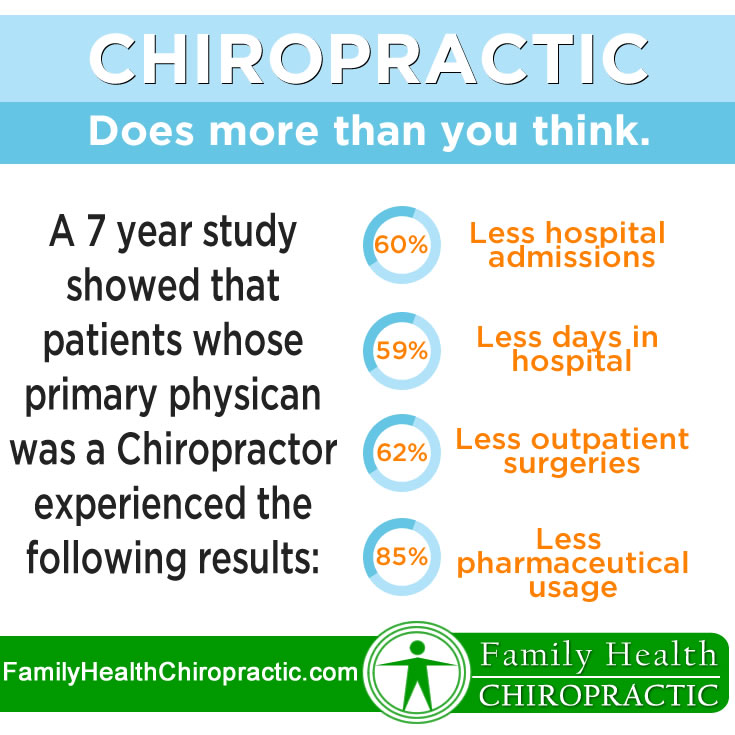
A study published in 2007 spent more than 7 years studying a group of over 800 people in order to determine how effective chiropractic could be.

The study divided the subjects into two groups. One group used their medical doctor as their primary care provider (PCP) while the other group utilized a Chiropractor as their PCP. The results revealed that those who used the Chiropractor as their PCP experienced 60.2% less hospital admissions, spent 59.0% fewer days in hospitals, endured 62.0% fewer outpatient surgeries and procedures, and spent 85% less in pharmaceutical costs when compared to the group using a medical doctor as their PCP.

These numbers are significant and occur each year for patients who utilize Chiropractic on a regular basis around the world. Chiropractic can help an individual or family save money while improving their health and wellness without the use of drugs or surgery.

Chiropractic is A Smart, Safe & Effective Solution

This data is compelling and makes the argument that utilizing a Chiropractor as a primary health care provider accompanies significantly better health outcomes. Current research proves that implementing Chiropractic as a healthcare and lifestyle model not only helps the individual, but has the potential to change the entire landscape of society. Eighteen cents out of every dollar spent in America goes towards healthcare expenses. Over eighty percent of that money is spent on non-emergency and non-genetic chronic disease. Any strategy that provides natural solutions to this healthcare epidemic initiates revolutionary change.

Chiropractic is a strategy that more people in every society deserve to have more awareness of its true value and benefits. Education and awareness is the key. Awareness in the true value of Chiropractic is necessary for more people to achieve the great benefits available to them through regular Chiropractic care over a lifetime.

What will NOT be heard during the U.S. Presidential Debates!2026-04-26T11:13:46-05:00

Treating Symptoms Has Becomes a Leading Cause of Death

Treating Only the Pain or Symptom is Killing You

I don't believe any one of you wants to be in pain. I also don't believe any one of you wants a life of disease or dysfunction. But simply focusing on your pain is only going to lead you to destruction. I get it. Pain sucks. But ‘Pain' itself reflects the existence of a major problem in today's health care system. It is absolutely killing us- like it's literally killing you and your family members- to only treat the symptom of pain when the true cause of the problem is not pain at all. Pain serves as an indication of an underlying issue or part of a healing process that provides protection to prevent further damage to an area. Medicine and drug companies instruct people to cover up their pain with strong pain-relieving drugs called opioids. Opioids reduce the intensity of pain signals reaching the brain and affect those areas of the brain that control emotion and diminish the effects of a painful stimulus. Opioids neither address the cause of problems nor improve function, but they do come with significant negative side effects. Medications that fall within this class include hydrocodone (Vicodin), oxycodone (OxyContin, Percocet), morphine, and codeine. Hydrocodone products are the most commonly prescribed pain drugs for a variety of conditions ranging from dental issues to injury-related pain. These highly addictive opioid drugs enslave millions of people every year.

Do you understand what a symptom is?

When you have a symptom, whether it is a headache, depression, foggy thoughts, hormone issues, blood pressure, cholesterol, heart rate issues, respiration issues, digestive issues, numbness, tingling, or any type of pain, what does that mean? A symptom in your body is your body’s gift telling you to please help me. It’s a warning signal. In fact, symptoms are not the beginnings of the disease process; they’re the things that come at the end of the disease process. Some people don’t even feel symptoms, as is the case with heart disease or cancer, until it’s too late and they’re already almost dead. I want us to start thinking of a symptom as a fire alarm going off. If a fire alarm is going off in your building or home, or if your check engine light is blinking in your car, what would you do? When the fire fighters come in do they run in with an ax and chop down the fire alarm? No they don’t. Would you run up on a chair and take the batteries out of the fire alarm? No, because the fire alarm is the effect, but what’s the cause of that fire alarm going off? It’s a fire. So, when you have a symptom that is the effect, but what is the cause? The cause is this disease process going on. We can’t chase the effects and cover them with medication; you have to get to the root cause of the problem. If you don’t put out the fire, the building is going to burn down. If we put tape over the check engine light, what’s going to happen to your car? It’s going to break down. As a society, we never really take care of the effects in anything we do like with the fire alarm or check engine light. However, when it comes to our body and the greatest asset that you say you have, which is your health, and when it comes to issues and health concerns, we do the exact opposite. We simply cover up the problems?

Covering Up Problems is a Major Problem

If your body is on fire and you simply turned on the fire alarm: if you mask that alarm with a drug, medication, or surgery, is your problem still there? Absolutely, 100 percent. If you’ve seen that with yourself or loved ones, one drug always leads to another drug. Have you ever known anybody on several medications? At the same time, is that person full of vitality and living the life they were created to have? No,. Most likely they’re just another person getting sicker and sicker and popping more and more pills. They’re victimized and they spend their entire life in an imprisoned body. If you continue to cover up the symptoms, the fire certainly will get worse. Sure… your blood pressure will drop, your cholesterol levels might improve and your pain may diminish, but does that equate to health? What will happen to the house if you don’t take care of the fire?

It’s going to burn down. In your body, that’s considered what? Death; your body doesn’t last. There is a study called Death by Medicine by PhDs and MDs that has shown that taking medications and masking symptoms and medical care may kill up to 999,936 people a year. You can look it up, there's even a movie on youtube: Death by Medicine. Let me be clear: It’s not your medical doctor that’s doing this, it’s the way we were trained and the philosophy we were taught when it comes to our greatest asset. It’s about how we look and feel, and when we feel bad then we do something about it and it’s already too late; you’re already at the end stages of the disease, at the edge of the waterfall, and there’s no turning back. That’s why we can’t cover it.

Painkillers are the Killers

Most of the 35 million people addicted to opioid drugs live in America. Two groups of people comprise the largest quantity of addicts: infants and those in military service. One of the saddest statistics plaguing society lurks in the number of infants born with an addiction to opioids due to their mother’s drug use. Every 25 minutes a new infant comes into this world with an opioid drug withdrawal. This is what treating “symptoms” gets us. The cost to care for the 20,000 opioid addicted infants amounts to fifty-thousand dollars per child. Opioid drug addiction remains one of the largest healthcare issues plaguing almost every industrialized society.

Over 16,000 people die annually from opioid use and millions suffer significant side effects from this class of drugs. No scientific evidence from clinical trials proves that opioids safely or effectively treat pain in patients without cancer. This means that that majority of prescribed opioids offer neither safe nor effective outcomes to those whom they prescribed. People end up addicted to opioids long before achieving any sort of health improvement.

Health Comes from Above

Your brain controls all function including healing of the body. The brain feeds your organs and your spine is what feeds your brain. By stimulating the sensors along your spinal column, Chiropractic care is able to “turn on” your brain to initiate healing. This is not a belief- but a modern, physiological fact. Chiropractic offers pain-relieving solutions without the use of dangerous drugs or surgery. Though a Chiropractic adjustment is not intended to treat or cure conditions (including pain), a valuable side effect to removing interference in the nervous system with an adjustment often manifests in the form of pain relief. A study published in 2003 showed that Chiropractic was five times more effective than non-steroidal anti-inflammatory drugs. Researchers followed up with patients a year later and determined that the only patients reporting effective long term results were the subjects receiving Chiropractic care. Chiropractic care safely provides non-invasive care with highly effective long term results that trump both drugs and acupuncture.

Millions of men, women, and infants suffer from the worldwide epidemic of opioid use and addiction. Pain sufferers deserve an alternative option to pharmaceutical drugs that mask pain without ever addressing the cause. Chiropractic provides access to a non-opioid solution that lasts. Chiropractors commit to not only investing in the science and research that prove the benefits of nervous system care but also providing lifesaving resources and care to every man, woman, and child.

Get Adjusted This Week and Turn On Your Power!

Treating Symptoms Has Becomes a Leading Cause of Death2026-04-26T11:13:46-05:00

#AskDrDanielDC Episode 1: Sleeping Positions, Losing Weight, & Drinking Alcohol

#HealthQuestion
1. What's the best sleeping position and mattress?
2. Why can't I lose weight?
3. What is the healthiest form of alcohol?

#TIMESTAMPS
0:33 – What is the best sleeping position and surface for my body?
4:00 – Why can't I lose weight?
12:25 – What is the healthiest form of alochol for my body?

#LINKS
MY NEWEST ARTICLE at my office (Family Health Chiropractic): https://www.familyhealthchiropractic.com/5-basic-gymnastics-strength-training-exercises-for-better-movement-health/
FOLLOW ME ON INSTAGRAM https://instagram.com/drdanieldc/
FOLLOW ME ON FACEBOOK https://www.facebook.com/drdanieldc
SNAP ME ON SNAPCHAT @drdanieldc


Dr. Daniel helps people to build health by improving how they move, eat and think. He currently runs one of the largest family practices in central Texas.

The #AskDrDanielDC Show is Dr. Daniel's way of providing as much value value as possible by taking your questions about various health conditions, fitness, nutrition and personal development and giving you his answers based on his life's work of helping thousands of people achieve health themselves.

Dr. Daniel is also a prolific public speaker, delivering keynotes wherever and whenever he's asked.

Find Dr. Daniel here:

Healthcare Clinic: https://www.familyhealthchiropractic.com
Business Facebook: http://www.facebook.com/www.familyhealthchiropractic.com
Facebook: http://www.facebook.com/drdanieldc
Twitter: http://twitter.com/askdrdanieldc
Instagram: http://instagram.com/drdanieldc
Snapchat @drdanieldc

#AskDrDanielDC Episode 1: Sleeping Positions, Losing Weight, & Drinking Alcohol2026-04-26T11:13:46-05:00

5 Steps to Reducing Stress with Coping Mechanisms

You have earned your right to cope with stress. Millions of years ago you had to adapt to the dangers of life and that meant developing a system that would help you to survive. This is known as the Fight/Flight system. And over millions of years, your body fine tuned this physiological mechanism allowing for acute stressors like being chased by a saber tooth tiger or avoiding a snake. The problem today is that this adaptation didn’t account for the chronic or long term stress that we now experience. In fact, the only long term stress that our bodies were ever exposed to thousands of years ago was famine.

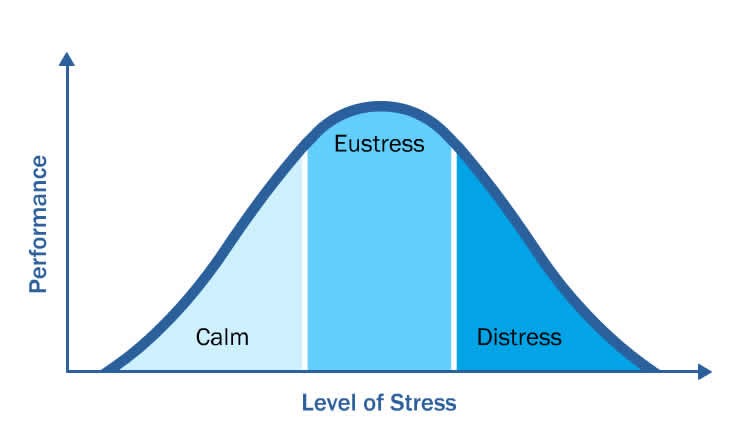
Today we can break stress down into 3 types: Acute, Chronic and Eustress.

Acute stress: This is the fight/flight process where you either protect yourself or run. The body prepares to defend itself and it takes about 90 minutes for the metabolism to return to normal when the response is over.

Chronic Stress: The cost of daily living, paying bills, raising kids, job performance, traffic and Donald Trump… This is the stress we tend to ignore or push down. Left uncontrolled this stress affects your health- your body and your immune system.

Eustress: This is stress that can be perceived as either positive or negative depending on circumstances. It includes stress of a happy marriage, promotions, a new baby, financial responsibilities and graduations. But there is also stress with negative connotations such as divorce, punishment, injuries, financial problems and work difficulties.

The point here is that not all stress is bad. In fact, a lot of it depends on how you perceive it and this is why “coping mechanisms” can help!

types of stress

Chronic Stress is Wrecking Your Body and Could be Causing Disease

Today, our seemingly never-ending stress is resulting in non-stop stress hormone production that obliterates our health and suppresses immunity.

These hormones have the power to change our global physiology, they suppress digestion, muscle formation, fat burning, and immune cells. This process eventually leads to weight gain, high blood pressure, elevated blood sugar, elevated blood fats and a whole host of other bodily complications.

When someone asks me how they can get rid of their belly fat, they usually want me to point them to some amazing diet or power pills that will incinerate the tire around their mid section. Truth is, if you have a “stress gut”, there’s no diet or fat burner that will save you! The body’s creation of belly fat was originally intended for sustenance during the long, cold winter months when game was harder to come by. Today, we face a triple-whammy of poor diet (drive-thru lifestyle), a horrifically and growing sedentary lifestyle, and an abundance of emotional or mental stress.

This is why I always try to teach health principles that include:

  • Eating Well: Eat Better – lots of vegetables, healthy fats, and quality protein; no sugar, no grains, no processed vegetable oils
  • Moving Well: Move Better – daily exercise to the point of exertion not only virtually erases the effects of stress, but will enable you to handle more stress before your body suffers from stress-induced breakdown.
  • Thinking Well: Go deep and Get connected – get a handle on your sleep/rest schedule, your level of gratitude or thankfulness in your life, and feeding your mental/emotional self with ‘quiet time’, spiritual reading, and e-fasting (that’s deliberate periods no TV, computer, phone or internet)

The modern “unnatural environment” we live in is resulting in an epidemic of stress-derived chronic disease. This includes: heart disease, cancer, diabetes, obesity, arthritis, neurodegenerative diseases, depression/anxiety and musculoskeletal problems such as back and neck pain.

The fat that accumulates around your midsection, which we now know is due to chronic cortisol is also considered a risk factor for developing the above conditions. This fat actually increases our blood pressure by pressing up against our kidneys – influencing the hormones that regulate blood pressure. Ironically, this same brilliant hormonal mechanism that helped man adapt and overcome the chronic stressors of yesterday is at the center of the number one killer of man today.

So what’s a modern hunter gatherer to do?

Work Inward and develop coping mechanisms. It has long been recognized that journaling your life’s experiences is one of the most effective strategies to manage stress. I know it may sound cliché or cheesy, but I guarantee that if you start journaling your thoughts, feelings and reflecting on your day or even projecting into your future, it will change your life.

Begin each day by opening your journal and completing the morning portion. Then complete the habit conditioning exercise for that day. Do this before anything else in the morning. Yes… get up 10-15 minutes earlier to get this done. Make a change in your life for something better!

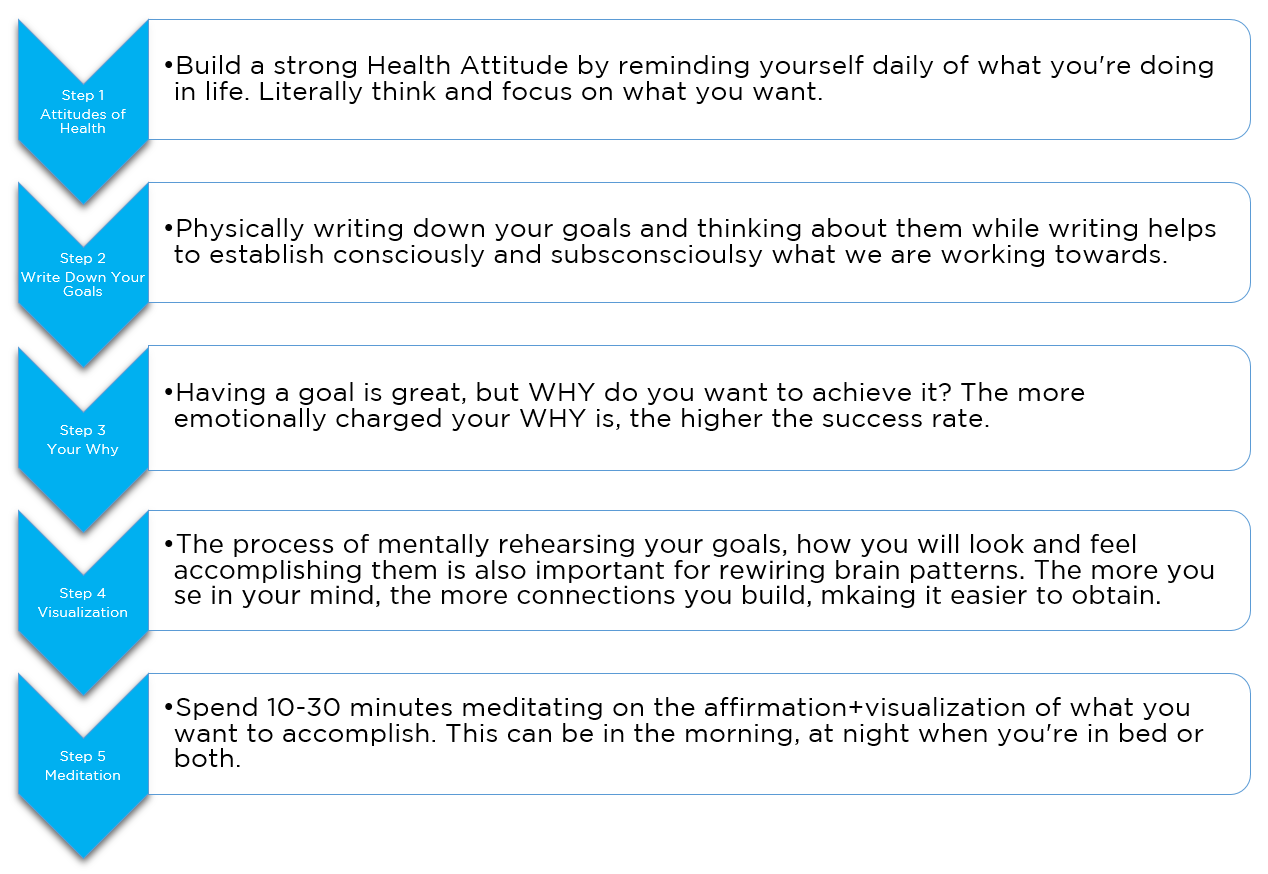
5 steps to Controlling Stress

Here's an example of a Daily Conditioning Exercise to Improve Coping Mechanisms. I personally have a small journal to do this exercise. I have created an example for you to download called: DOWNLOAD BY CLICKING HERE > The 5 Minute Journal Simply print out 30 for the month and start!

daily stress exercises

Look, I get it…

You are going to fight me on how little time you have, lack of patience, you're too busy with work or kids, or some other lame excuse as to why you cannot do this activity daily. Well that’s your choice. And health or life is just that, a choice; it's on you! At the crux of almost everyone’s mental stress are the demands placed on our limited resources; namely our time, energy, focus and money. The world seems to have an insatiable appetite for these things; everyday it seems that there are more demands and fewer resources. In the economy of our lives, we must recognize the need for strategies that protect our limited resources.

Your health is a limited resource and yet it is your greatest asset. So putting anything else in front of it is not a “healthy” strategy. If we are to be truly happy – and find peace of mind – we must strive to master managing this asset. Health should take priority over everything. People don’t necessarily experience any less stress; they simply develop better strategies and coping mechanisms for dealing with it.

Life is full of surprises – get ready for them my friends!

5 Steps to Reducing Stress with Coping Mechanisms2026-04-26T11:13:46-05:00

Forget Dieting. Just Focus on Thriving!

By far and large, the most common questions that come into my headspace include that of Diet and Losing Weight. It's the end of May!!! Here we are, nearly half of the year done and I'm wondering how those January 1st resolutions to become more fit and eat healthier are doing? Sadly, most of these resolutions failed before the end of month. Why? Because in the excitement of the New Year and making positive life changes, we all to often opt for the most dramatic, extreme and in most cases “ill planned” ways to reinvent ourselves. The latest cleanses, starvation diets, or following the x,y or z program are all perfect examples of how to fail.

I would like to propose that for the second half of the year, we focus more on a reversed approach; one not of dramatic change, but of mastering small changes one at a time until the entire lifestyle has transformed.

Change is a process, not an event!

While it’s much more exciting to make a big show of things, excitement only lasts a short time before fading. And often the larger the change, the greater the falling off the horse. I would like to propose a mid year challenge to all of you. Instead of yo-yo dieting, I recommend the formula of growing excitement that comes from small successes for permanent change. How does this happen? Through personal development, education, planning and execution.

What is Nutrition?

Nutrition is not simply buying “whole wheat” bread or choosing “Low Fat” over “Saturated” fat. Nutrition is also not a diet that dictates all food choices based on a certain philosophy such as Paleo or Vegan. Nutrition at the most basic definition is food that makes the body function better. Did you get that? I hope you did because that one statement can change your life forever. So let me repeat it:

Nutrition at the most basic definition is food that makes the body function better.

Either a food or drink improves how your body functions or it doesn’t. Let's stop with the passionate, dogmatic notions of eating Paleo, Zone, Atkins, Vegan etc. And NO, I'm not saying that there are no benefits found in each of these eating philosophies, but there are also massive restrictions that can impede success. If you don't believe me, then look at the numbers! We have adopted more diets, weight loss programs, drugs and fat burners into our economy than ever before- yet we're no skinnier for it!

Currently, two-thirds of American adults are overweight and one-third obese, according to the federal Centers for Disease Control and Prevention. That means that 58 million are overweight, 40 million obese, 3 million morbidly obese, and all are at serious risk for virtually all chronic disease.

Avoid Toxic Foods and Increase Nutrients

There are several factors behind the surge of obesity, but one of the major contributors is toxic food choices. This would certainly be avoided if we just looked at food in terms of function or how it effects our body. Diet-induced diseases, including obesity, account for the largest burden of chronic illnesses and health problems worldwide. The current Western diet, characterized by foods that are highly processed, deficient in nutrient quality, and high in energy density, has Americans fat and sick as ever. More Americans each day are forsaking healthy home-cooked meals, and are gorging on calorie-rich, nutrient-poor snacks, sodas and sweets when the dinner bell rings. In fact, 90% of the money Americans spend on foods goes toward processed foods.

Why are processed foods so toxic?

Your body is unable to express optimal health when it is fed unnatural food.  Your body knows exactly what to do with food that grows from the ground and is found in nature, but it becomes confused when faced with mechanically altered foods.  These denatured, processed foods do not provide sufficient nutrients to allow anyone’s body, especially children’s, to reach full potential of health, nor the proper functioning of the immune, nervous, skeletal, digestive, and reproductive systems.


What are some characteristics of toxic foods?

  • Produced, manufactured, and likely only been around for a short period of time
  • Made in a laboratory or factory
  • Animals that are raised in captivity and fed unnaturally
  • Always the same
  • Lasts forever (ever seen a twinkie go bad?)
  • Ready for instant consumption
  • Dull, bland
  • Artificially flavorful
  • No connection to land or culture

What are some characteristics of non-toxic Nutrient rich foods?

  • Been around for thousands of years and eaten by your ancestors
  • Grown from the ground or tree
  • Animals that graze freely
  • Variable quality
  • Spoils quickly
  • Requires preparation
  • Vibrant colors, rich textures
  • Authentically flavorful
  • Strong connection to land and culture

15 Nutrition Habits to Build On

Remember, addition is the first step toward making lasting change. So find some foods that fit the non-toxic criteria, and give your body what it needs to be healthy, age gracefully, and to feel great. Builds habits using foods that improve function; not simply satisfy hunger. You should eat to live. Period.

1. Add Before Subtracting. That is honestly the simplest advice that I can give someone who has a horrible diet and is interested in cleaning it up. Continue eating the foods that are causing harm to your body, but start adding the foods that are going to heal it! Too many changes at once is a recipe for failure so we want to add good habits before subtracting or eliminating those foods we are controlled by. I personally believe that this foundation of nutrition habits is critical for long term function and performance. Next, you will want to maintain the good habits of adding “high quality nutrients” while slowly decreasing the “less than ideal foods” in your diet.

2. Practice Intermittent Fasting. This is by far the best thing I do for my health. For many years I believed in the whole eat several meals a day BS, but now I believe it was a futile, inflexible and impractical way to eat and live. It's obvious to me now that the human body was not designed to be constantly fed; food was not readily available thousands of years ago like it is today and modern research is now proving that our cells work better when fasted.

3. Never ever go to buy your groceries or food, empty stomach. I have noticed this pattern from time to time. High number of unhealthy items in your grocery list is directly proportional to how hungry you were when shopping!

4. Clear your kitchen. Absolutely clear your pantry, refrigerator and secret stash from the junk. More sugary things (or other unhealthy stuff ) you have in your home, the more likely you'll eat them from time to time.

5. Keep healthy foods in front of you at all times. This is an extension of previous point. Keep foods like almonds, walnuts, fruits, dates, etc in your kitchen preferably at eye level. Fill up your bowl with fruit that is easily accessible. Don't blame your will power in case you snack on chips, donuts, biscuits etc from time to time. The real reason I would snack on crap is because it's right in front of me.

6. Whenever hunger strikes drink water. Learn to distinguish hunger from cravings. In most cases its the craving ( which is due to missing nutrients in your diet ) or you eat because you are BORED! Drinking water or green tea will in most cases alleviate the cravings. This practice can easily reduce few hundred calories daily and when compounded can result you in few kilos lighter in just few months time.

7. Take Omega-3's everyday. Our brain is the master controller of our body. It regulates hormone production, digestion, feel good hormones, cell repair, learning and memory and more. The brain is primarily made up of fats and that is why all the research on omega-3 fatty acids is so positive.

8. Practice low flame cooking. High flame cooking destroys the precious nutrients in food. Practice low flame cooking even if it takes longer. Be patient.

9. Reduce Sugar Consumption. Didn't I already tell you to get rid of the junk? dsOur sugar consumption has drastically increased since last 100 years. Almost every product on supermarket shelves have some form of processed sugar in it- cereals, ketchup, soft drinks etc, salad dressings… even tomato sauce?

Completely eliminating sugar may be next to impossible and can overwhelm majority of us. Every day simply aim to minimize the sugar you eat by becoming conscious- if you plan to eat a cheesecake, eat one third of it, and share the rest with friends. If you plan to drink sugared coffee, use a smaller cup and so on and so forth.

10. Eat healthy fats. My diet is almost 40-50% healthy fats. Yes I thrive on fats (coconut oil and related products, avocados, desi ghee, whole eggs and various butters). Its a myth that saturated fat is bad for you.


11. Give at least 2 hours gap before sleeping and eating your dinner. This will ensure that your blood sugar is normalized. Eating food closer to bed time, can raise your blood sugar which can interfere with your ability to sleep.

12. Eat more protein everyday. Protein has a higher thermic effect when compared to other macro-nutrients. What it means is you burn more calories to digest proteins than carbs or fats. Numerous studies suggests eating anything between 1.4g-2.0g per kg of your bodyweight.

13. Eat lot of veggies everyday. Start by eating veggies first in your meals and you will never overeat. Eating raw vegetables have fibre in them which draws water and fills up your stomach reducing your appetite

14. Drink enough water. 70% of your body is water. Drink half your body weight in ounces everyday.

15. Drink something alkaline before you drink tea/coffee. Besides water, drink green tea or have lemon with honey. You see your stomach lining is very sensitive after 8 to 10 hours fast when you sleep. Tea/Coffee are acidic in nature and should be consumed only after you have consumed lot of water/green tea etc.

A few other lines to digest:

  • If it didn’t exist when hunter-gatherers were around, it’s probably not food.
  • If it’s wrapped in layers of plastic, cardboard and foil, it’s probably not food.
  • If it requires heavy advertising to sell it, it’s probably not food.

Commit to Personal Excellence

Whether the goal is maximizing athletic potential or simply a healthy lifestyle, strive for the best. I know it's cliche, but Rome was not built in a day. So give yourself the time to develop and stop pressuring yourself so much. We have 6 more months to go before the next “New Year Resolutions Extravaganza”. What choices will you make that will lead to permanent changes in your fitness and nutrition moving into the next year.

Forget Dieting. Just Focus on Thriving!2026-04-26T11:13:46-05:00

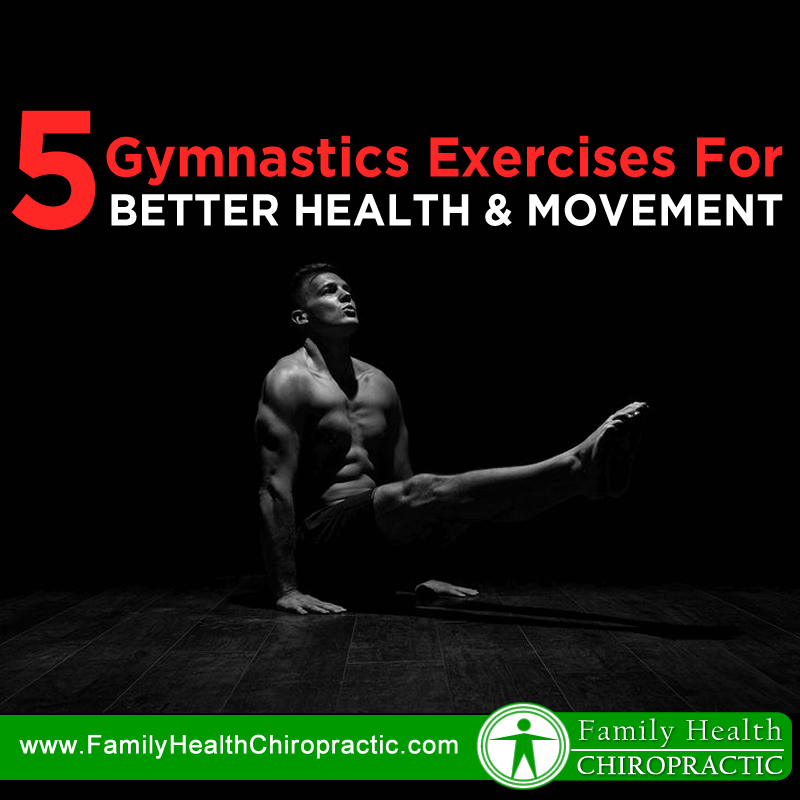
5 Basic Gymnastics Strength Training Exercises For Better Movement & Health

I’ve been a fan of Tim Ferris, American author, entrepreneur, angel investor, and public speaker for many years now. He’s known most for his best selling book, The 4 Hour Work Week and as a big human self-experimenter or life hacker. This weekend I listened to his podcast where he interviewed Christopher Sommer, former US national team gymnastics coach. Coach Sommer is also the founder of GymnasticBodies, a training system that I am in the process of testing myself. As a world-renowned Olympic coach, Sommer is known for building his students into some of the strongest, most powerful athletes in the world.

Everything this guy said just made so much damn sense to me that I had to share, especially with regard to proper progression and injury avoidance. So many people want to be healthy and as soon as they start exercising they hurt themselves. Why? Because we don't start from the basics. If you want to listen to the interview yourself, you can check it out here: The Secrets of Gymnastics Strength Training

During the interview, the question was asked, If someone is 35-years-old, a former athlete and has never done gymnastics, what’s a good way to start?

Coach Sommers was pretty blunt about this and I have to say that after working with thousands of people here in Austin TX (one of the fittest, healthiest cities in the US), I have to agree. Most adults are broken.

We start off as children, spending much of our day playing, laying on the floor stretching out in awkward positions and pushing our bodies beyond our limits; because quite frankly we don't know our limits as kiddos. Then it starts to slow down in high school, more in college to the point that we have almost no ability in our work life- maybe 45 minutes of gym time a few times a week. And then we want to get back into shape and hit it hard like there's not tomorrow. Then pain.

“The first thing that has to happen to most adults, is that we have to fix joints. We have to repair their bodies. Most adults are simply broken and yet they wonder why they hurt gardening or when the'yre working out.”

Gymnastics strength training provides countless benefits to those willing to commit to the process. And by process- you’ve got to earn your ability to do things; nothing comes over night. But by focusing on bodyweight progressions, through this form of training you have the opportunity to increase relative strength, strength endurance, mobility, body awareness, movement awareness, and so much more.

Additionally, the intense full-body muscle contractions and significant time spent under tension lead to great gains in hypertrophy (big muscles), lean muscle mass (the “ripped” effect), and fat loss (sexy factor).

I find it interesting that we can look at gymnasts and think, “WOW… how amazing are they”… yet we all have the ability to achieve the same results. The problem is that we all don’t have the patience and are unwilling to put in the time.

How to Achieve A Gymnastics Body

First off, this article won't get you there. But it's a start! The greatest benefit from gymnastics training is not directly related to ability or physique, but to your mindset and approach. If I told you to write a 365 page book for me; you’d immediately think it was not possible or start to stress about all the work it would take. But If I asked you to write 1 page per day for 1 whole year- it would seem a bit easier or at least more obtainable. And that’s the difference between gymnastics strength training and most other forms of exercise. In the fitness industry, just as in life, it is all too common to encounter people who want instant gratification and immediate results.

Stretching, high reps with low weight or body weight, and joint prehab. This the the prescription that we all need- including some of the best athletes in the world. But Nooooooo! People just want to cycle for miles on end, run miles on end, hold a handstand, climb a rope with no legs, squat 500 pounds or learn to do a back flip. The big problem, with this mindset, is that these people often end up injured, plateaued, or both. And I’ve personally seen this happen over and over and over again.

People who succeed in health and personal fitness are those who take the long road; gradual, consistent steps on a path riddled with prioritizing quality and mastery. Coach Sommer compares this shift in mindset to the difference in maturity between a child and an adult.

A child wants things right away, and if a task takes hard work, discipline, or commitment, the child is likely to give up and shift attention to something new. As a person matures into an adult, they are more likely to realize the potential benefits of focusing on one task for longer periods of time, even if it does require significant amounts of energy.

5 Basic Gymnastics Strength Training Exercises For Improved Movement

Here are four basic gymnastics strength-training exercises that can give you the most bang for your buck. For many of us, modern lifestyle and one-sided training have stolen our ability to complete these relatively simple body weight tasks, so do not be surprised if these end up being a bit more challenging than you first presume.

1. The Jefferson Curl

This exercise is one of the best mobility and prehab exercises we know. Some benefits include:

  • Lengthening of the hamstrings and the spinal muscles (from your neck to your low back)
  • Strengthening of the connective tissue between the vertebrae
  • Increased control of spinal mobility
  • Improved back health under load

Start by standing up tall on stable elevated surface like a bench, with weighted bar, chin comes down, keep pelvis tucked under, think of vertebra like string of pearls curling forward, to at least hands under the feet, and then curl back up again.  Start very light, like with 5 lbs, and build up to minimum to half body weight.  Coach’s preference is to build up to body weight.

2. The Hollow Body Hold

The hollow body hold is a foundational position in all of gymnastics, and allows you to properly transfer force from your upper body to your lower body without any energy leaks. In fact, most of the injuries that I see take place in my office are due to “energy leaks” or the inability to transfer weight properly even when it consists of only bending down to lift a newspaper.

The stronger and more stable you are in this position, the more power you’ll have when:

  • squatting
  • throwing
  • pushing
  • pulling
  • jumping
  • hitting
  • kicking
  • sprinting

Begin by lying down on your back, with your legs outstretched and together. Completely straighten your legs by flexing your knees, and ensure proper form by pointing your toes as far away from your body as possible. Also reach your arms overhead, completely straightening your elbows and looking up towards the ceiling.

From this outstretched position, engage your entire anterior core by lifting your arms and legs off the floor. You should focus on pressing your lower back into the ground while squeezing your entire abdominal wall. Be sure that your shoulders are slightly lifted and your ribs are tucked in rather than protruding from your chest. Ideally your body shape should be smooth and round, almost like a banana.

Hold this hollow body position for a full sixty seconds. To ensure there is no cheating, use a timer, metronome, or stopwatch to count your minute. If you cannot hold the position with integrity for the full time, then you might need to start with a scaled version such as tucking your legs in towards your chest or bringing your arms down by your side.

3. Arch Body Hold

This is the complete opposite position as the hollow body. Where the hollow body works the entire anterior core, the arch body position will expose any weakness along your posterior chain or the back part of your body. Additionally, many people are chronically tight in the front of their bodies, and the arch body hold will open up tight areas such as your chest and hip flexors.

Many of us are chronically tight in the front of the body, so this exercise will help improve all the following muscles due to chronic sitting:

  • Pec minor and Major
  • Hip-flexors
  • Quadriceps
  • Abs

To start, lie facedown on your belly with your arms outstretched overhead and your legs straight and together. As you can imagine, the goal here is to completely arch your entire body as much as possible, so lift both your upper and lower body as high as you can towards the ceiling. Focus on engaging your glutes and mid-back so you are not exclusively arching from your lower back.

If you are like most people who try to hold an arch body position for sixty seconds, you will begin to tremble, shake, curse, and drop to the floor before the minute has expired. This should serve as a wake-up call for you to strengthen your posterior chain and stretch your chest and hip flexors.

If necessary, break down the arch body position in a similar fashion to the hollow body hold by bringing your arms down to your side, bending your knees, or both.

4. Standing Pike Stretch

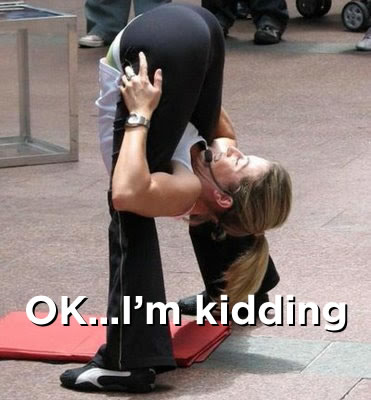
Finally, you get to relax and stretch. The standing pike stretch will assess flexion through the hips and spine, and those of you with tight hamstrings might struggle a bit here. Stand up tall with your legs completely straight and knees locked out, and completely fold over forward, placing your hands on the ground as fully as possible. Your goal is to reach your hands behind your feet to the point where you can press your bodyweight up onto your toes.

kidding

Ok… Seriously though… this one may be hard, but work at getting better!

If this position is unattainable for you right now, then try doing it seated. Sit up tall with your legs outstretched in front of you, knees totally straight, and have your partner gently push forward on the middle of your back. Inhale and exhale with your partner’s pushes, and reach your hands towards your feet, all while pressing the backs of your knees into the floor. No bouncing, just nice smooth gentle stretching.

5. Elevated Bridge

Forget deadlifts and roman chair extensions. If you want one exercise to give you a strong, flexible, injury-proof back, master the elevated bridges instead.

Bridges can help:

  • Help get rid of back pain caused by sitting hunched over all day long
  • Bulletproof the spine in preparation for heavy or explosive movements
  • Strengthen your spinal muscles, which can prevent slipped discs
  • Give the entire front of your body an incredible stretch
  • Result in extra endurance in sports and life
  • Work every single muscle in your back—as well as nearly every other muscle in your body

First, start wherever your current level is, then work up to the more difficult variations as your strength and flexibility increases. Aim to train bridges 2-3 times a week—but even once a week will make you stronger and more flexible. Bridge progressions go from short bridges, to straight bridges to the Elevated Bridge.

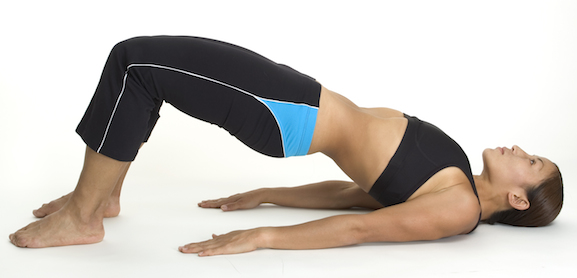
Short bridges

Short bridges are great for beginners or people with previous back injuries. They gently work your back, butt, and hamstring muscles and are a great starting place.

How to do them:

Lie on your back with your knees bent. Squeeze your butt and abs and raise your butt and hips as high as you can while still keeping your shoulders on the ground. Hold for one second, then lower down.

Straight Bridges

Straight bridges are the next progression in the bridge exercise, and will start working your shoulders as well as your back, butt and leg muscles.

How to do them:

Lie on your back with your legs straight. Place your hands on the floor on the outside of your hips, pointing your fingers toward your toes. Push yourself up onto your hands, lifting the hips up and squeezing your butt as you do so. Hold for a second, then lower back down.

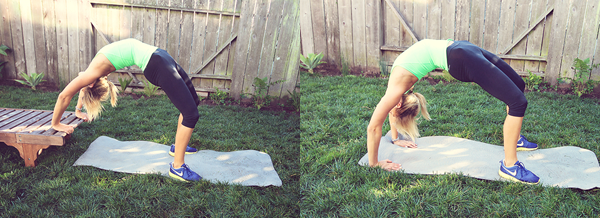
Elevated bridges

Elevated bridges are the next step to help you ease into doing full bridges. These really start to work your shoulders as well as your back, butt and leg muscles.

elevated bridges

How to do them:

Find a bench or elevated surface that’s about knee height or higher (make sure it’s sturdy) and sit in front of it. Face away from the bench, then place your hands by your head with your fingers pointing toward your feet. Press through your hands and raise your hips, arching your back and straightening your arms. Raise your hips as high as you can, then lower back down.

Conclusion

In any endeavor in life, you get out exactly what you put in. Impatient, shortsighted efforts will yield incomplete and poor-quality results, if not long-term injuries. On the other hand, a consistent work ethic, when paired with world-class programming and coaching knowledge, will allow trainees to continue to experience progress for months and years on end.

5 Basic Gymnastics Strength Training Exercises For Better Movement & Health2026-04-26T11:13:46-05:00

Troubleshooting Crappy Shoulder Pain

One need not be an Olympic contender to experience shoulder injuries that can prove debilitating. Certainly, a variety of mundane tasks from carrying grocery bags to hanging new curtains in your living room windows can cause such injuries, but the vast majority of injuries are caused by excessive, repetitious, overhead motions such as those movements practiced by swimmers, pitchers, tennis players, and weight lifters. In 2006 alone for instance, nearly 7.5 million patients visited their doctors complaining of shoulder problems, and of these visits, over 4.1 million cases involved rotator cuff issues.

Muscles of the Shoulder

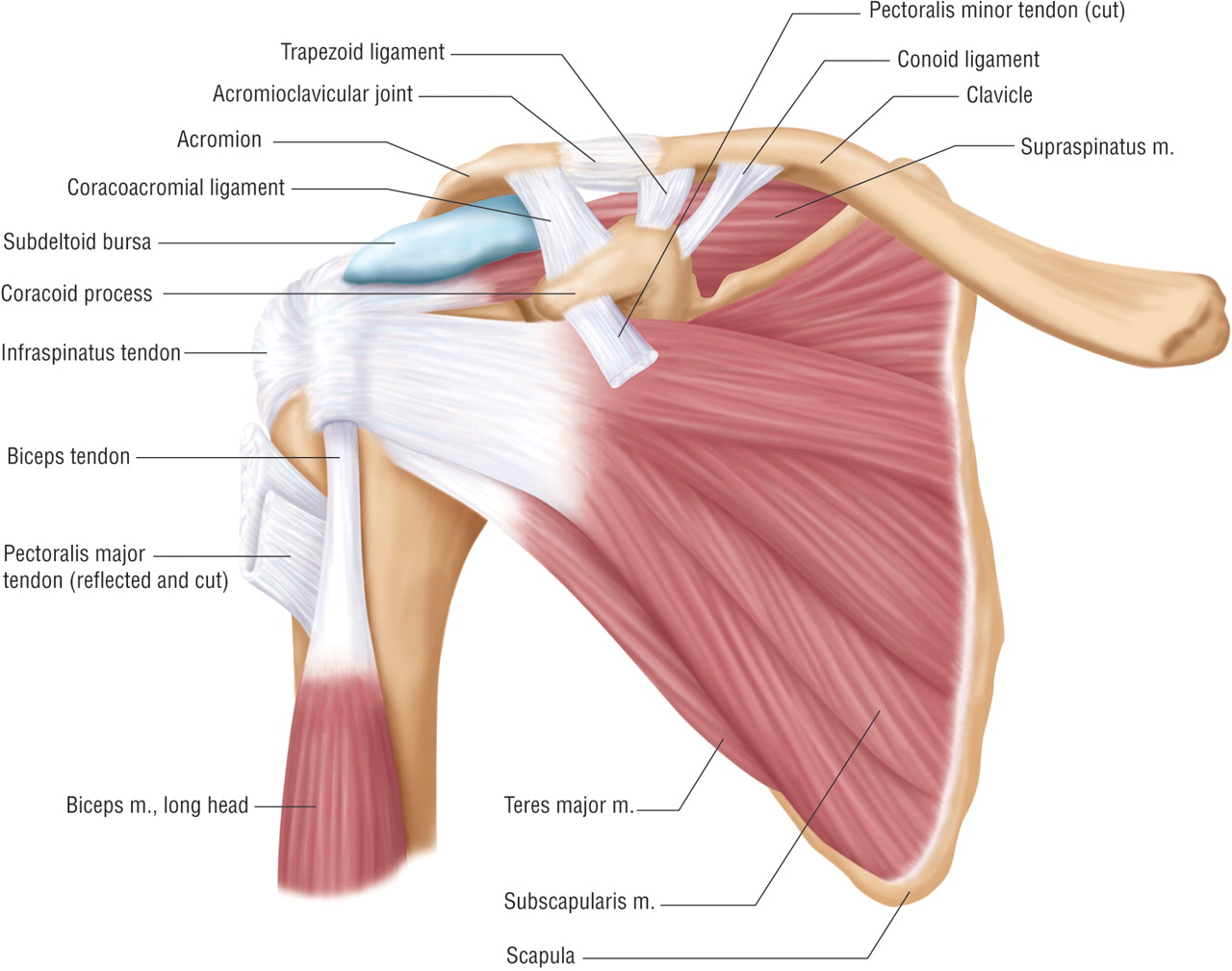
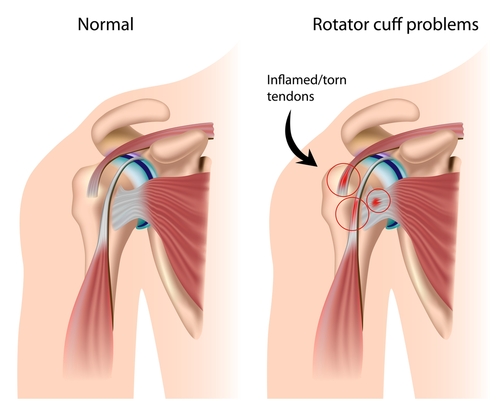
The most important shoulder muscles are the four rotator cuff muscles – the subscapularis,supraspinatus, infraspinatus and teres minor muscles.

muscles of the shoulderWhile we tend to think of the shoulders as a monolithic block of bones and muscles, they are in fact a complex network of muscles, ligaments, tendons and joint capsules. As a rule, life has a habit of drawing the body forward whether as the result of gravity, or our attempts to easily see the objects that are in front of us in our everyday lives. As mentioned above, one need not be an Olympian to suffer from shoulder difficulties, and for a lot of us, we tend to carry the stress in our lives as shown by the tightness and hyperactivity of the shoulder muscles. The resultant slumped forward posture causes the musculature on the front of the chest and shoulders to shorten, which causes a bent over appearance that makes us look like human question marks by the time we hit old age. Additionally, these forces can cause head and neck pain, disc degeneration, and rotator cuff impingement among a host of other problems.
Common Shoulder Injuries and Their Warning Signs

The shoulder is one of the most vulnerable joints in the human body because there is so much range of motion surrounding it. Determining whether your discomfort originates with a shoulder related injury or just the problems associated with living life, you need to be aware of the warning signs of a potential problem. As such, if you are feeling discomfort, ask yourself the following questions:

  • Can you rotate your arm in normal positions?
  • Does your arm feel like it could pop or slide out of socket?
  • Does weakness prohibit you from completing daily functions?

A yes answer to any of these questions is suggestive of more serious problems, and I would strongly encourage you to speak with a healthcare professional to learn about available treatment options. The majority of shoulder related problems are connected to the muscles, tendons, and ligaments rather than the bones.

Most doctors group shoulder related ailments into two categories:

  • Instabilities —occurs when one of the shoulder joints is forced out of its normal position. Patients presenting with this condition will feel pain when lifting their arm, or they might feel as if their arm is slipping out of place.
  • Impingements—caused by excessive rubbing of the shoulder muscles against the shoulder blade, impingement injuries occur as the result of overhead arm motion.

Shoulder Pain Testing

Testing for Impingement:

  1. While seated, have a partner raise the arm of the shoulder in question to the front and overhead as far as possible.
  2. Your partner should use one hand on your arm and the other hand supporting your shoulder blade (scapula).

The space where your rotator cuff tendons and shoulder bursa reside (the sub-acromial space) becomes smaller when your arm is raised overhead and pushed to the limit. If pain is felt in your shoulder, the test is considered positive. The pain is likely caused by impingement of the tendons or bursa in that area of your shoulder.

Biceps Tendonitis Test

1. While seated, raise your painful arm (shoulder) forward to the front.
2. While holding your arm out straight in front of you, turn your palm up.
3. You partner should then push your arm down, while you attempt to resist.

If you feel pain in your shoulder while resisting you could have biceps tendonitis.

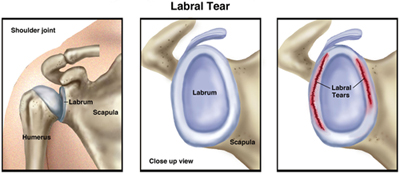
Testing for Labrum Tears
labral tear test

The Labrum tear test has two parts: the apprehension and relocation tests.

The Apprehension Test:

1. Begin by lying on your back on a flat, elevated surface (e.g., a bench or table).
2. Move your arm out to the side perpendicular to the torso.
3. Flex your elbow to a ninety-degree angle.
4. Your partner should slowly rotate your arm so your hand moves toward your ear with the partner pushing as far as possible. Maintain the ninety degree elbow flexion.

If you are apprehensive (hesitant) about shoulder movement beyond the joint, this test is considered positive for a possible labrum tear.

The Relocation Test:

You may feel your shoulder is unstable and potentially wants to move out of place – or relocate – especially when your shoulder is in extreme external rotation. If this is the case, have your partner gently press on the front of your shoulder to relocate the joint.

If you feel less relocation and your shoulder feels more stable, believe it or not this test is considered positive and a torn labrum is the probable cause.

AC Joint Separation

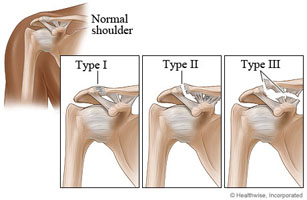
ac shoulder joint separationAn acromioclavicular joint separation, or AC separation, is a very frequent injury among physically active people. In this injury the clavicle (collar bone) separates from the scapula (shoulder blade). There are various grades of severity for this condition.
The test for an AC (acromial-clavicular) joint separation is called the AC joint compression test. The shoulder blade (scapula) connects to the collarbone (clavicle) at this joint.

  1. While seated, have your partner place one hand at the front of your shoulder joint and one hand at the rear.
  2. The partner should slowly, but firmly press on both sides of your shoulder to compress the AC joint.

If there is a joint separation, pain will be felt at the joint between the downward pressing hands. In addition, pain while raising the arm upward and while sleeping are also indications of an AC joint separation.

Rotator Cuff Tear

  1. While seated, have your partner raise the painful arm/shoulder to the side and parallel to the floor.
  2. While you relax the arm, the partner lets your arm drop.

rotator cuff tearsIf your arm drops involuntarily and you are unable to maintain that parallel position you may have a rotator cuff tear. Some may compensate for a torn rotator cuff by elevating the scapula toward the ear.
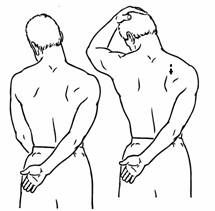
The empty glass test is used to assess the status of the supraspinatus, one of the four rotator cuff muscles. The supraspinatus is located on the upper part of the shoulder joint and is involved in abduction (arm raising).

  1. While seated or standing, lift the sore arm forward and to the side about thirty to 45 degrees.
  2. Pronate your wrist so the palm of your hand faces down to the floor (think “thumbs down” position).
  3. In this position your partner should gently push your arm down while you resist.

If pain or weakness prevents you from maintaining your arm position, you may have a supraspinatus tear.

To test the infraspinatus muscle

  1. Stand with your arm at the side with the elbow at 90 degrees.
  2. Have someone resist while you try to externally rotate your arm away from the body.

Pain or the inability to resist  indicates a positive test for an infraspinatus strain.

The subscapularis muscle is the muscle that rests between the scapula and your ribcage.

  1. Start in a standing position and place your hand behind your back with the back part of your hand resting on your lowback.
  2. Try to raise the back of your hand off your low back or away from your low back.

If you are unable to move your hand away from your low back or you have pain from this movement, then you likely have a subscapularis problem!

Frozen Shoulder

A frozen shoulder is also known as adhesive capsulitis. It occurs slowly over time and can limit functional use of your arm. A frozen shoulder manifests in pain and tightness. This makes it difficult to reach overhead, press a dumbbell, or scratch your back.

There is no special way of diagnosing a frozen shoulder, nor is there a diagnostic test to verify it (e.g., an X-ray or MRI). A frozen shoulder diagnosis is made by observing the specific shoulder moving through a range of motion.

Frozen Shoulder Testing:

  1. Stand in front of a mirror. A partner should observe you while moving the arm and shoulder. The partner should be noting the range and quality of motion of the shoulder joint.
  2. Slowly raise both arms to the front and overhead. If you suffer from frozen shoulder, your painful arm may only come up to a point just past parallel with the floor. Additionally, as your scapula elevates towards your ear, you will feel general pain in the shoulder.
  3. From this position, slowly lower the arm down, and then slowly lift the arm out to the side. Note the range of motion that occurs. If the arm only goes up to a point parallel to the ground – and it's painful – then you likely suffer from frozen shoulder syndrome.

A final test for frozen shoulder is to stand with both arms at the sides and the elbows flexed at ninety degrees. Externally rotate the arms outward. If the frozen shoulder syndrome is present, the painful arm will not rotate outward in comparison to the healthy shoulder.

3 Basic Solutions for Shoulder Pain

Exercising the muscles and ligaments of the shoulder goes a long way towards avoiding a shoulder related injury, but failing to correct faulty positions and poor form is probably the biggest culprit!

upper trapezius stretchBasic Stretching – A common issue with anterior shoulder pain is upper trap overuse. An easy way to combat this is to stretch the upper trap before you try to strengthen the muscles of your mid back. Stretching the upper trap will inhibit it a bit, and therefore prevent it from taking over for your mid and lower traps when trying to retract your shoulders. For the record, I’m not recommending you just stretch your upper trap in the absence of other exercises. I’m saying you can stretch your upper trap immediately prior to some pulling activity to emphasize proper muscle activation. Do this two or three times on each side, for thirty to sixty seconds. The pull should be strong enough that you feel it, but you’re not trying to rip your trap off. Don’t go crazy.
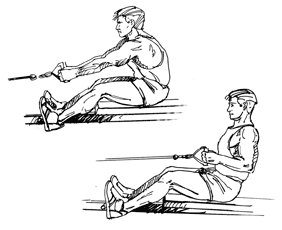
 

seated_cablerowsBasic Strengthening – If the muscles of your mid back are weak, all the activation work in the world won’t magically make them strong enough to stabilize your shoulders. Sometimes you just need to get stronger; and for most of us that means strengthening your back! Seated cable rows are ideal for this purpose. Use a handle that allows you to have a neutral, shoulder-width grip. Close-grip handles (the triangle-shaped ones where your hands are inches from each other) actually cause your shoulders to internally rotate, which we don’t want. Another great exercise is rowing. Row, Row, Row!
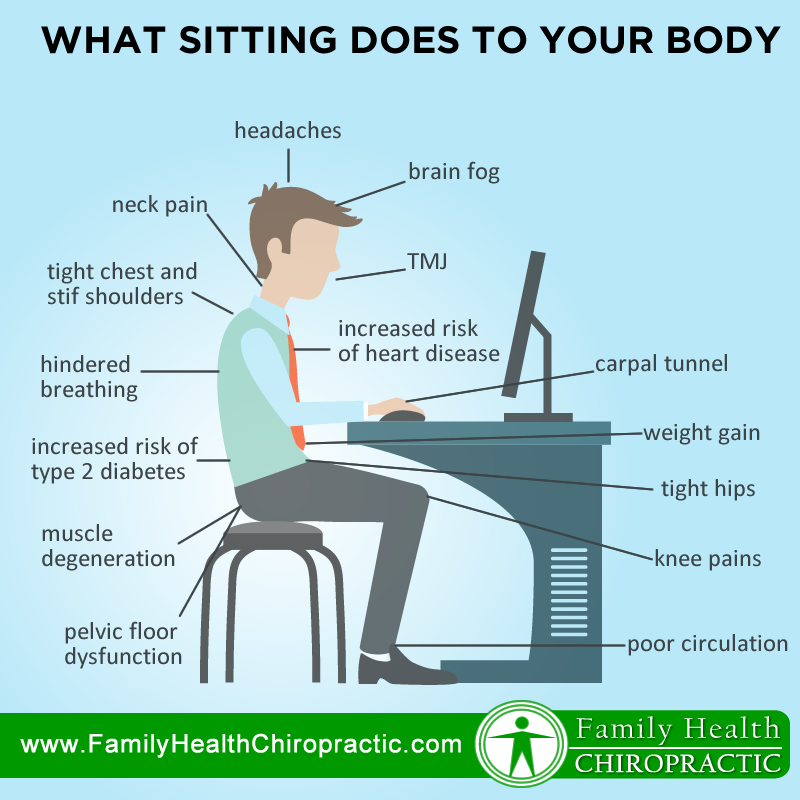
 

Basic Positioning – Do I really need to talk to you about posture and how it affects EVERYTHING? This is one of the most common problems I see and should be the easiest to fix. When your shoulders start in a bad position and have a movement demand placed on them, it’s unlikely they will be able to transition into a good position while doing the work.Packing your shoulders mostly just means exaggerating your neutral posture. Pull your shoulders down and back and lightly squeeze your scapulae together. Congratulations, your shoulders are now braced and the stabilizers are activated. Doing this before any type of shoulder work, either pulling or pressing, will significantly increase proper muscle activation and joint stability.

Shoulder Pain Sucks But You Can Do Something About it!

Shoulder joint injuries suck because almost everything you do in life requires them. Trying to figure out what happened or what is happening can be a head-scratcher but it shouldn't ruin your life either. With the proper assessment and movement tests you can determine specific pain points and narrow it down to specific injury issues which then lead to specific corrections or therapies.

The tests mentioned above can be done by anyone to determine the possible cause of shoulder joint injuries. You may discover one specific issue (e.g., only a rotator cuff tear) or multiple issues (e.g., biceps tendonitis and impingement) but whatever the case, don't let it get worse. It is imperative to strengthen all the participating muscles as well as the articulations (joint structures) of the shoulder to enhance shoulder health and reduce future vulnerabilities.

Troubleshooting Crappy Shoulder Pain2026-04-26T11:13:46-05:00

Sitting Sucks, But You Don’t Have To

Will You Stand Up to a Sitting World?

There is absolutely no getting away from it: the more you sit, the worse your health will be and the earlier you may die (regardless of how fit think you are).

Sitting is now considered worse for your health than smoking and research shows that the 45 minutes of high intensity exercise you do daily won’t protect you from its effects. The World Health Organization ranks physical inactivity – sitting too much – as the fourth biggest preventable killer globally, causing an estimated 3.2 million deaths annually.

What can you do? The answer is surprisingly simple – unless you are asleep; you better keep moving. Genetically speaking, the human body evolved a central nervous system that requires movement to function correctly. For over 200,000 years, Homo Sapiens spent the majority of the day moving. If they wanted food, they had to move to get it. If they wanted to travel, they had to get there by foot. All that movement may seem exhausting to most; but it was part of our everyday life and helped to shape and mold the body’s we all have the potential to have today. Our bodies were built for movement, our brains feed off of it and in turn this movement keeps us healthy.

But you sit at breakfast. You sit on your way to work. You sit at work. You sit in front of a computer screen. You sit while eating dinner and you slouch over your phone randomly throughout the day. You sit while watching TV and then you get up and do it all over again the next day.

All this sitting is increasing your risk of heart disease, diabetes, cancer, and even depression—to the point where experts have labeled this modern-day health epidemic the “sitting disease.” Worse, a growing body of evidence now shows that people who spend hours exercising are not protected from the effects of sitting the same way they are not protected if they choose to smoke.

In a 2012 study in the International Journal of Behavioral Nutrition and Physical Activity, researchers reported that people spent an average of 64 hours a week sitting, 28 hours standing, and 11 hours of non-exercise walking, whether or not they exercised the recommended 150 minutes a week. That’s more than nine hours a day of sitting, no matter how active they otherwise were.

“We were very surprised that even the highest level of exercise did not matter squat for reducing the time spent sitting,” says study author Marc Hamilton, Ph.D., professor and director of the inactivity physiology department at Pennington Biomedical Research Center. In fact, regular exercisers may make less of an effort to move outside their designated workout time. Research presented at the 2013 annual meeting of the American College of Sports Medicine from Illinois State University reports that people are about 30 percent less active overall on days when they exercise versus days they don’t hit the road or the gym. Maybe they think they’ve worked out enough for one day.

Adding to the mounting evidence, Hamilton recently discovered that a key gene (called lipid phosphate phosphatase-1 or LPP1) that helps prevent blood clotting and inflammation to keep your cardiovascular system healthy is significantly suppressed when you sit for a few hours. “The shocker was that LPP1 was not impacted by exercise if the muscles were inactive most of the day,” Hamilton says. “Pretty scary to say that LPP1 is sensitive to sitting but resistant to exercise.” Heart disease and diabetes aren’t the only health hazards active couch potatoes face.

The American Institute for Cancer Research now links prolonged sitting with increased risk of both breast and colon cancers. “Sitting time is emerging as a strong candidate for being a cancer risk factor in its own right,” says Neville Owen, Ph.D., head of the Behavioral Epidemiology Laboratory at Australia’s Baker IDI Heart and Diabetes Institute. “Emerging evidence suggests that the longer you sit, the higher your risk. It also seems that exercising won’t compensate for too much sitting.” According to Alberta Health Services-Cancer Care in Canada, inactivity is linked to 49,000 cases of breast cancer, 43,000 cases of colon cancer, 37,200 cases of lung cancer, and 30,600 cases of prostate cancer a year. As if that weren’t enough to put you in a sad state, a 2013 survey of nearly 30,000 women found that those who sat nine or more hours a day were more likely to be depressed than those who sat fewer than six hours a day because prolonged sitting reduces circulation, causing fewer feel good hormones to reach your brain.

Scared straight out of your chair? Good.

Because the remedy is as simple as:

  1. Move more
  2. Move well
  3. Perform basic maintenance on your body everyday

Move More

Obviously as your chiropractor I am here to make sure that your spine is moving properly. This is one advantage that you have over those people who are not fortunate enough to get chiropractic adjustments. Like it or not, we all have a spine that gets damaged from life and failure to maintain the health of your spine will be a limiting factor behind movement. So the first step to “Moving More” is making sure that your spine allows this movement.

When we force our bodies into positions they were not designed to adopt, ugly things begin to happen to the human spine. The human body was designed to stabilize the spine under normal working conditions, but normal working conditions have dramatically changed since the time of our ancestors. What you need to understand here is that your spine is always searching for stability. When you fail to organize your spine properly, the bones that make up your spinal column will default to a second tier reactionary stabilization pattern that ends up limiting your range of motion, causing spine stiffness and making your muscles work harder than normal.

On top of working towards better spine alignment, you should look for ways to eliminate sitting from your day. Switch to a standing work desk or throw a few boxes underneath your computer screen and work while standing up. Look for ways to eliminate sitting from your leisure time. I’m not telling you to stand while you eat dinner, but sitting on the ground is better while watchin TV than your couch. As a general rule, for every 30 minutes you are chained to a chair, spend 2 minutes moving or recovering. This movement or recovery doesn’t have to be anything major – just get up and walk around, get some water, do some jumping jacks or arm swings and your’re good to go!

Move Well

Learning how to have good posture or move properly does not take a long time; most people pick it up in 10 minutes. The hard part is making a habit of it. But just like you were not a good driver when you first started, the same is true with learning how to get your body in a good position. This part of the process has to be a daily exercise and constantly on your mind. What’s the point of only working on your body when you are the gym only to throw it all away from poor decisions outside of it? The same is true with body mechanics, posture and knowing how to move. When you look at “Moving Well” as a form of nutrition for your body, then you can begin to understand how it’s an all-day thing, just like drinking water and breathing oxygen.

Perform Daily Maintenance

There are literally no day’s off when it comes to performing daily maintenance on myself. The same should be true for you. “Daily Maintenance” in this case refers to mobility techniques designed to resolve pain, improve range of motion and restore the elasticity of your muscles. This is not simply stretching or foam rolling your body. Most people know how to get into classic stretching positions and foam roll. The problem is that people don’t have a system for understanding how and when to perform these techniques and why.

Mobilizing your body (stretching, foam rolling, compression, etc) will treat symptoms and might even help avoid them; but correcting your position will cure the disease!

Need More Help?

If you or someone you know needs help with moving more, moving well and/or performing daily maintenance, then contact our office by calling 512-347-8881 or clicking the button below:
Sitting Sucks, But You Don’t Have To2026-04-26T11:13:46-05:00
Go to Top