Blog

Austin Chiropractor Holds Chips & Salsa Week!

We're Having Chips and Salsa Week at Family Health Chiropractic!

Come celebrate the best of Central Texas this week

Our friend and patient Kyle (owner of Kylito's Salsa) was generous enough to share his stash of hot sauce and salsa. So all week we are having chips and salsa, sangria and cucumber/mint infused water. Just for you! Cause we love you ;)

Austin Chiropractor Holds Chips & Salsa Week!2026-04-26T11:13:54-05:00

Austin Chiropractor Holds Selfie Contest

Austin Chiropractor Holds Selfie Contest

Watch this video…

Watch this video…

Win A Chance To Get A Free Night At the Movies!!

(Includes an Alamo Draft House $50 Gift Card)

Hey, in case you didn’t know, “The Selfie” is the “New Autograph” and because you are a

SUPER STAR in my eyes, I WANT your autograph! …and because I think you’re such a

SUPER STAR, I also want to give you and someone you know, a night out at the movies!

Here’s how you can enter…


Earn 1 Raffle Ticket by Posting Your Selfie To Instagram…

  1. Take A Selfie With Dr. Daniel or Staff (each selfie counts as 1 raffle… so you can get 3!)
  2. Follow Us On Instagram @drdanieldc
  3. Post Your Selfie To Instagram and then post #ILoveFamilyHealthChiropractic in the comments (remember to put the hashtag #)
  4. Give Us A Shout Out By Posting @drdanieldc in the status update of your post.

Earn 1 Raffle Ticket by Posting Your Selfie To Facebook…

  1. Take A Selfie With Dr. Daniel or Staff (each selfie counts as 1 raffle… so you can get 3!)
  2. Like Us On Facebook at http://www.facebook.com/familyhealthchiropractic
  3. Post Your Selfie To Facebook with #ILoveFamilyHealthChiropractic in the status update

Earn 2 Raffle Tickets by Posting Your

Selfie To Both Facebook and Instagram

Austin Chiropractor Holds Selfie Contest2026-04-26T11:13:54-05:00

The Truth About Dangerous Supplements | Find out Tonight

This popular female supplement has an ingredient that has been linked to Psychotic Events.

Wanna know more?

Come to tonight's Spine & Wine event and listen to a short 15-20 minute discussion on Vitamins and Supplements and what you need to know to protect yourself!

Dr. Daniel will be discussing his 5 step system for identifying a GOOD vitamin from a BAD vitamin.  Come and learn how to pick out a dud from any store aisle and stop throwing away your money on supplements that don't work or worse, wreck havoc in your body.

According to the FDA, there have been numerous adverse reporting events when taking a popular supplement.

“Neuropsychotic Events have been reported when individuals consume products that contain…”

Warning: Your Multi-Vitamin Could Be Poisoning You! There are 5 ingredients that Dr. Daniel looks for to determine whether it's good or bad.

Millions of people believe that taking a daily multi-vitamin is a healthy act. And it can be. However… not all multi-vitamins are created equal, and not all of them are safe!

In fact, the majority of multivitamin supplements being sold in the marketplace are just plain crap. This is true even for many that are sold in “health food” stores.

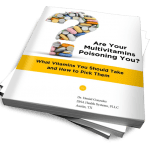
paperbackstack_550x498If you don't have time to stop by and listen to this important, and timely discussion, then you can pick up a copy of Dr. Daniel's new 30 page report by clicking here: Are your Multivitamins Poisoning You?

  • A multivitamin contaminant that could be lodging itself inside you and your family’s nervous system
  • Learn about the results of 38 leading multivitamin brands and whether they contain what they claim on the label?
  • How to avoid being a sucker and what to look for in a good multivitamin.
  • The “NATURAL” fallacy and the IMPORTANT differences between food-based and synthetic vitamins .
  • The 5 things I personally look for when reading multivitamin labels to make sure it’s legit!
  • What are the 4 important vitamins and supplements that even healthy people need to be taking?

addtocart

This report is selling for $27, but you can get a copy for only $7

(or you can come and listen tonight at 7pm!)

The Truth About Dangerous Supplements | Find out Tonight2026-04-26T11:13:54-05:00

Artificial Sweeteners | 13000 times sweeter than sugar!

STUDY PROVES IT:

Zero-Calorie Sweeteners Just As Bad As Sugar (Perhaps Even Worse)

At Packing on FAT…

AND A HOST OF OTHER HEALTH PROBLEMS!

Nowadays, many individuals turn to artificial sweeteners as a substitute for their sugar fix. What most of the public isn’t aware of is how dangerous these chemicals have been demonstrated to be in countless scientific studies. Aside from the dozens of neurological conditions brought on by artificial sweeteners, a surprising finding is the fact that they can actually cause you to GAIN weight – rather than lose it.

Of course, this is surprising because people have been led to believe that they will lose weight using them.

But before we jump into the negative consequences of artificial sweeteners, let’s have a quick look at how rampant they’ve become in our food supply…

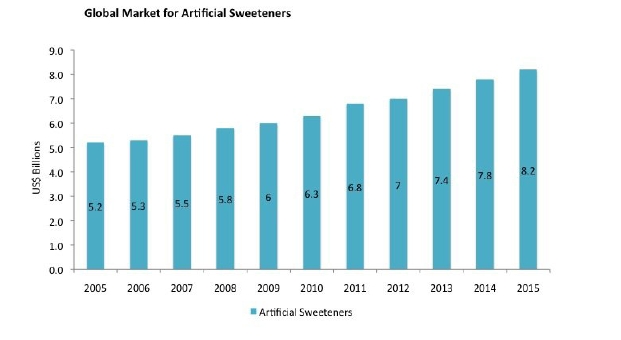
This first graph represents the growing GLOBAL MARKET for artificial sweeteners (in US $billions)

risks of artificial sweeteners

risks of artificial sweeteners

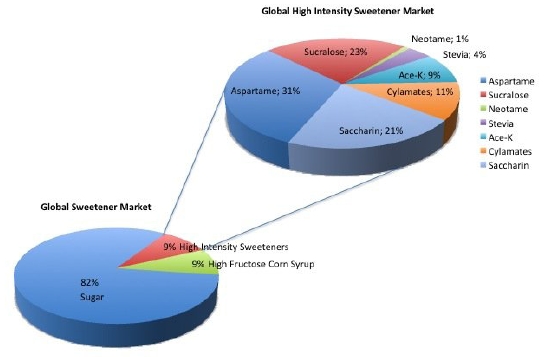
This second graph shows the “sweeteners” market share in relation to sugar…

sweetener-chart

Weight Gain – An Unknown Artificial Sweetener Side Effect

artificial-sweeteners-weight-gainContrary to popular belief, replacing blatant sugar with artificially sweeteners like splenda, aspartame, or others won't help you lose weight. A 2008 study from Purdue University compared rats eating yogurt that had been sweetened with glucose (simple sugar), compared to rats eating yogurt sweetened with a zero-calorie substitute called saccharin (Sweet N Low).

The study showed that the rats consuming the zero-calorie substitute gained more body fat, more overall weight, and that even after cessation of the saccharin intake, they were unable to make up for this weight gain.

The question that this brings to mind for most people is how does something that contains zero calories cause you to gain more weight than something loaded with sugar?

The answer lies in how the intake of these sneaky chemicals confuses your body’s sensory systems. Normally, sweet foods provide a “salient orosensory stimulus” that strongly predicts that you are about to take in a lot of calories.

Ingestive and digestive reflexes gear up for that intake but when false sweetness (such as by using artificial sweeteners) isn’t followed by lots of calories, the system gets confused. Thus, people may eat more or expend less energy than they otherwise would.

The researchers in the Purdue study stated that by breaking the connection between a sweet sensation and high-calorie food, the use of saccharin changes the body’s ability to regulate intake, and that this change is heavily dependent on experience.

Problems with self-regulation might explain in part why obesity has risen in parallel with the use of artificial sweeteners. It also might explain why research on the human use of artificial sweeteners is inconclusive, with various studies finding evidence of weight loss, weight gain or little effect.

Because people may have different experiences with artificial and natural sweeteners, human studies that don’t take into account prior consumption may produce a variety of outcomes.

Nonetheless, the authors concluded that…

“The data clearly indicate that consuming a food sweetened with no-calorie saccharin can lead to greater body-weight gain and adiposity than would consuming the same food sweetened with a higher-calorie sugar.”

And even though this study was done on rats, they noted that their findings match emerging evidence that people who drink more diet drinks are at higher risk for obesity and metabolic syndrome, a collection of medical problems such as abdominal fat, high blood pressure and insulin resistance that put people at risk for heart disease and diabetes.

Though an increase in appetite is one contributing factor to the weight gain caused by artificial sweeteners, the chemical imbalances and confusion they create inside your body work in other ways as well.

For instance, frequent consumption of zero-calorie artificial sweeteners can impair your body’s normal metabolic response to food intake. Since your body begins to realize it can no longer predict with accuracy when it is getting foods with calories, as opposed to foods that only taste like they do, the typical metabolic boost you get from eating food (ie. thermic effect of food) decreases. This makes it harder to expend more calories from dietary intake.

Needless to say, there are studies that show weight loss is possible when substituting artificial sweeteners for sugar but in many cases these studies have been influenced or funded by corporations with a vested interested in their results (more on this later).

Aspartame – The Controversial Origins of the “Super” Artificial Sweetener

Aspartame, which is by far the most prominent artificial sweetener currently used in diet products, is also the most controversial of them all (you’ll see in the next section). Its origins are questionable, to say the least. Many claim it never should have been allowed on the market. The few who argue it is safe, have very little ground to stand on for those educated on how it became approved.

Many of the studies done to determine the safety of aspartame, in the process of its approval as a food additive, have had severe conflicts of interest mainly due to inappropriate by Searle, the very same company that produces NutraSweet (their “street name” for aspartame).

Dr. Robert Walton investigated the claims made that Searle essentially bought their way into the market. The results he found were quite shocking. In the 166 studies that he found to have relevance in regards to human safety, 74 of those studies had been funded by Searle. The 92 remaining studies were funded independently.

Unsurprisingly, of the 74 studies that were funded by Searle, 100% of them claimed that aspartame was safe for human use. As far as the independently funded studies, 92% of them found health concerns in regards to aspartame, and found it to be unsafe for human consumption.

Even before aspartame had come to this point, it encountered numerous legal, political, ethical, and moral barriers. Aspartame was inadvertently discovered back in 1965, by a chemist working on an ulcer medication. The timeline between when aspartame was discovered to when it was released on the market is blemished with countless actions of deception from Searle.

One of the earliest tests, done by the University of Wisconsin in 1967 by Dr. Harold Waisman, had been conducted on monkeys who drank milk which contained aspartame. Of the seven monkeys being fed the mixture, one died and five others experienced grandular seizures. Despite these early warning signs, Searle pushed on.

In 1971, a neuroscientist by the name of Dr. John Olney, conducted several studies which showed that the aspartic acid found in aspartame, caused holes in the brains of baby mice. Later, one of Searle’s own researchers, conducted a similar study and concluded the same results as the ones demonstrated by Dr. Olney. Again, Searle pushed on.

In 1976, an FDA investigation of Searle was initiated, sparked by the many concerns that Searle’s personal studies on aspartame were inconsistent with research from independent studies.

The investigation results found Searle’s tests were not only full of inaccuracies, but also manipulated data. An investigator involved was quoted as stating they “had never seen anything as bad as Searle’s testing.”

Shortly after the investigation, the FDA sent a formal request to the U.S. Attorney’s office to begin grand jury proceedings. Not surprisingly, one of the most significant events of this procession saw Samuel Skinner, the U.S. Attorney in charge of the investigation, resigning from the attorney’s office and taking a position within Searle’s law firm, allowing Searle to buy themselves out a bad situation.

In spite of the fact that 75% of all health complaints are related to the use of aspartame, its use continues.

And if this hasn’t scared you enough, then consider that the “G.D. Searle and Co” (mentioned as Searle above) became the pharmaceutical unit of Monsanto in 1985 – one of the most criminal and monopolist agricultural companies in the world.

It should come as no surprise then that the Searle pharmaceutical division was responsible for the development of one of the biggest pharmaceutical disasters of our time – Celebrex.

Just something to think about next time you’re deciding how to sweeten your coffee or tea.

Artificial Sweeteners Side Effects in Humans

Ideally, it should only be a matter of time before ALL these chemical sweeteners are pulled off the market but because of BIG business that probably won’t happen anytime soon.

Nonetheless, in 1970, cyclamate (one of these man-made chemicals) was removed from the market due to concerns that it promoted cancer growth.

Additionally, the artificial sweetener saccharin has also been found to cause tumors in the bladders of rats. Despite being briefly removed from the market after the study, it was soon back on the market again, without any warning of the health risks to the consumer. So saccharin, aspartame, and cyclamate have all been shown to have concerns for cancer risks, yet two of the three still remain on the market today.

Let’s look at the biggest concern – Aspartame – in more detail.

To understand its nasty side effects, it’s helpful to realize that Aspartame is comprised of 4 deadly compounds: phenylalanine, aspartic acid, methanol, and DKP.

PHENYLALANINE

The largest component of aspartame is called phenylalanine, making up 50% of the artificial sweetener.

Phenylalanine is an amino acid normally found in the brain. Persons with the genetic disorder phenylketonuria (PKU) cannot metabolize phenylalanine. This leads to dangerously high levels of phenylalanine in the brain (sometimes lethal). It has been shown that ingesting aspartame, especially along with carbohydrates, can lead to excess levels of phenylalanine in the brain even in persons who do not have PKU.

This presents a serious problems since high levels of phenylalanine in the brain can cause the levels of serotonin to decrease, leading to emotional disorders such as depression. It has been shown in human clinical trials that phenylalanine levels of the blood are increased significantly in those who chronically use aspartame.

Even a single use of aspartame raised the blood phenylalanine levels. In his testimony before the U.S. Congress, Dr. Louis J. Elsas showed that high blood phenylalanine can be concentrated in parts of the brain and is especially dangerous for infants and fetuses. He also showed that phenylalanine is metabolized much more efficiently by rodents than by humans. Thus, rodent studies showing minimal effects of phenylalanine should be considered with a grain of salt.

ASPARTIC ACID

Now, let’s move on to the next deadly component with Asparatame – aspartic acid. Roughly 40% of aspartame is made up of aspartic acid.

Dr. Russell L. Blaylock, a professor of neurosurgery at the Medical University of Mississippi, has cited 500 scientific references to show how excess free excitatory amino acids such as aspartic acid in our food supply are causing serious chronic neurological disorders and a myriad of other acute symptoms.

Aspartate (from aspartic acid) acts as a neurotransmitter in the brain but too much of it can kill certain neurons by allowing too calcium into the cells, which triggers an onslaught of free radical damage. This influx triggers excessive amounts of free radicals, which kill the cells.

Unfortunately, the blood brain barrier, which normally protects the brain from excess influx of aspartate (as well as many other toxins) does not fully protect against excess levels of this “excitotoxin” in the blood. Thus, aspartame ingestion has been associated with a number of neurological defects such as memory loss, multiple sclerosis, headaches, vision problems, dementia, brain lesions, and more.

One common complaint of persons suffering from the effect of aspartame is memory loss. Ironically, in 1987, G.D. Searle, the manufacturer of aspartame, undertook a search for a drug to combat memory loss caused by excitatory amino acid damage.

But wait, there’s more.

METHANOL 

Methanol (or wood alcohol) is a deadly poison and makes up 10% of aspartame. Some people may remember methanol as the poison that has caused some “skid row” alcoholics to end up blind or dead. Methanol is gradually released in the small intestine when the methyl group of aspartame encounters the enzyme chymotrypsin.

To make matters worse, methanol is then broken down into formic acid and formaldehyde in the body. Formaldehyde is a deadly neurotoxin. It’s the same stuff used to preserve dead bodies.

An Evironmental Protection Agency (EPA) of methanol states that methanol “is considered a cumulative poison due to the low rate of excretion once it is absorbed. In the body, methanol is oxidized to formaldehyde and formic acid; both of these metabolites are toxic.”

The EPA recommends a limit of consumption of 7.8 mg/day.

But why would ANY level of poison consumption be safe?

diet cokeTo give you some perspective, a one-liter bottle of Diet Coke contains about 56 mg of methanol. Heavy users of aspartame-containing products consume as much as 250 mg of methanol daily or 32 times the EPA limit!

Keep that in mind the next time you drink a Diet Coke or opt for NutraSweet.

Symptoms from methanol poisoning include headaches, ear buzzing, dizziness, nausea, gastrointestinal disturbances, weakness, vertigo, chills, memory lapses, numbness and shooting pains in the extremities, behavioral disturbances, and neuritis. The most well known problems from methanol poisoning are vision problems including misty vision, progressive contraction of visual fields, blurring of vision, retinal damage, and blindness.

Formaldehyde, on its own, is a known carcinogen, causes retinal damage, interferes with DNA replication and causes birth defects.

Sounds good to me. Sign me up for more.

Considering these dangers, why doesn’t the FDA or FTC step and shut down the use of these poisons in our food supply?

Well, it’s partly due to monetary reasons – artificial sweetener are HUGE business.

Another reason is that no scientist in their right mind would subject human beings to ingesting these poisons just to see what happens.

In fact, we humans lack a couple of key methanol-related enzymes, making more sensitive to the toxic effects of methanol than animals. Therefore, tests of aspartame or methanol on animals do not accurately reflect the danger for humans.

As pointed out by Dr. Woodrow C. Monte, director of the food science and nutrition laboratory at Arizona State University, “There are no human or mammalian studies to evaluate the possible mutagenic, teratogenic or carcinogenic effects of chronic administration of methyl alcohol.”

This is how sick and twisted our food supply has become…

Dr. Monte was so concerned about the safety issues of methanol (and aspartame) that he filed suit with the FDA requesting a hearing to address these issues. He asked the FDA to…

“Slow down on this soft drink issue long enough to answer some of the important questions. It’s not fair that you are leaving the full burden of proof on the few of us who are concerned and have such limited resources. You must remember that you are the American public’s last defense. Once you allow usage (of aspartame) there is literally nothing I or my colleagues can do to reverse the course. Aspartame will then join saccharin, the sulfiting agents, and God knows how many other questionable compounds enjoined to insult the human constitution with governmental approval.”

Shortly thereafter, the Commissioner of the FDA, Arthur Hull Hayes, Jr., approved the use of aspartame in carbonated beverages, he then left for a position with G.D. Searle’s public relations firm.

Aspartame also becomes more dangerous inside the human body when it has previously been heated about 86 degrees F. In spite of this reality, an “unconscionable” act was passed in 1993 by the FDA approving aspartame as an ingredient in numerous food items that would ALWAYS be heated to above 86 degree F (30 degree C)!

I hate to be the bearer of bad news but this information is critical for you to understand. It’s just one more reason why proper education is so important to your health. By knowing this information you should hopefully feel a sense of disgust with how big business has no interest in your health – not in the slightest.

You need to be in control of your health and the only way to do that is by educating yourself.

But just before we finish, there’s still one more nasty byproduct of aspartame that you need to know about, especially if the above 3 have failed to convince you.

DIKETOPIPERAZINE (DKP)

DKP is a byproduct of aspartame metabolism, which has been implicated in the occurrence of brain tumors, uterine polyps, and elevated blood cholesterol.

G.D. Searle conducted animal experiments on the safety of DKP. The FDA found numerous experimental errors occurred, including “clerical errors, mixed-up animals, animals not getting drugs they were supposed to get, pathological specimens lost because of improper handling,” and many other errors. These sloppy laboratory procedures may explain why both the test and control animals had sixteen times more brain tumors than would be expected in experiments of this length.

In an ironic twist, shortly after these experimental errors were discovered, the FDA used guidelines recommended by G.D. Searle to develop the industry-wide FDA standards for good laboratory practices.

Are There Any SAFE Artificial Sweeteners?

The short answer is NO. As with any food item produced by man, the goal is usually to cut corners and maximize profits. Health is of little concern to most food conglomerates, especially considering that the big wigs at the top are so disconnected from what their “products” are doing to the health of millions of people

There are sweeteners on the market like splenda and acesulfame K but once again, they have many deleterious effects in the human body.

Your best bet is to avoid them at all costs. If I’m at Starbucks and have the choice between raw brown sugar or NutraSweet (or Sweet n Low), I’ll take the sugar any day of the week.

As a general rule of thumb, choose natural whenever possible.

Good Sweeteners?

Listen, if you need to sweetener your coffee, tea, or anything else you should first look at parting ways with this habit. Drinking coffee is bad enough, let alone adding sugar to it. If you must have a cup of coffee, drink it black.

But if sweeteners are a must, here’s a list of what I would recommend. However, bear in mind that each of these can be better or worse depending on how they are processed:

Stevia – derived from a natural plant in the sunflower family, it is 300 times sweeter than sugar. I’ve used this but I’m not too fond of its lingering after taste.

Xylitol – naturally derived from the fiber within plant foods. Surprisingly, it actually helps fight cavities.

Raw honey – has many beneficial health properties but can range in glycemic index from low to high depending on the variety. It is usually harder to find but well worth using in small amounts.

Pure Maple Syrup – this sweet sap-derived sweetener is loaded antioxidants but comes with a higher glycemic index. I use maple syrup immediately post-workout (in a smoothie) as this is the only time your body can properly deal with high glycemic simple sugars.

If you’ve been to lied about these zero-calorie sweeteners, just imagine what else you don’t know. Aren’t you tired of all the misleading and confusing health and nutrition information?

Artificial Sweeteners | 13000 times sweeter than sugar!2026-04-26T11:13:54-05:00

Measles Vaccine Shmeasles | The Measles Scare of 2015

Don't accept out of hand the alarms raised by the same people who say your food is safe, Swine Flu and Ebola were going to kill us, vaccines are without costs, and the pharmaceutical industry is working for your benefit.

Just like we are all supposed to be dead from Ebola… ”The Measles” is comin to getcha! (Of course this is not true.) It's probably just MERCK's stock was dropping and someone decided the american public needed a little scare to get people to vaxjab themselves and their kids.

DISNEY'S MEASLES DEBACLE

DisneyWorld employs 58,000 people in Orlando. Roughly 46,500 people visit the park per day for a total of 104,500.

We have 70 cases so far, or 1 case for every 1493 people working at or visiting the park in any given day. That's a high number for measles in general, but then again, 47 MILLION people visit the park each year. If we are talking 70 cases in a year, we are talking 79 out of 47,104,500, or one case in 672,921 (LOL!).

It gets worse. Nowhere in the article is it asserted all 70 cases come from 2015, so to be fair to Disney, we are probably talking about 2014 cases too when we mention the magic number of 70. Then we have to multiply by two and we get one case of measles out of 1,345,842 visitors/workers.

Divide this number by 100k, and you get 13.42. Now go to the causes of death by rate, and you find you are more likely to DIE of stomach cancer than to contract measles at Disney.

Just this year… A Measles Outbreak Was Traced to A Fully Vaccinated Patient for First Time

sn-measles

Get the measles vaccine, and you won’t get the measles—or give it to anyone else. Right? Well, not always. A person fully vaccinated against measles contracted the disease and passed it on to others. The startling case study contradicts received wisdom about the vaccine and suggests that a recent swell of measles outbreaks in developed nations could mean more illnesses even among the vaccinated.

China has one of the most vaccination compliant populations in the world. In fact, measles vaccine is mandatory. So why have they had over 700 measles outbreaks from 2009 and 2012 alone? The obvious answer is the the measles vaccines are simply NOT effective. 

BUT, BUT, But the Measles Vaccine Saved us…. Uh… Well… not really!

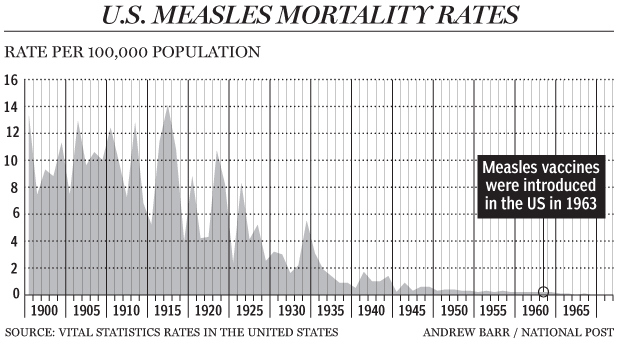
Look how mortality rates were dropping way before the vaccine was even introduced. Pretty sure this had to do with public sanitation and hygiene, not the vaxcrap snake juice we've been sold on. Bah!

measle_rates_us

VACCINES ARE NOT EFFECTIVE

A recent study published in PLoS titled, “Difficulties in eliminating measles and controlling rubella and mumps: a cross-sectional study of a first measles and rubella vaccination and a second measles, mumps, and rubella vaccination,” has brought to light the glaring ineffectiveness of two measles vaccines (measles–rubella (MR) or measles–mumps–rubella(MMR) ) in fulfilling their widely claimed promise of preventing outbreaks in highly vaccine compliant populations.

Another study published this year (January 2015) in the Journal of Pediatrics found that vaccines are linked to SIDS!!!!

It's amazing how on one end parents are placed under intense pressure and scrutiny to vaccinate their kids. They are told that refraining from vaccinating their infants or children will greatly increase their risk of dying or being disabled. Worse, they are increasingly labeled as ‘crazy' and ‘irresponsible' anti-vaccine zealots who are putting the lives of others in danger.

But what happens when the actual evidence from the scientific and clinical literature produced by these very agencies contradicts their own vaccine policies?

This is exactly what has happened with the publication of a new study in the Journal of Pediatrics titled ,”Adverse Events following Haemophilus influenzae Type b Vaccines in the Vaccine Adverse Event ReportingSystem, 1990-2013,” wherein CDC and FDA researchers identify 749 deaths linked to the administration of the Hib vaccine, 51% of which were sudden infant death linked to the administration of Hib vaccine.

VAERS received 29,747 reports after Hib vaccines; 5179 (17%) were serious, including 896 reports of deaths. Median age was 6 months (range 0-10.22 months). Sudden infant death syndrome was the stated cause of death in 384 (51%) of 749 death reports with autopsy/death certificate records. The most common non death serious AE categories were neurologic (80; 37%), other noninfectious (46; 22%) (comprising mainly constitutional signs and symptoms); and gastrointestinal (39; 18%) conditions. No new safety concerns were identified after clinical review of reports of AEs that exceeded the data mining statistical threshold.

This callous disregard for the evidence — evidence that clearly shows the CDC misrepresents the safety of the HiB vaccine — speaks to the blind investment in vaccine policy decisions over human wellbeing. Millions of parents have listened to the CDC and FDA and believed that these vaccines not only work but are safe. Informed consent requires those undergoing a quasi-mandatory medical intervention like vaccination to know the true risks associated with it. Failing to do so is clearly a violation of this medical ethical protection against being abused, and in some cases disabled and even killed.

That's just Ri-DAN-culous!

-Dr. Dan

Measles Vaccine Shmeasles | The Measles Scare of 20152026-04-26T11:13:54-05:00

Are You Magnesium Deficient?

Are you feeling run down, irritable and experience chronic stiffness? Do you find it hard to get a good night's sleep… Or do you find yourself tossing and turning with legs that ache…

If so, there's a very good chance you may be deficient in magnesium!

Magnesium deficiency has become one of the biggest mineral deficiencies of the western industrialized world! Yet it is the single MOST IMPORTANT MINERAL for maintaining electrical balance and metabolism in our cells.

UNFORTUNATELY MAGNESIUM IS NOT IN OUR FOODS!

Did you know that the mineral content of vegetables today has dropped by more than 80 percent in some cases.

Commercial farming technology and powerful fertilizers practically sterilize the soil – leaving it with little-to-no mineral content!

Magnesium content in vegetables has dropped between 25-80% since before 1950. And we’re NOT getting it from other foods, either:

>>> Refined grains remove 80-97% of magnesium
>>> Refined oils remove all magnesium
>>> Refined sugar removes all magnesium

Today statistics show that a majority of people are magnesium deficient.

This is bad news, because magnesium is one of your body’s “master minerals.”

Magnesium rich foods are essential for cellular health and over 300 biochemical functions in the body. Unfortunately, around 80% of American’s may have a magnesium deficiency and the majority of them don’t even know it!
A study published in BMC Bioinformatics found that your body has 3,751 magnesium binding sites.

This indicates that magnesium benefits are far greater than previously imagined. Because your body requires and uses magnesium for so many different functions, you can quickly become low in magnesium especially if you are not consuming enough high magnesium foods.

Some of the major functions that require magnesium are:

  • Protein synthesis
  • Nerve function
  • Blood sugar control
  • Neurotransmitter release
  • Blood pressure regulation
  • Energy metabolism
  • Production of the antioxidant glutathione

magnesium-banner1v

Are You Getting Enough Magnesium?

Magnesium deficiency is dramatically under-diagnosed because it does not show up on a blood test!

Only 1% of the magnesium in your body is stored in your blood and the majority of it is stored in your bones.

Some of the main health challenges that have been linked to a magnesium deficiency include:

  • Hormone imbalance and PMS
  • Fibromyalgia
  • Heart Attack
  • Type 2 Diabetes
  • Osteoporosis
  • Constipation
  • Tension or Migraine Headaches
  • Anxiety and Depression
  • Chronic Fatigue

As you can see, increasing your intake of high magnesium foods is essential to your health.

Best Magnesium Supplements

If you think you might be more severely magnesium deficient and you want to improve your levels more quickly you may consider taking a magnesium supplement. My recommendations are taking either magnesium chelate, magnesium glycinate or magnesium theonate. You should strive to get 600-1,200 mg of magnesium daily.

Start with at least 400 mg a day, and work your way up from there.  However, be careful of the cheap magnesium supplements you find on store shelves! They often have impurities, and most are so cheap you can’t even absorb them!?

Check out my own formula by clicking here!

magnesium-banner1v

Are You Magnesium Deficient?2026-04-26T11:13:55-05:00

Do you need chiropractic care?

Do you Need Chiropractic?

Asking if you need chiropractic is like asking if you need to brush your teeth.  There is no question that every day we expose our spine to stresses that result in early wear and tear. From sitting down at a computer all day to driving cars and having bad posture due to modern technology – our spines are stressed to the point of disease.  Most people wait till they have a heart attack or stroke before deciding to get healthy. Don't wait for a surgical recommendation before deciding that you need chiropractic care.


Do you need chiropractic care?2026-04-26T11:13:55-05:00

This Makes You Fat & Diabetic

How This Chemical Makes You Fat & Diabetic

I spent most of my adult life (ages 18 – 29) living in apartments on a budget. Like other downtown condo-living natives, this meant all of my home furnishings came from IKEA, Target and Walmart – because let’s face it, they are affordable and yet trendy.

What I was not aware of, was the hidden toxin that had been sprayed all over it prior to being shipped to the warehouse and then personally assembled in my home. I was also unaware of the fact that the gas from these chemicals can continue to seep into the carpet and walls. It then becomes a sort of force field that is constantly transferred to the dust that collects in our homes only to continuously expose us day in and day out. Chemical Crap!

In fact, most of us in the Western world are being exposed to this hidden toxin right now. It’s responsible for slowing metabolism, disrupting hormones and causing cancer. For many it can trigger asthma and breathing problems, headaches, joint pain and even infertility.

I’m talking about flame retardants. And before you roll your eyes and assume that your not exposed, realize that it’s estimated that 75% of us are toxic with these chemicals already.

“We found that several toxic flame retardants are in people's bodies. When you sit on your couch, you want to relax, not get exposed to chemicals that may cause cancer,” said lead author, Robin Dodson, ScD”

Recent tests also revealed that most people have no less than six different flame retardants in their system. Say Wow. No really, say it! The most shocking of all was chlorinated tris (TDCIPP), a chemical that was phased out of children’s pajamas decades ago.

Every time I read about flame retardants and how they’re running rampant within our bodies, I think of the “new furniture smell” that lingers for days after you set it up. Is that smell making me sick?

This is why I personally detox and cleanse my body every 3-4 months out of the year. If you're interested in my clinical detox system, check out The Real Health Blueprint Launching in January!

1ae5ba3bdb4343e1914b86163fc40329

Flame Retardants: A Quick History

In his article, Americans Have More Toxic Flame Retardants in Their Bodies Than Previously Thought, Dr. Joseph Mercola explains how flame retardants were initially used in furniture manufacturing to prevent cigarette fires.

Flame-retardant chemicals were developed in the 1970’s, when 40 percent of Americans smoked and cigarettes were a major cause of fires. The tobacco industry, under increasing pressure to make fire-safe cigarettes, resisted the push for self-extinguishing cigarettes and instead created a fake front group called the National Association of State Fire Marshals.

In 1975, the California Technical Bulletin 117 (TB117) was passed and required furniture sold in California to withstand a 12-second exposure to a small flame without igniting. This state requirement quickly became an international standard.

Since then, their use has skyrocketed. Research published in Environmental Science and Technology revealed that 85% of couch foam samples contained flame retardants.

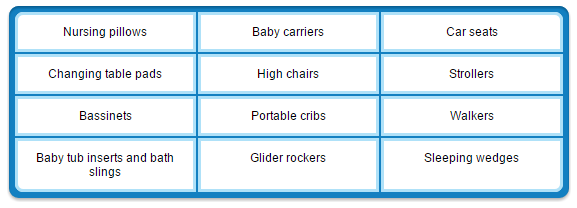
Aside from couches and mattresses, such chemicals were detected in 60 percent of car seats tested by The Ecology Center while a separate study in Environmental Science & Technology also detected flame-retardant chemicals in 80 percent of the following children’s products tested:

flame retardants

TAKE THIS FREE TEST

The generous scientists at Duke University’s Superfund Research Center have implemented a sampling system to find out if your furniture contains levels of flame retardants. The process works as follows:

1. Complete their online form to receive a sample ID.
2. Prepare your sample:

  • Cut a piece of foam, 1 cubic centimeter in size (a little bigger than the size of a marble)
  • Wrap the foam in aluminum foil
  • Place each foam sample in its own re-sealable sandwich bag; be sure to completely seal the bag
  • Attach or write the Sample ID Number on the re-sealable sandwich bag

3. Mail it in. Enclose the following in a box or envelope:

  • Foam sample with Sample ID Number written on bag (Step 2)
  • Copy of confirmation email (Step 1)

Mail to:
Gretchen Kroeger
Box 90328 – LSRC
Duke University
Durham, NC 27708

It’s pretty cool that this sort of service is being offered to the public considering there are really no other easily accessible services like this available.

The Health Risks

PBDEs or Flame Retardants resemble the molecular structure of PCBs, which have been linked to cancer, reproductive problems, and impaired fetal brain development. Like PCBs, even though certain PBDEs have been banned in some US states and the European Union, they persist in the environment and accumulate in your body – and can still exist in products imported from other countries.

Higher levels of PBDEs have even been linked to fertility issues, which may be likened the chemical structure resembling thyroid hormones.

Earlier this year, another study also found that children whose mothers were exposed to flame retardant chemicals during pregnancy have lower IQs and are more prone to hyperactivity disorders. Researchers also found that children involved in the study had concentrations 5 times higher in their bodies compared to their mothers. Could this be the reason why cancer rates are so high in children these days? Makes ya wonder huh?

Flame Retardants Make You Fat & Diabetic.

Exposure to a variety of brominated flame retardants have been associated with the development of type 2 diabetes and metabolic syndrome in people with low, background levels of exposure. Animals exposed to flame retardants develop high blood sugar, gain weight, and show immune system effects and changes in gene expression linked to type 1 diabetes. Holy cow. As if just sitting on the couch doesn’t make us fat enough, now the chemicals you get from your couch are making you fat as well!

The newest science suggests that endocrine-disrupting chemicals (EDCs) such as flame retardants may also be the real trigger behind the obesity epidemic. The association is becoming so clear that they’ve been dubbed obesogens.

Chemical flame retardants are the most common EDCs in most homes. They’re found in foam-filled furniture, in most kinds of mattresses (including memory foam) and pillows, in many fabrics, and in ordinary house dust. Released continuously indoors, they also build up in the human body. Nothing has escaped the global flood of these compounds — they’ve even been detected in marine mammals as well as in outdoor air.

Don’t panic. Just start where you can. Even small steps will make a difference. Gradually ridding your home of synthetic foams, including memory foam, is the best way to begin. And the key place to begin is where you spend the most extended time — in the bedroom. Your natural bedroom — and your baby’s — will go a long way to reduce your family’s exposures to flame retardants and many other suspect chemicals.

To read studies directly related to flame retardant exposure click here!

Tips To Reduce Current Exposure

  1. Start undergoing a Detox & Cleanse program every 3-4 months. I would recommend that you check out my own system launching in January at http://www.realhealthblueprint.com1ae5ba3bdb4343e1914b86163fc40329
  2. Be especially careful with polyurethane foam products manufactured prior to 2005, such as upholstered furniture,
    mattresses, and pillows, as these are most likely to contain PBDEs. If you have any of these in your home, inspect them carefully and replace ripped covers and/or any foam that appears to be breaking down.
  3. Older carpet padding is another major source of PBDEs, so take precautions when removing old carpet.
  4. Deca PBDEs can be found in electronics like TVs, cell phones, kitchen appliances, fans, toner cartridges, and more. It’s a good idea to wash your hands after handling such items, especially before eating, and at the very least be sure you don’t let infants mouth any of these items (like your TV remote control or cell phone).

This Makes You Fat & Diabetic2026-04-26T11:13:55-05:00

The Benefits of Chiropractic Adjustments

The Benefits of Chiropractic Adjustments

New Research is proving chiropractic adjustments benefit the body. Although millions benefit from chiropractic care by reducing or eliminating headaches, neck pain, back pain, sciatica and low back pain, many more benefit from a chiropractors approach to health.

There are a lot of misconceptions about chiropractic and how chiropractors are trained. In fact, did you know many chiropractic programs incorporate an entire year of PhD level advanced nutrition training? Did you know that chiropractors get more training in orthopedics, physical medicine and anatomy than medical doctors?

Why should you get chiropractic adjustments regularly?

Because several times throughout the day you expose your spine to potential damage such as:

  • A vertebra going out of place (“misalignment”) because of a slip or fall (i.e. “macrotrauma”)
  • The entire spine mis-aligning globally due to poor posture from sitting at work or in a car (i.e. “microtrauma”).
  • Joint swelling caused by damage done to the intervertebral joint.
  • An inflammatory response caused by a poor diet, lack of pure water, or psychological stress.
  • Osteoporosis or degenerative changes of the spine or intervertebral discs.
  • Trigger points and tight back muscles that pull the vertebrae out of place.

The Benefits of Chiropractic Adjustments2026-04-26T11:13:55-05:00
Go to Top