
How to Choose a Mattress and Pillow for Better Sleep
One of the most common questions patients ask at our Austin chiropractic office is, “What is the best mattress or pillow?” The honest answer is that there is no single best option for everyone. We all have different builds, sleep positions, and preferences, so the right choice comes down to support, comfort, and a bit of trial and error. Here is a practical guide to choosing a mattress and pillow that support healthy, restful sleep and a well-aligned spine.
Why Your Mattress and Pillow Matter
You spend roughly a third of your life in bed, so your sleep surface has a real impact on both how well you sleep and how your spine feels. A mattress that supports your body in good alignment, and a pillow that keeps your neck in a neutral position, can reduce aches and help you wake up feeling more rested. The goal is to keep your spine in a natural, comfortable position whether you sleep on your back, side, or stomach.
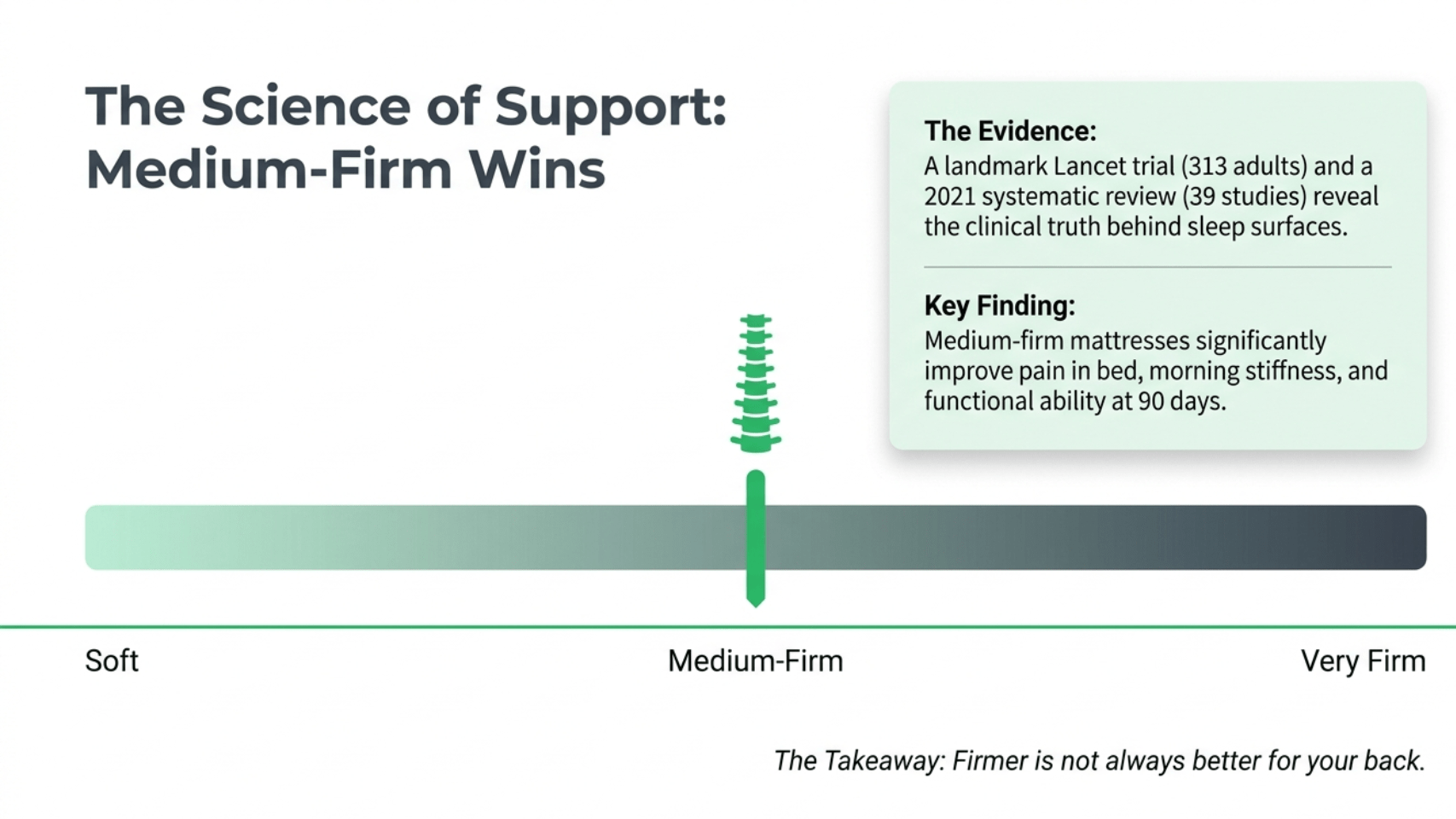
The research is clear on one point: mattress firmness matters. A landmark randomized controlled trial published in The Lancet followed 313 adults with chronic low back pain and found that those sleeping on a medium-firm mattress had significantly better outcomes for pain in bed, pain on rising, and functional disability at 90 days compared to those on a firm mattress (Kovacs et al., Lancet. 2003; PMID 14630439). A systematic review published in the Journal of Orthopaedics and Traumatology in 2021, which analyzed 39 qualified studies, confirmed this finding: a medium-firm mattress promotes comfort, sleep quality, and spinal alignment across most sleeper types (Caggiari et al., J Orthop Traumatol. 2021; PMID 34878594). The old belief that firmer is always better for your back is not supported by the evidence.
Choosing a Mattress
Rather than chasing a specific brand, focus on how a mattress fits your body and sleep style.
- Support and firmness: Medium-firm is the best-evidenced choice for most people with back or neck pain. If you currently sleep on a very firm or very soft mattress and wake with stiffness, this is worth reassessing.
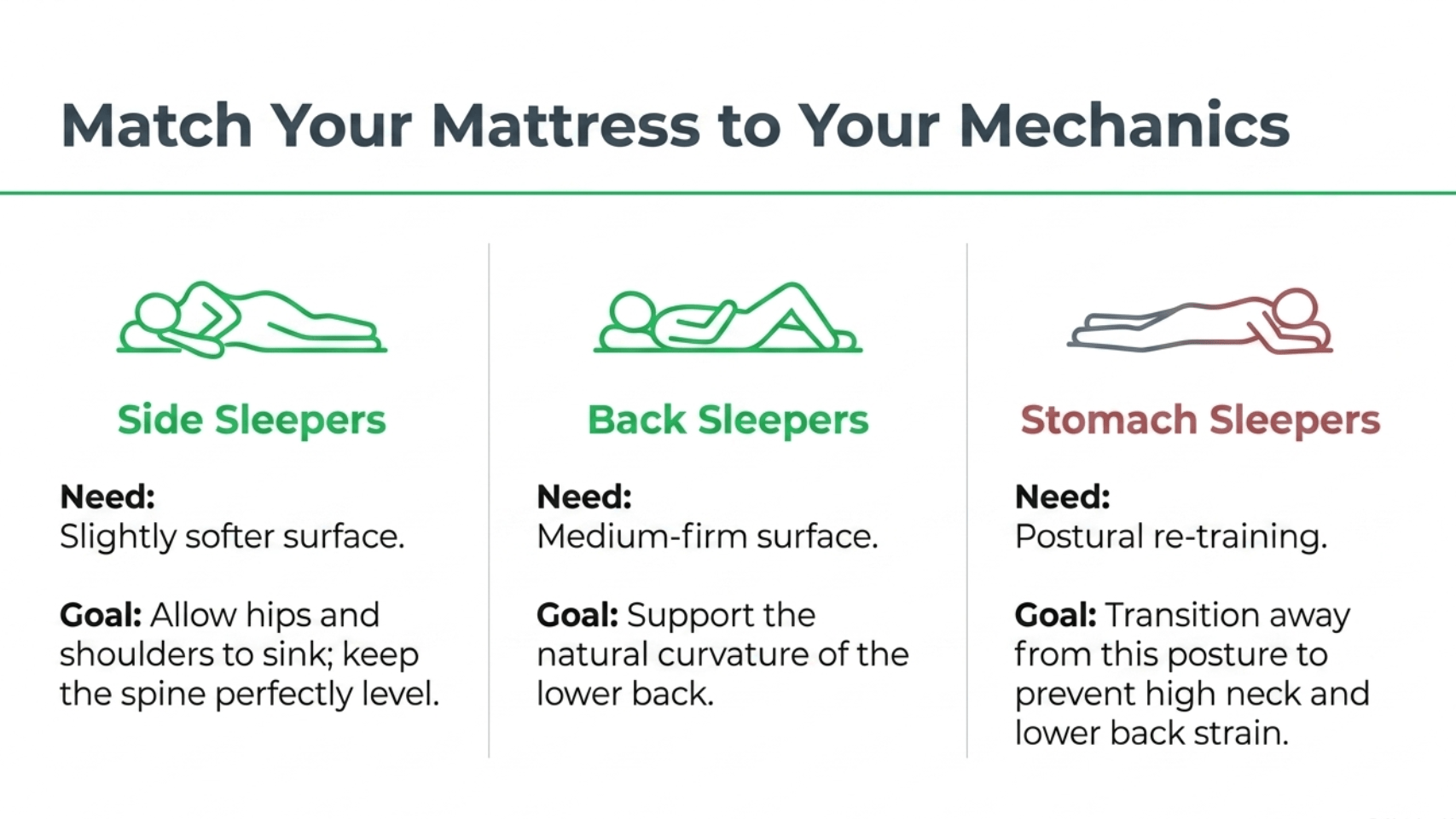
- Sleep position: Side sleepers generally need a slightly softer surface to allow the shoulder and hip to sink in while keeping the spine level. Back sleepers do well on medium-firm. Stomach sleeping places the most strain on the neck and lower back regardless of mattress, so it is worth trying to transition away from it.
- Trial period: Look for a retailer with a generous return or trial window, since the only real test is sleeping on it for a few weeks. A brief in-store test tells you very little about long-term comfort.
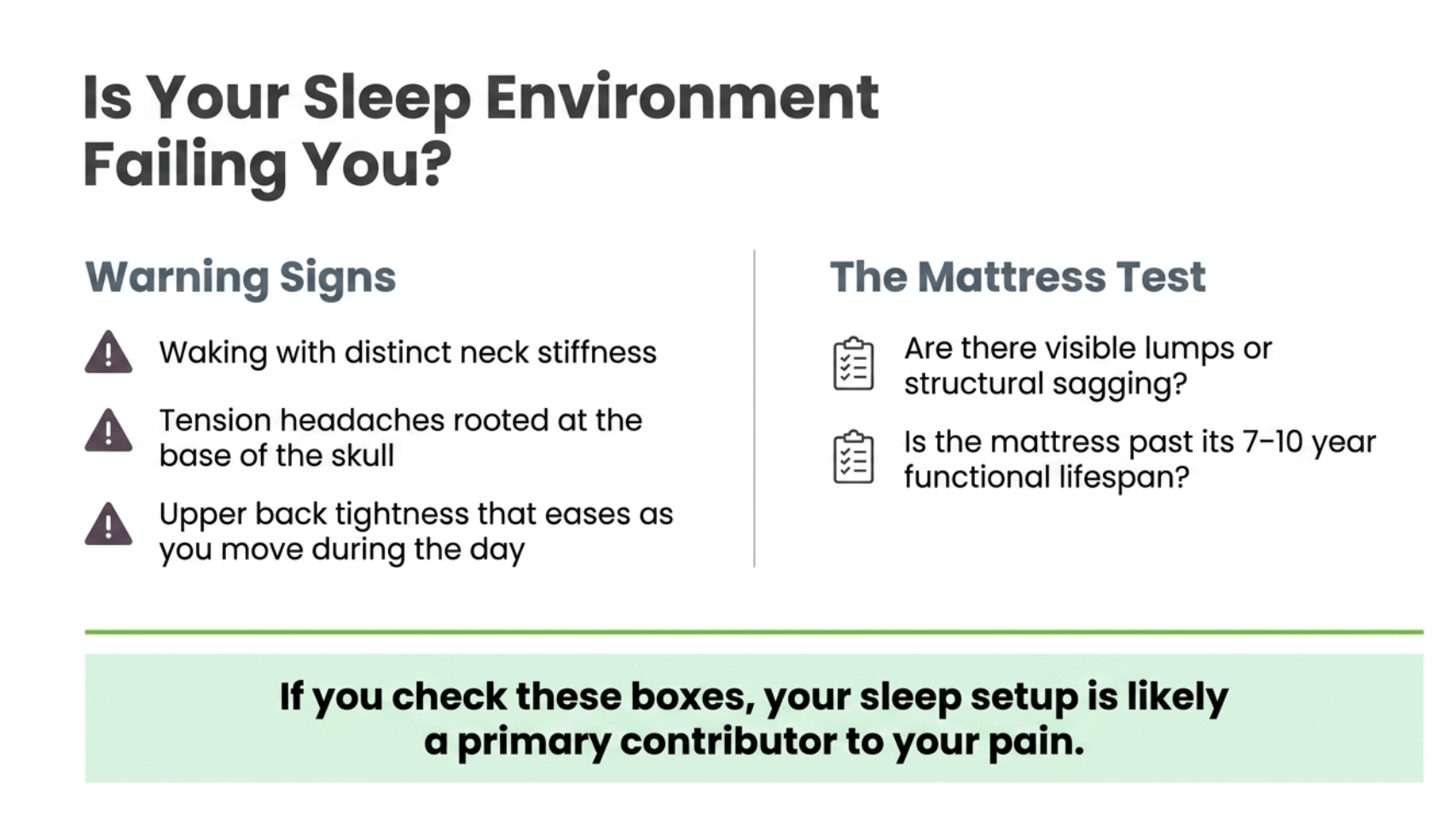
- Replace when needed: If your mattress sags, has visible lumps, or consistently leaves you sore in the morning, it is likely contributing to your discomfort. Most mattresses have a functional lifespan of 7 to 10 years.
Choosing a Pillow
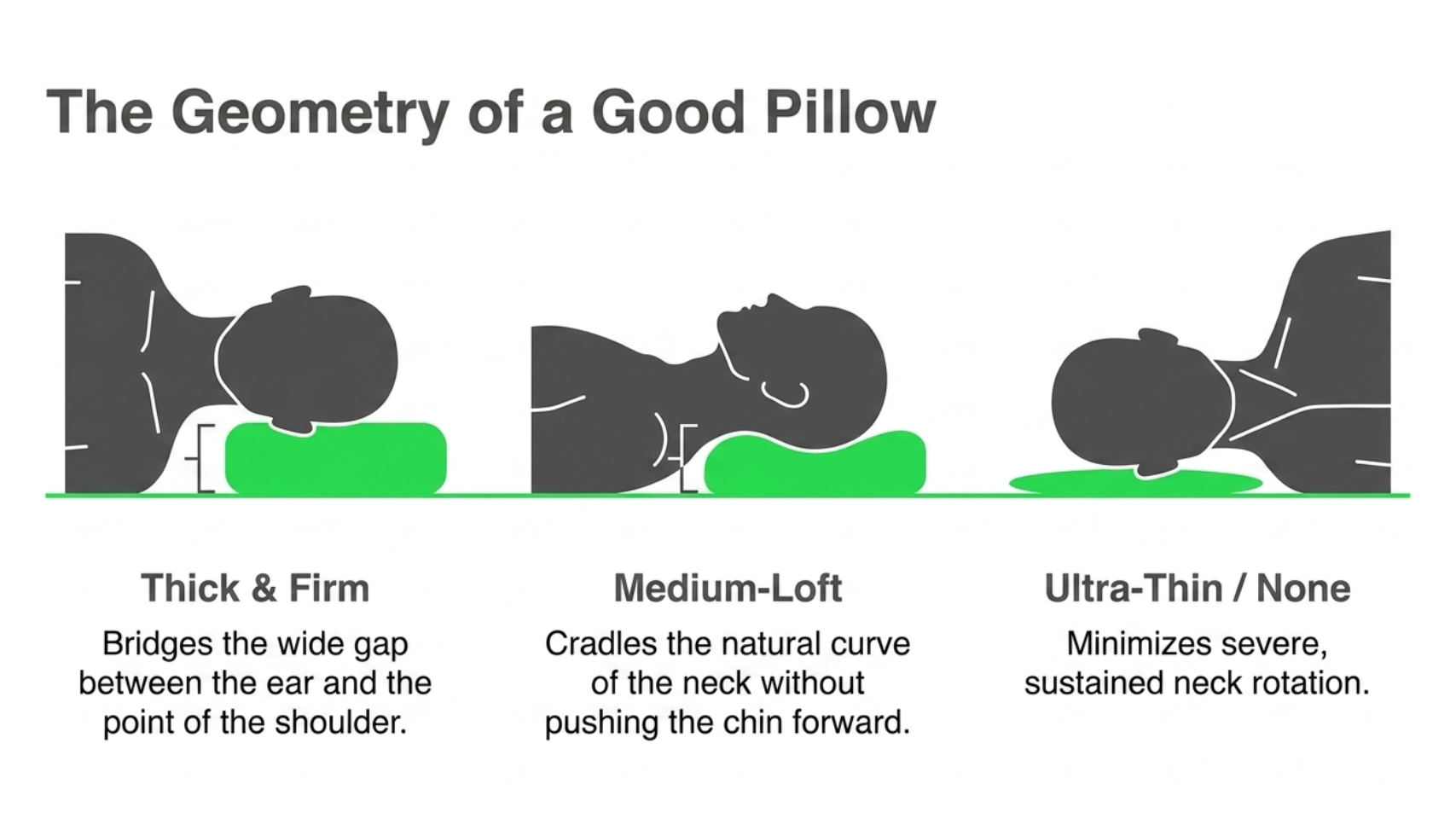
Your pillow should fill the space between your head and the mattress so your neck stays aligned with your spine. The ideal height depends on your sleep position and body frame.
- Side sleepers generally need a thicker, firmer pillow to bridge the gap between ear and shoulder.
- Back sleepers do best with a medium-loft pillow that cradles the natural curve of the neck without pushing the chin forward.
- Stomach sleepers need a very thin pillow or no pillow at all to reduce neck rotation and strain.
If you regularly wake with neck stiffness, tension headaches at the base of the skull, or upper back tightness, your pillow height is one of the first things worth reassessing. We often evaluate pillow and sleep position as part of a broader postural assessment at our Austin office.
What About Organic or Natural Options?
Some people prefer mattresses and bedding made from natural materials such as organic cotton, wool, or natural latex, often to reduce exposure to synthetic materials or because they prefer the feel. That is a perfectly reasonable personal choice. If it matters to you, look for recognized certifications that verify organic textile content. There is no evidence that material type alone affects sleep quality or back pain outcomes, so focus on support and fit first.
A Note From Our Austin Practice
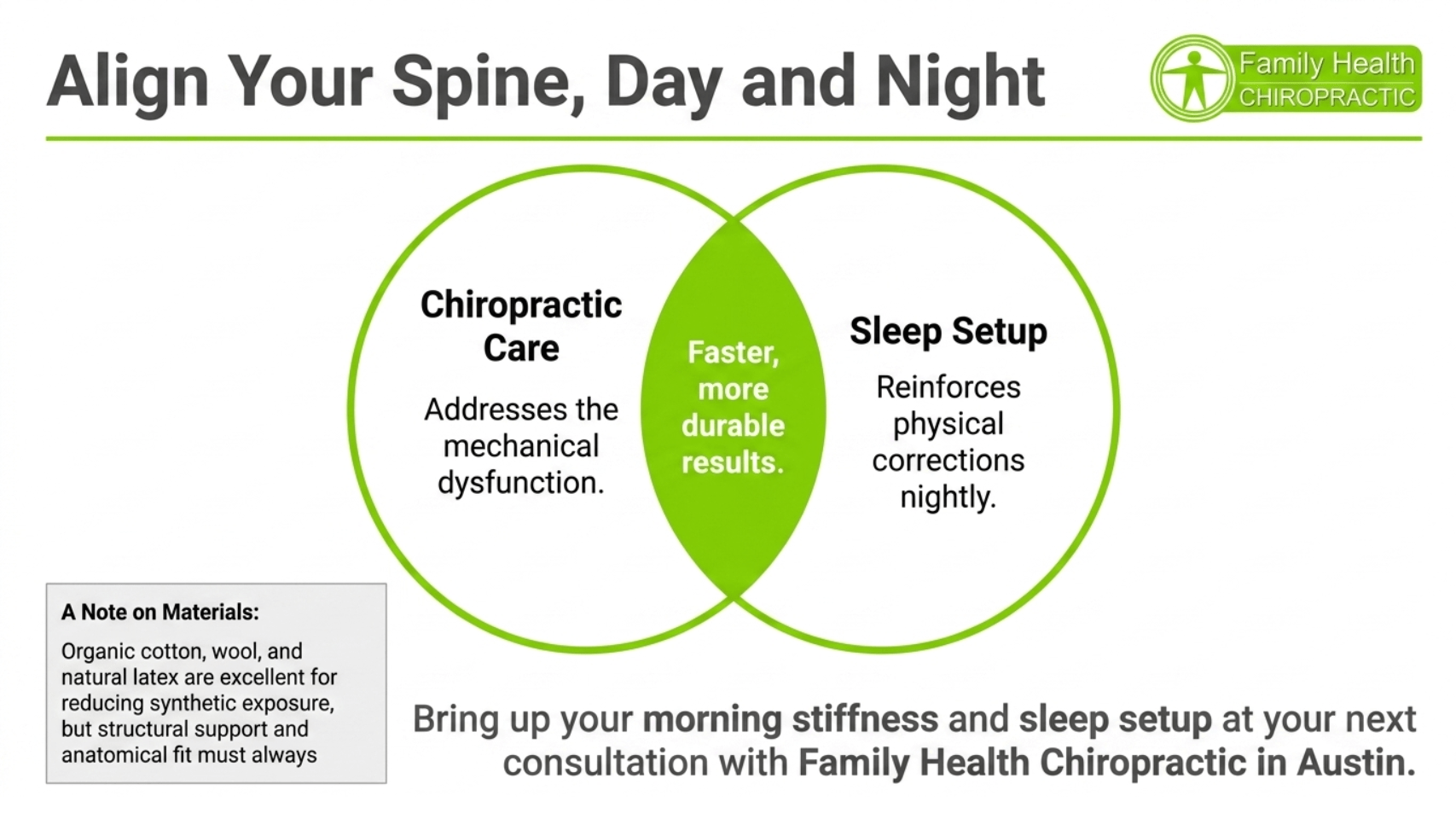
Sleep position, mattress support, and pillow height come up regularly in our patient consultations at Family Health Chiropractic in Austin. For patients dealing with persistent neck pain, upper back tightness, or morning stiffness, we often find that sleep environment is a meaningful contributing factor. Chiropractic care addresses the mechanical side, but pairing it with an appropriate sleep setup tends to produce faster and more durable results. If you are unsure whether your current setup is contributing to your symptoms, that is a good question to bring up at your next visit.
What firmness mattress is best for back pain?
The best-supported choice for most people with back pain is a medium-firm mattress. A randomized controlled trial published in The Lancet (2003) found that patients with chronic low back pain sleeping on a medium-firm mattress had significantly better outcomes for pain, stiffness, and function at 90 days compared to those on a firm mattress. A 2021 systematic review of 39 studies confirmed that medium-firm promotes spinal alignment and sleep quality across most sleeper types.
How do I know if my pillow is causing neck pain?
Common signs include waking with neck stiffness, tension headaches at the base of the skull, or upper back tightness that eases during the day. If your symptoms are worse in the morning and improve as you move around, your sleep position or pillow height is likely a contributing factor. A pillow that is too high, too low, or too soft may not maintain neutral neck alignment through the night.
Can a chiropractor in Austin help with sleep-related neck or back pain?
Yes. At Family Health Chiropractic in Austin, we regularly evaluate sleep position, pillow setup, and workstation ergonomics as part of a broader postural and spinal assessment. Chiropractic care addresses the mechanical component, while guidance on sleep environment helps reinforce those corrections between visits. If morning stiffness or sleep-related pain is part of your picture, bring it up at your consultation.
Ready to feel better?
If you are new to our office, learn what to expect on your first visit, or see our full range of chiropractic services.