Blog

NOT TONIGHT, DEAR: Dealing with Headaches

The connection between poor posture and headaches is well established. Poor posture causes muscle strain, changes in your breathing patterns and leads to a host of problems, including headaches. Neck pain and an occasional headache can easily become chronic if positive steps aren’t taken to get your posture back into alignment.

Poor posture results in the wasted use of muscle control against the forces of gravity. In addition to causing strain on the hamstrings and large back muscles important in maintaining posture, a condition called anterior head translation, or forward head posture, also places strain on your upper back and neck muscles. These muscles must work as though they are supporting an additional ten pounds of weight for every inch your head moves forward. The added strain puts pressure on the nerves in your neck and keeps upper back and neck muscles in a constant state of contraction, causing headaches.

Factors that contribute to poor posture and posture-related headaches include poor muscle tone, obesity, stress, pregnancy and high-heeled shoes. Personal habits and environmental concerns include a poorly assembled computer workstation, carrying heavy backpacks, and even the way you hold and carry an infant or small child.
Tension headache symptoms include mild to moderate pain, usually on both sides of the head or neck. In contrast, neck-related headaches are usually on one side of the head or neck. The pain associated with neck-related headaches may be severe.

The most important step you can take to alleviate or prevent these headaches is to improve your posture. Strength training that targets your back muscles and hamstrings is also beneficial as are alternative therapies such as massage, relaxation therapy, acupuncture, or chiropractic care.

Daily living, poor posture, and injury often result in tight neck muscles which can contribute to chronic headaches.

Gentle neck-stretching exercises can decrease this muscle tightness:

  • Flexion Stretch – Chin to Chest: Gently bend your head forward while bringing your chin toward your chest. Stop when a stretch is felt in the back of your neck. Hold position for 15-30 seconds. Return to starting position. (Neck in midline position). Repeat above stretch five more times.
  • Extension Stretch: Gently bend your head backward so that your eyes are looking up. Stop when a stretch is felt in the front of your neck. Hold position for15-30 seconds. Return to starting position. (Neck in midline position). Repeat above stretch five more times.
  • Lateral Flexion; Ear to Shoulder: Gently bend your neck in attempts to touch your left ear to your shoulder. Stop when a stretch is felt in the right side of your neck. Hold position for 15-30 seconds.

Stretching your shoulders can feel good, and it can also improve your posture.

  • Shoulder Rolls: Roll your shoulders down and back, starting with small circles and working up to larger circles. Do 10 circles backwards and then repeat forward circles.
  • Arm Circles: With one arm at a time, make backwards arm circle with your palm facing out, thumb pointed up. Repeat 15 with each arm.

Daily activities can often cause tight back muscles. Over time this can result in significant back pain and increase your risk for back injury.

  • Back Stretch: Contract your abs as you tip forward from the hips, bringing your hands down to the floor. Relax your head down and reach with your fingertips to stretch the back. Hold for 30 seconds.
  • Wide Back and Shoulder Stretch: Contract your abs as you tip forward from the hips. Take the feet wide and bring the arms inside the legs, then wrap your arms around the back of the calves, grabbing onto the ankles. Gently pull with your hands to open the shoulders and stretch the upper back. Hold for 30 seconds.

Some headaches are worse than others, but those created by bad posture are common and easily corrected and prevented. Good posture is the key!

NOT TONIGHT, DEAR: Dealing with Headaches2026-04-26T11:13:56-05:00

STAND AND DELIVER: Identifying and Correcting Bad Posture

[dcwsb inline=”true”]

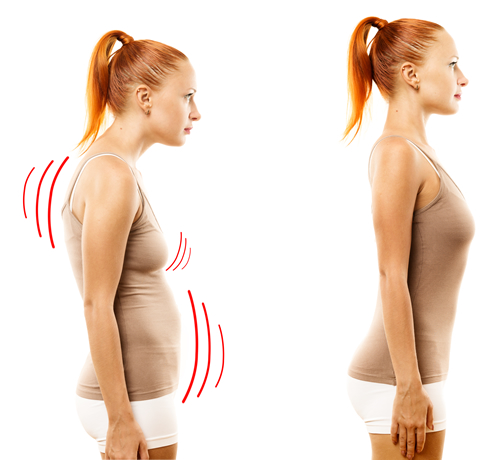
When seen from the front, the spine should be straight.  But when viewed from the side, the healthy spine has three gentle curves: In the neck and lower back, called lordosis; and in the chest area, called the kyphosis.  But these curves can become distorted and the spinal column (and the whole skeletal structure) can become misaligned.

good postureCHARACTERISTICS OF NATURAL ALIGNMENT (STANDING)

  • Leg bones form vertical columns of support.
  • Central axis or Center of gravity divides the entire body almost exactly in half.
  • Weight-bearing joints (ankle, knee, hip, and shoulder) line up along the central axis.
  • Pelvis and rib cage are in a natural, neutral position.
  • Spine is optimally elongated.
  • Muscles throughout the body are evenly balanced and elastic.
  • Internal organs are positioned naturally and not compressed.
  • Body is free from pain and tension.
  • Examples of unnaturally aligned bodies: note how the weight-bearing joints are unstable and under constant stress.

bad postureCHARACTERISTICS OF UNNATURAL ALIGNMENT (STANDING)
  • Leg bones are not vertical and don’t offer solid support for the body.
  • The skeleton does not organize around the vertical axis.
  • Weight-bearing joints are not stacked up, causing compression in the joints.
  • Pelvis and rib cage are misplaced.
  • Spine is contracted and shortened.
  • Muscles throughout the body must be chronically contracted.
  • Internal organs are ill positioned, crowded, and compressed.  The body is subject to chronic tension, pain, and stiffness.

Spinal misalignment is a three-dimensional problem, creating what is often called the screw matrix effect:

Here’s an easy home-test you can do with a partner: Start in a standing position, relaxed, feet about shoulder-width apart, eyes closed.  Tilt head forward and back, then side to side, the stop in the middle.  Partner, check these things while looking at the subject’s posture from the front:

  1. Are the eyes level?  To which side is the head tilting?
  2. Are the shoulders level?  Which is higher or lower?
  3. Is the head centered, or is it shifted toward one side or the other?  Which side?
  4. Are the hips level?  Which side is higher or lower?

These posture red flags may go away once the patient opens his or her eyes, as a matter of pure instinct, so make note of them while you can.

Noting the subject’s posture from the side:

  1. Look at the hold of the ear, is it lined up over the middle of the shoulder?
  2. Is the middle of the shoulder lined up over the middle of the pelvis/hip?
  3. Is the pelvis behind the shoulders (in back of the shoulders)?
  4. Is the pelvis in front of the shoulders?
  5. The middle of knee and ankle bones should also be lined up with the pelvis.

SPINAL DEGENERATION AND SPINAL CURVATURE

Spinal degeneration is the progressive loss of spinal strength and integrity to hold the body up, protect the nerves within, and maintain good posture.  Spinal degeneration is classified into four stages.  Stage I is notable for a loss of curves in the spine, resulting in a slumped or slouched appearance.  Stage II adds bone and disc degeneration to the condition.  In Stage III, misaligned vertebrae begin to fuse together.  Stage IV Spinal Degeneration is notable for the addition of surgical additions to the spine for support.

Your spine is supposed to be curved, but those curves must be healthy and stable, and your vertebrae well-aligned.  

If they are, good posture is yours for a lifetime.

[button_2 color=”green” align=”center” href=”https://www.familyhealthchiropractic.com/schedule-an-appointment/”]Schedule an Appointment[/button_2]
STAND AND DELIVER: Identifying and Correcting Bad Posture2026-04-26T11:13:56-05:00

Natural Living, Herbal Soap, Amazon Services LLC, And Affiliate Advertising Program

Make sure you like Health & Natural Living on Facebook and Follow on Pinterest to be updated every time we find a fantastic tutorial for a healthy & natural living.
Today I want to share this wonderful tutorial for making your own herbal soap without having to use lye ? a product many people are fe…

Natural Living, Herbal Soap, Amazon Services LLC, And Affiliate Advertising Program2017-03-16T21:22:19-05:00

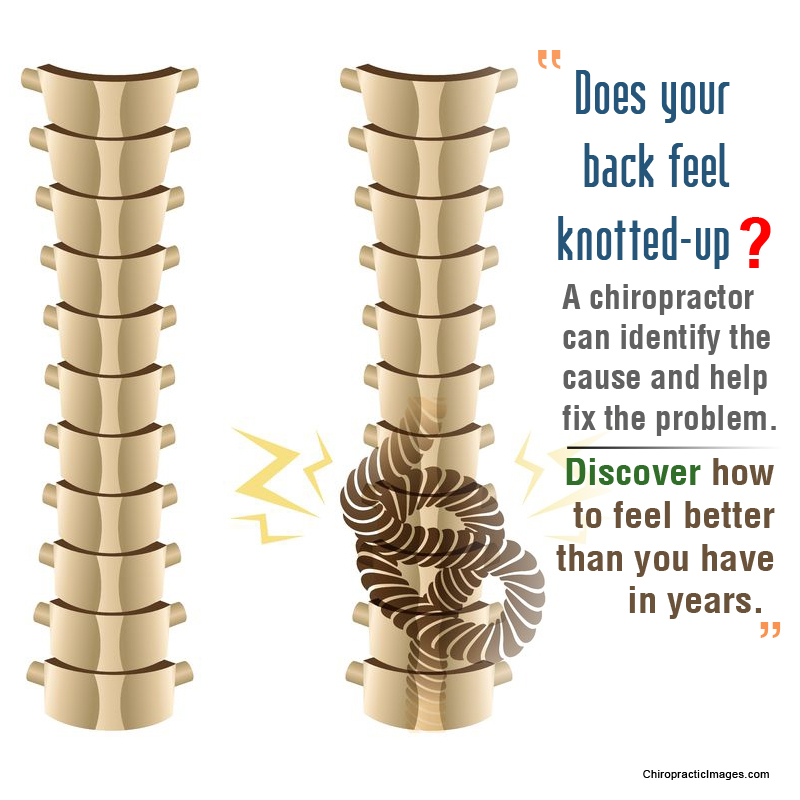
Feeling Knotted Up? | Austin Chiropractor | Family Health Chiropractic

[dcwsb inline=”true”]

As more health and medical offices begin to expand throughout the country, so are the treatments provided to cure pains and prevent illnesses most wouldn't have expected. Family Health Chiropractic offers family chiropractic care.  Chiropractic care is one of the world’s leading all natural health care professions and it’s growing rapidly.

In our lifetimes, odds are we will never know what it feels like to lift 900 pounds above our bodies. Jake Prazak of N.I.P Fitness is one of very few people on this earth to claim such a feat. In fact, he currently holds the world bench press record of 920 lbs for his weight class and according to him, he owes it all to chiropractic care.

“I heard from somebody else that chiropractic care can help migraine just from alignment issues and it helped me out tremendously. What followed from that was doing it for the physical purposes,” said Prazak. Jake, like many athletes around the world is discovering the all natural benefits that chiropractic care can have on the body. Some of the world’s best athletes have used chiropractic care for everything from regular adjustments to physical therapy.

Other types of things that we see in chiropractic may help people with sinus and allergy issues. People that have digestive problems, women with menstrual cycle problems as far as the pain associated with that. Headaches are a big one too. So again there are many things that a chiropractor can do for you.

3.5.14

Feeling Knotted Up? | Austin Chiropractor | Family Health Chiropractic2026-04-26T11:13:56-05:00

Self Healing | Austin Chiropractor | Family Health Chiropractic

[dcwsb inline=”true”]

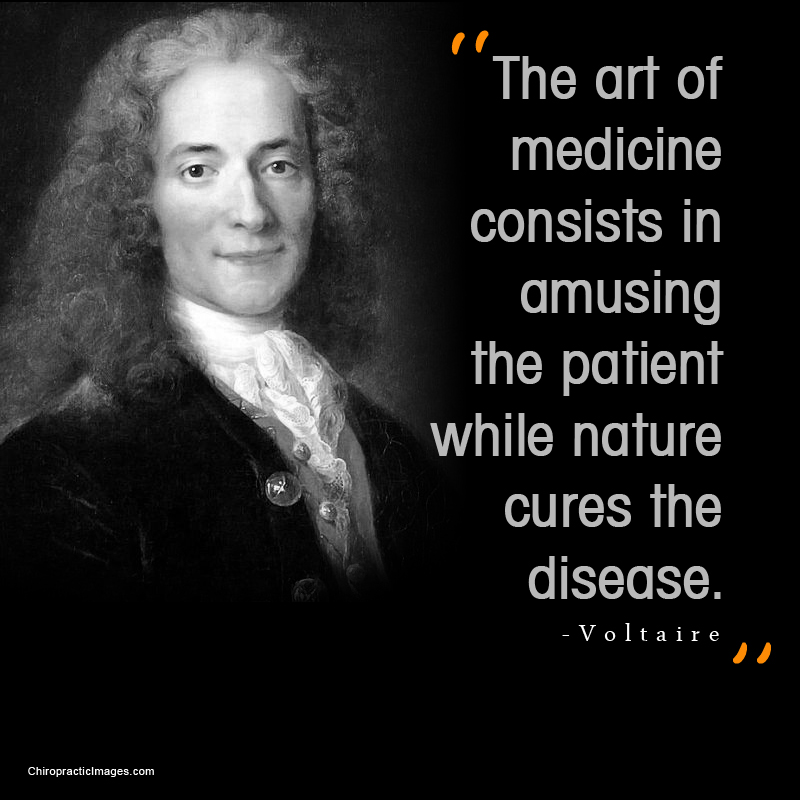
Voltaire (and your grandmother) recognized long ago that humor and laughter are good for you. You've probably noticed yourself that you simply feel better after a good belly laugh. The problem, of course, is that your sense of humor generally abandons you right when you need it the most–on the tough days. But if you manage to bring your sense of humor to your daily conflicts on your job, your relationship with your spouse and children, and your health or financial problems, you'll go a long way toward improving the quality of your life; and you'll boost your physical health and well-being in the ways discussed here.

Every year, there is more evidence that your thoughts, moods, emotions, and belief system have a fundamental impact on the body’s basic health and healing mechanisms. 

Whether or not you get sick depends on your body’s ability to fight off infection and disease. In 1980 (prior to the discovery of the AIDS virus), the departing editor of the New England Journal of Medicine, Dr. Franz Ingelfinger, estimated that 85% of all human illnesses are curable by the body’s own healing system. We now know that building a positive focus in your life plays an important role in supporting the body's ability to do this.

The body’s healing system responds favorably to positive attitudes, thoughts, moods, and emotions (e.g., to love, hope, optimism, caring, intimacy, joy, laughter, and humor), and negatively to negative ones (hate, hopelessness, pessimism, indifference, anxiety, depression, loneliness, etc.). So you want to organize your life to maintain as positive a focus as possible.

Family Health Chiropractic

Self Healing | Austin Chiropractor | Family Health Chiropractic2026-04-26T11:13:57-05:00

Vaccine Injury | Austin Chiropractor | Family Health Chiropractic

[dcwsb inline=”true”]

Vaccine Injuries are real and covered up.  Ever since vaccinations were introduced 200 years ago there has been a lot of controversy surrounding them. Some people think of illnesses as being primarily dangerous or at least inconvenient. They see vaccinations as an effective means to avoid diseases and possibly even eradicate them while others see the benefits of certain diseases and the potential dangers of vaccinations.The key of a vaccination is to trade off the hazardous nature of the disease against the potential adverse effects of the vaccination and alternative treatment methods. Unfortunately, it seems as though vaccinations may be causing more harm than good.  The problem is that the general public is not aware of such dangers.

3.3.14

Vaccine Injury | Austin Chiropractor | Family Health Chiropractic2026-04-26T11:13:57-05:00
Go to Top