How to Do a Perfect Squat
A sound, functional squat is something nearly every healthy, pain-free person can perform. The squat is not an invention of a trainer or coach any more than walking or running is. It is a natural, functional movement pattern that supports your everyday well-being.
Most people around the world do not sit in chairs for everyday tasks; they squat. Meals, rest, and gatherings are often performed in a squat position rather than in chairs. In much of the modern world we spend a great deal of time sitting in chairs, couches, benches, and stools, and that sedentary pattern can contribute to deconditioning of the joints, soft tissue, and muscles that a regular squat helps maintain.
You may occasionally hear that you should avoid squatting altogether, or that the knees should never bend past 90 degrees. For most healthy people, a well-executed squat is a normal and useful movement. Consider that getting up off the floor, or rising from a low seat, naturally requires bending the knees well past 90 degrees. If you have a specific knee, hip, or back condition, check with your provider about how to modify the movement for your situation.
When done correctly, the squat is not only safe for most people, it can also help strengthen and support the knees, hips, and back. Poor squat mechanics, on the other hand, can place unnecessary stress on those joints. Athletically, the squat builds core strength and is one of the best hip-extension exercises available, which makes it a strong foundation for general fitness and athletic movement.
It is possible to injure yourself by squatting incorrectly, but with good form the squat can be made as safe and routine as walking. Here is how to do it well.
How to Do a Proper Squat
- Start with your feet about shoulder-width apart and your toes pointed slightly outward.
- Brace your midsection by gently contracting your abdominal muscles while keeping the natural arch in your low back.
- Begin the movement by sending your hips back, as if you were bumping a car door closed with your rear while your hands are full.
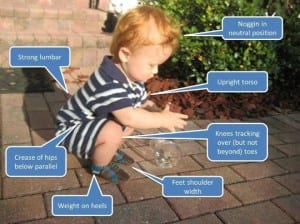
- Descend by sinking into the squat, keeping your body weight in your heels so your knees do not travel past your toes.
- Raise your arms in front of you for counterbalance and keep your chest tall as you lower, maintaining a tight midsection and the arch in your low back.
- Go as low as you comfortably can, ideally so the fold of the hips drops below the knees, while keeping your knees pressed outward and not collapsing inward.
- As you rise, drive through the outside of your feet, as if you were trying to spread the floor apart beneath you.
- Stand tall at the top to complete full hip extension.
Practiced consistently with good form, the squat is a simple, effective movement for building lower-body and core strength and supporting healthy joints over the long term.
READY TO FEEL BETTER?
Book Your Appointment Today
Same-week appointments are often available. Call 512-347-8881 or request a time online.
Ready to feel better?
If you are new to our office, learn what to expect on your first visit, or see our full range of chiropractic services.