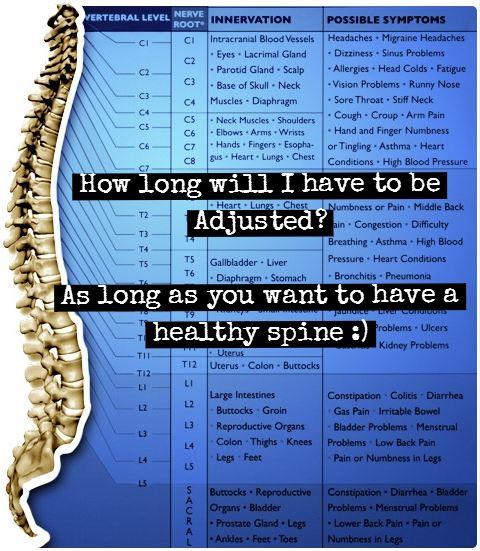

The Compounding Effect of Chiropractic Adjustments
One question we hear often at our Austin chiropractic office is, “Why do I need more than one adjustment?” It is a fair question, and the answer comes down to how the body changes over time. Much like building strength at the gym or correcting a long-standing habit, lasting results from chiropractic care tend to come from consistent, progressive visits rather than a single session. Each adjustment is designed to build on the one before it.
Why a Single Adjustment Is Rarely the Whole Story
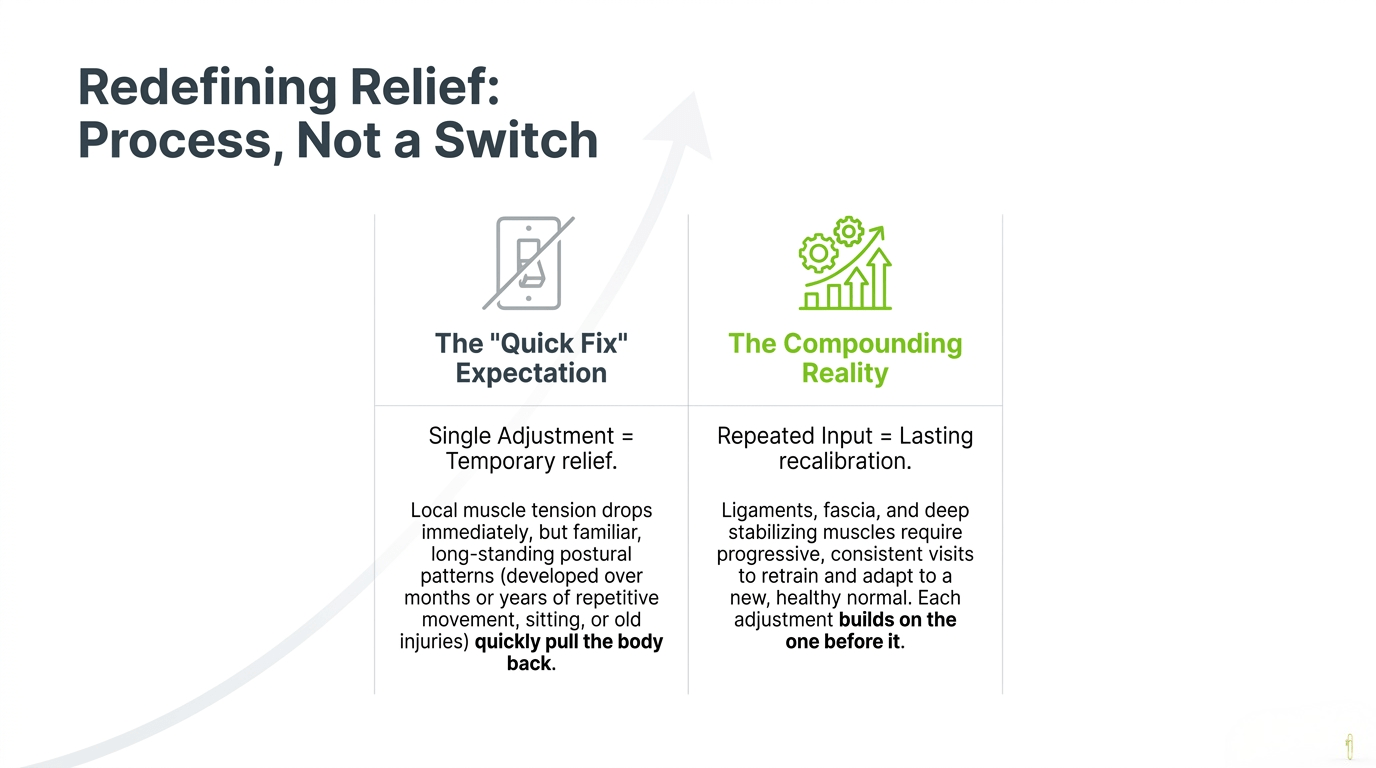
Many of the spinal and postural patterns we work with developed gradually, often over months or years of repetitive movement, prolonged sitting, old injuries, or daily stress. Because those patterns took time to form, they usually take time to retrain. A single adjustment can offer meaningful relief, but the surrounding muscles, ligaments, and movement habits often pull the body back toward its familiar pattern if that pattern is not progressively addressed. Over a series of visits, the goal is to help the body hold its improvements for longer periods between each session.
The Mechanism: Why Repetition Matters
When a joint is adjusted, the immediate effect includes reduced local muscle tension, improved range of motion, and a shift in how the nervous system perceives that area. These effects are real, but they are also temporary in the early stages of care. The soft tissue surrounding the spine, including the ligaments, fascia, and the deep stabilizing muscles, needs repeated input to begin adapting to a new normal. Think of it less like flipping a switch and more like gradually recalibrating a system that has been compensating for years.
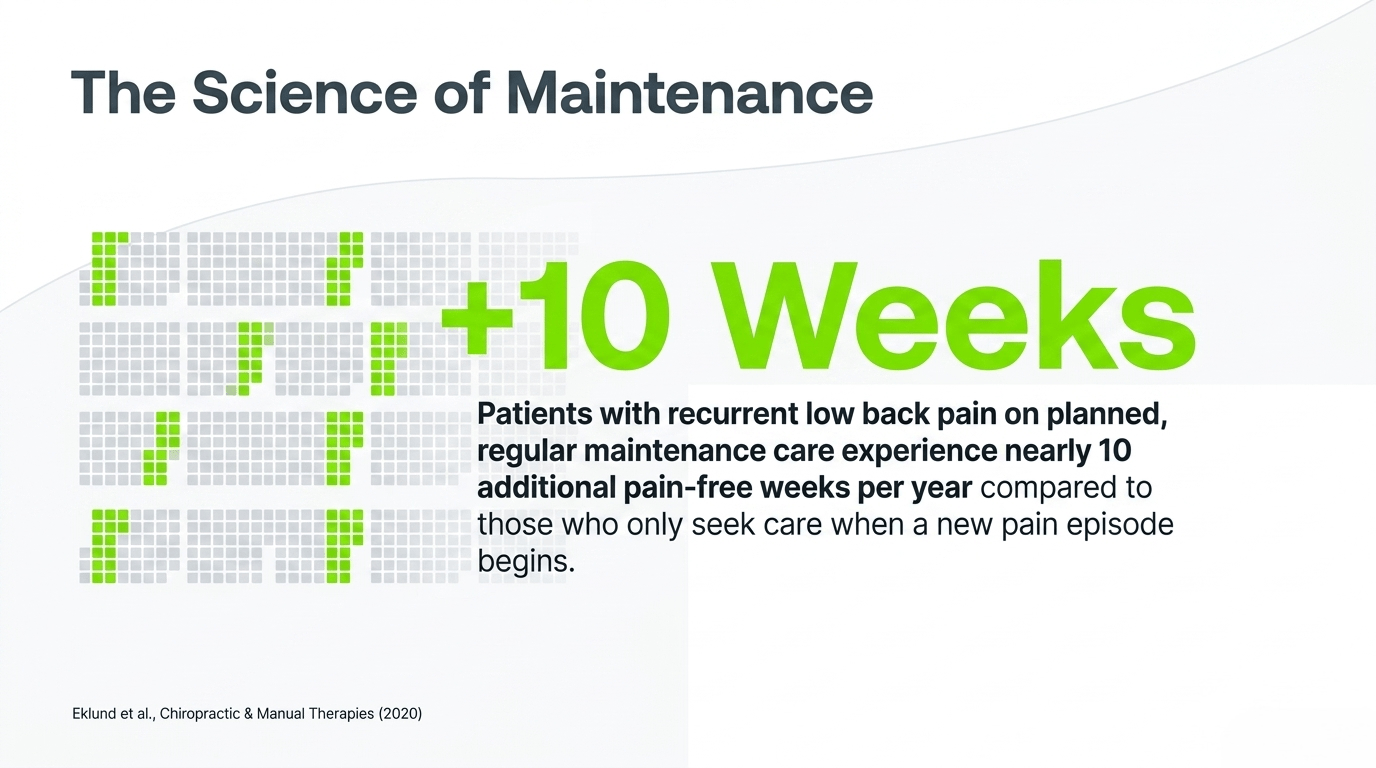
Research supports a compounding model of care. A pragmatic randomized controlled trial published in Chiropractic and Manual Therapies found that patients with recurrent and persistent low back pain who received regular maintenance care at planned intervals experienced fewer days with activity-limiting pain and longer pain-free periods between episodes compared to patients who only sought care when a new episode began (Eklund et al., Chiropr Man Therap. 2020; PMID 32316995). For the subgroup of patients with the most functionally disruptive pain patterns, the difference in pain-free time was nearly 10 additional weeks per year.
What Compounding Care Looks Like in Practice
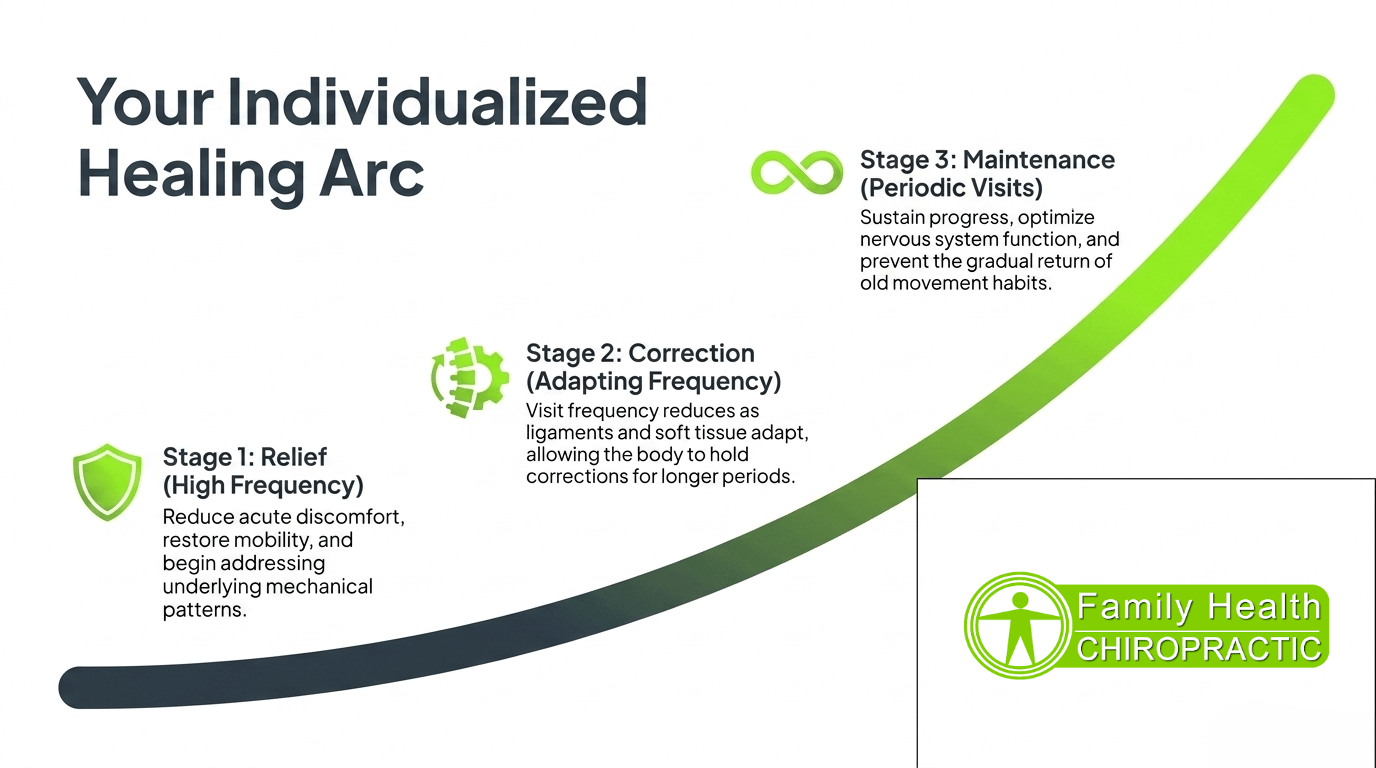
Care plans at our Austin office are always tailored to the individual, but there is a general arc that most patients follow. Early visits are typically more frequent, focused on reducing acute discomfort, restoring mobility, and beginning to address the underlying mechanical pattern. As the body begins to adapt and hold corrections longer, visit frequency is reduced. Over time, for many patients, periodic maintenance visits are used to sustain progress and prevent the gradual return of old patterns.
This is not a one-size-fits-all prescription. Some people recover quickly and need only a short initial course of care. Others with longer-standing issues or more complex patterns benefit from a more gradual approach. We reassess at every stage and adjust the plan based on how your body is actually responding.
What You Can Do Between Visits
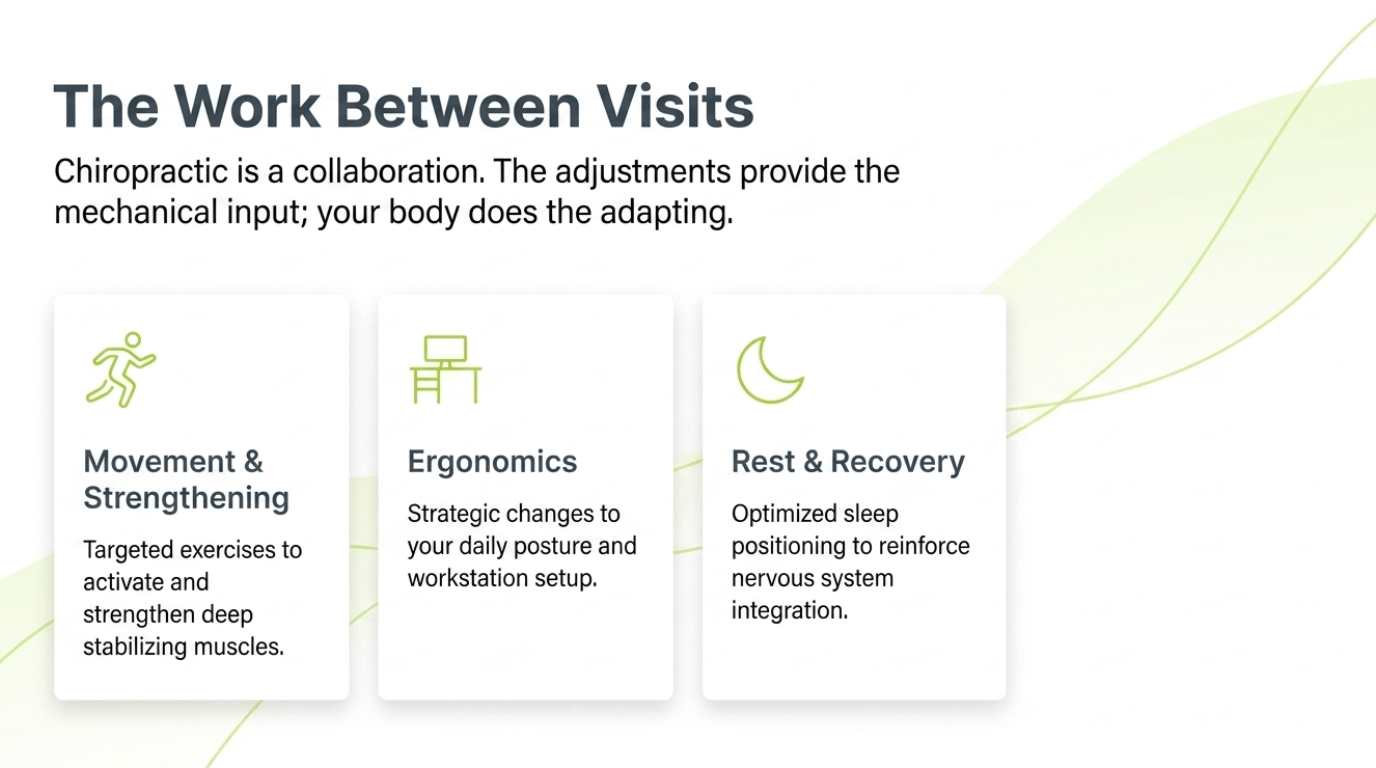
The work does not stop when you leave the office. Movement, posture habits, and ergonomics all influence how well your body holds the changes made during an adjustment. We routinely give specific at-home guidance, which may include targeted stretches, strengthening exercises for the deep stabilizing muscles, or simple changes to workstation setup or sleep position. These reinforce the adjustments and help your nervous system and soft tissue continue adapting in the right direction between sessions.
Setting Realistic Expectations
We want every patient in Austin and the surrounding area to understand what they are working toward and why. Chiropractic care is not a passive treatment where you show up and something is done to you. It is a collaborative process. The adjustments provide the mechanical input; your body does the adapting. That adaptation takes time, repetition, and consistency. Patients who engage actively with their care plan, including the at-home guidance, tend to see the best and most durable results.
If you have questions about how many visits to expect or what your care plan might look like, the best place to start is a thorough examination. That gives us a clear picture of what we are working with and allows us to give you a realistic, personalized roadmap from the beginning.

Why do I need multiple chiropractic adjustments?
Spinal and postural problems develop gradually over time, so they generally require consistent, repeated input to correct. A single adjustment can provide relief, but multiple visits allow the surrounding muscles and ligaments to progressively adapt and hold the correction longer. Research supports a compounding model where regular care produces more stable and lasting outcomes than single sessions alone.
How many chiropractic visits will I need?
This depends entirely on your individual condition, how long it has been present, and how your body responds to care. We reassess at every stage and adjust the plan based on your progress. Some people need a short focused course; others with more complex or long-standing patterns benefit from a more gradual approach followed by periodic maintenance visits.
Does Family Health Chiropractic offer maintenance care in Austin?
Yes. For patients who have completed an initial course of care and want to maintain their progress, we offer periodic maintenance visits tailored to their individual needs. This approach is supported by research showing that regular maintenance care can reduce the number of days with activity-limiting pain and extend pain-free periods for patients with recurrent or persistent back pain.
Ready to feel better?
If you are new to our office, learn what to expect on your first visit, or see our full range of chiropractic services.