The Best and Worst Core Exercises for Back Pain
Core exercises inevitably come up when someone struggles with back pain or wants to strengthen their spine. Back injuries are among the most common orthopedic injuries, happening often in gyms and workplaces – and unfortunately, when people hurt their backs, they frequently turn to movements, stretches or core exercises that do more harm than good.
Most people have some degree of spinal degeneration, but only some experience pain, spasms or discomfort. Herniated discs, bulging discs and arthritis are all very common, and many people don’t know they have them until the nerves become inflamed and irritated. That’s often when someone says, “My back went out,” and heads to the doctor. Standard care – anti-inflammatories, cortisone shots or muscle relaxers – can ease symptoms, but it doesn’t address the underlying problem.
This degenerative process usually builds over years through repetitive stress: poor posture, faulty movement patterns, a lack of proper training, and unhealthy lifting technique. The key insight is this: if you don’t fix the foundation of your spine – improving core muscle function and correcting posture and movement – those recurring “I threw my back out again” episodes tend to keep coming back.
The Core Is More Than Your Abs
The idea that strengthening the core is all about abs and sit-ups is outdated. The rectus abdominis is only a small part of what needs to be strong and balanced. The true core, or “foundation muscles,” includes:
- Pelvic floor muscles
- Transversus abdominis
- Multifidus
- Internal and external obliques
- Rectus abdominis
- Erector spinae
- The diaphragm
Among the muscles that matter most are the abdominals (rectus abdominis, transverse abdominis and the obliques), the lower-back muscles (the back extensors and quadratus lumborum), the lats in the upper back, and the psoas, which runs from the lower spine to the upper leg.
The quadratus lumborum (QL) may be the most important back muscle most people have never heard of. It attaches to each lumbar vertebra, the rib cage and the pelvis, and is involved in side bending. Because it connects to every lumbar vertebra without changing length much, it provides support to each vertebral joint and has a unique ability to stabilize the lower back. In general, the core acts as a support system for the spine: when we move, the core muscles contract together (co-contraction) to brace and protect it.
Core Exercises You Should Avoid
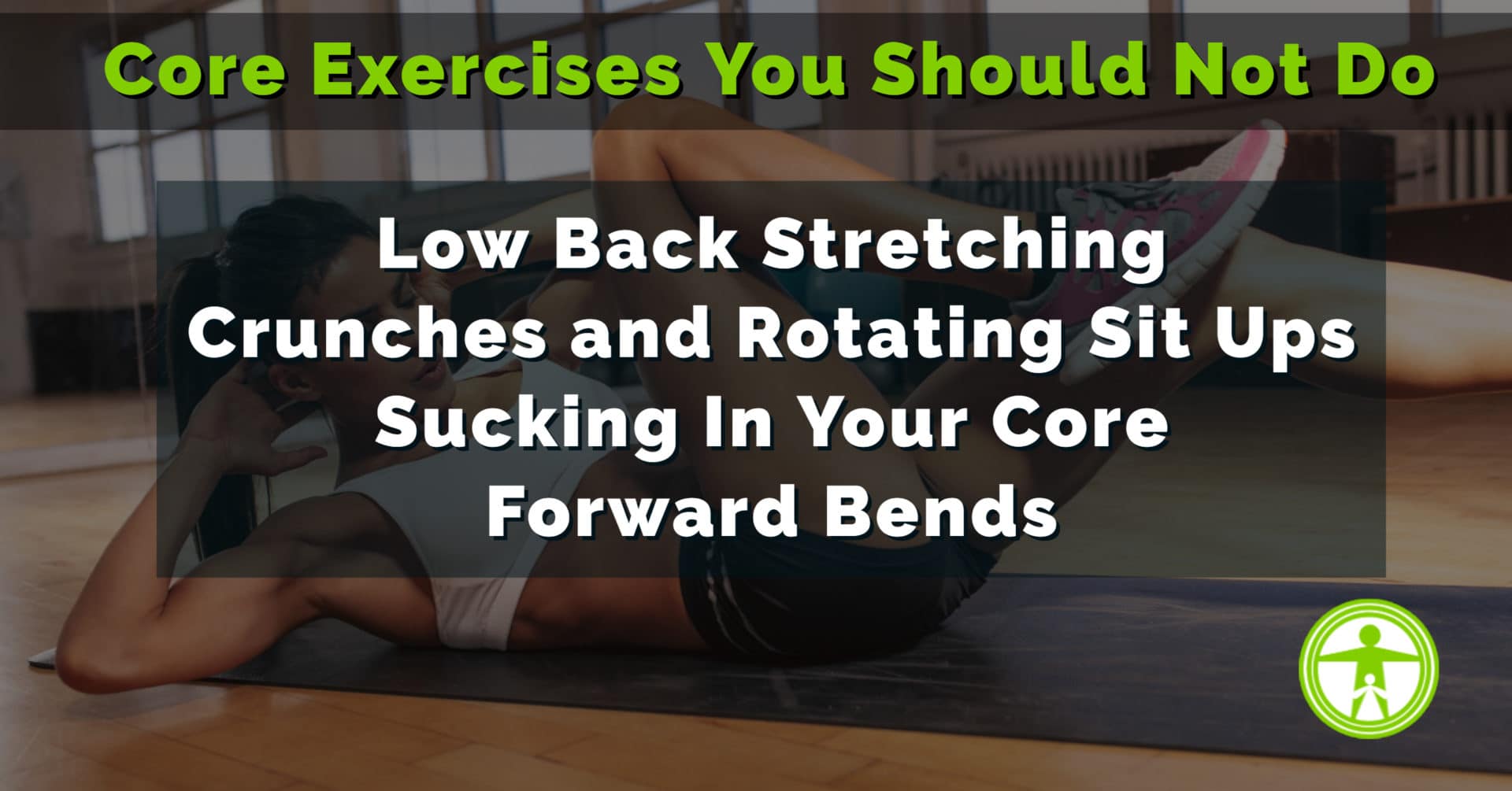
Much of the most respected research on the core comes from Dr. Stuart McGill, a spine biomechanist. His work points to a few clear “don’ts” for people with back concerns:
- Lower-back stretching – it can decrease back stability and stress the discs.
- Traditional crunches – they load the discs and don’t activate the core effectively.
- “Sucking in” to activate the transverse abdominals – for many people this doesn’t properly engage or challenge the core.
- Forward bends first thing in the morning – the discs hold extra fluid after a night lying down, making them more vulnerable under that added pressure.
The Best Core Exercises for Back Pain
Most people get into trouble by training the core like any other body part – with heavy weights and a full range of motion. But for a healthy back, the goals are muscle endurance (not maximal strength) and stability (the ability to brace, not move). In most daily activities and sports, the core’s real job is to stop movement.
Think about it: when you open a car door, your core keeps your spine from twisting as you pull. When you kick a ball, your core stops you from pitching forward. The core is meant to be stable and resist movement – which is exactly why twisting and over-bending ourselves into pretzels is counterproductive.
McGill prescribes four foundational exercises, often called the “Big 3” plus a variation, for back health:
- Modified curl-up – unlike a regular curl-up, one leg is bent and the other straight, the hands rest under the lower back, and you lift only the head and neck.
- Stir the pot – a plank-type exercise on a stability ball where you move your arms in small circles as if stirring a pot. If that’s too hard, hold a plank on the ball or the floor.
- Side bridge – a side plank from the elbow.
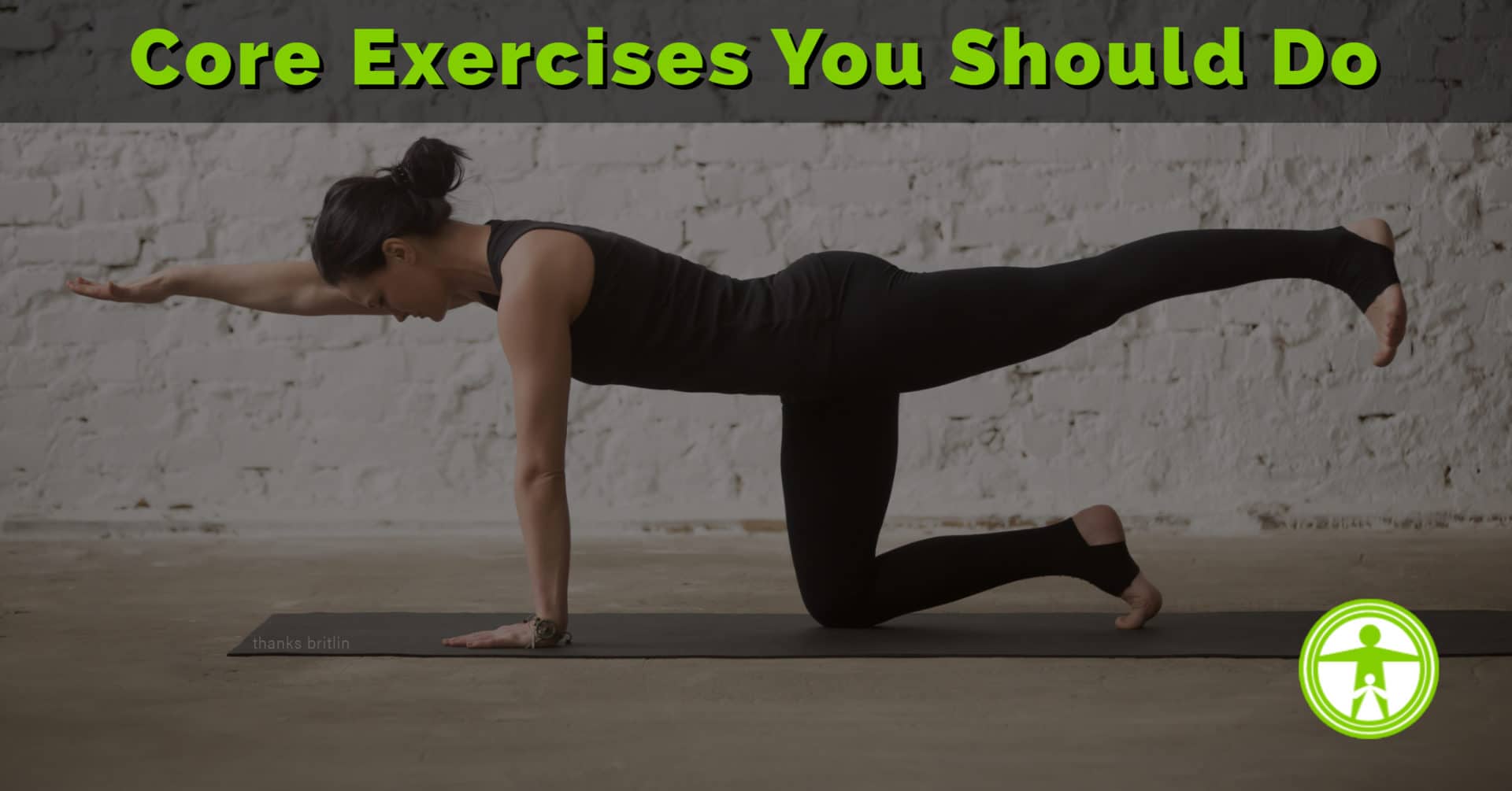
- Bird dog – starting on all fours, lift the opposite arm and leg while keeping the core stiff; to progress, trace small squares with the hand and foot at the top of the movement.
A few points to focus on: keep the isometric (tightening) hold to about 10 seconds and add repetitions to progress, and maintain form – once you can’t keep your spine braced, stop.
The Bottom Line
Your core’s most important function is to stabilize your back, and it does this through co-contraction, with no actual movement. Stretching the lower back works against that goal, so it’s better to avoid lower-back stretching and bending at the spine. Instead, stretch the muscles around the hips and bend at the hip rather than the back.
Endurance, not maximal strength, is what protects the back, since the core has to keep the spine supported for hours at a time. You might assume you’re too advanced for these exercises, but most people train strength rather than endurance and are surprised by the benefit. If you currently have back pain, see a doctor before starting.
Whether or not you’ve had back pain, try these four exercises – modified curl-up, stir the pot, side bridge and bird dog – daily for the next few weeks. If they don’t help and you haven’t had a proper spine examination, that’s the most important next step.
READY TO FEEL BETTER?
Book Your Appointment Today
Same-week appointments are often available. Call 512-347-8881 or request a time online.
Ready to feel better?
If you are new to our office, learn what to expect on your first visit, or see our full range of chiropractic services.