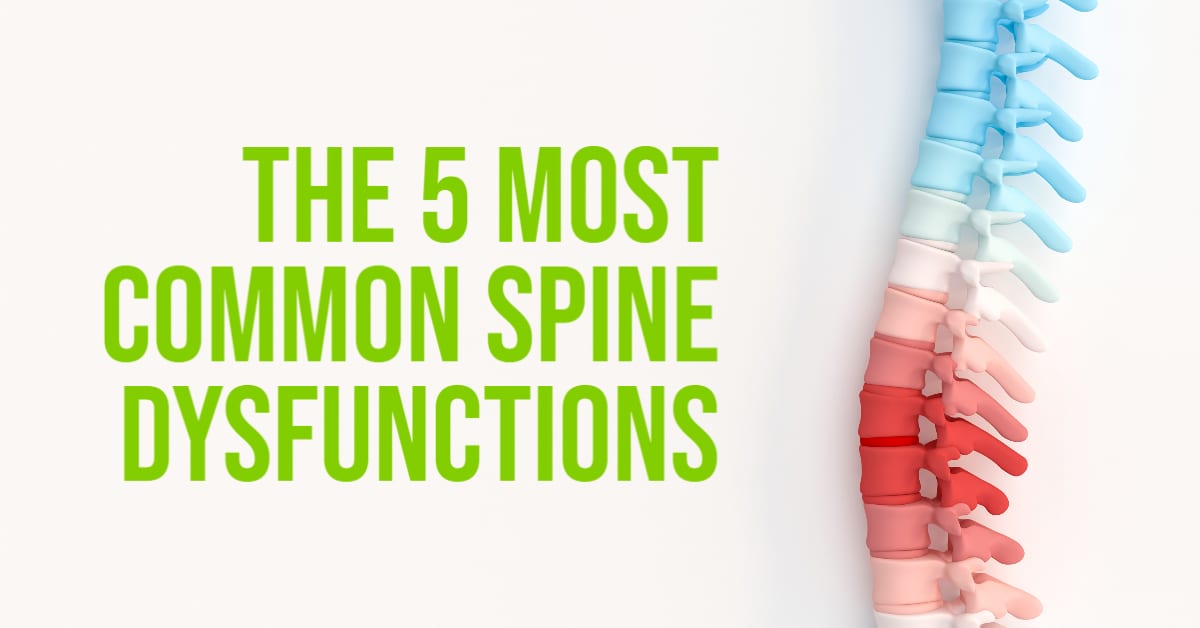
The 5 Most Common Spine Dysfunctions
If you’re dealing with back pain – or any spine-related issue – it helps to understand the anatomy and function of the spine so you can narrow down what might be happening. Most of the problems that lead to back pain and disability have little to do with disease.
That isn’t to say that cancer, organ failure, diabetes and other conditions are never the origin of back pain, but they account for the minority of spine problems. By far, the majority of troubles spanning from the neck to the lower back are mechanical and directly related to behavior – the way you carry yourself and the repetitive, sustained stresses of daily life and sport.
When those stresses occur consistently, or at a frequency and intensity the spine cannot tolerate, the result is microtrauma to its soft-tissue structures: discs, ligaments and cartilage. As these tissues weaken, the spine loses support and more problems follow. For most of the conditions below, behavioral change and exercise are the best treatment options available.
1. Disc Bulges and Protrusions
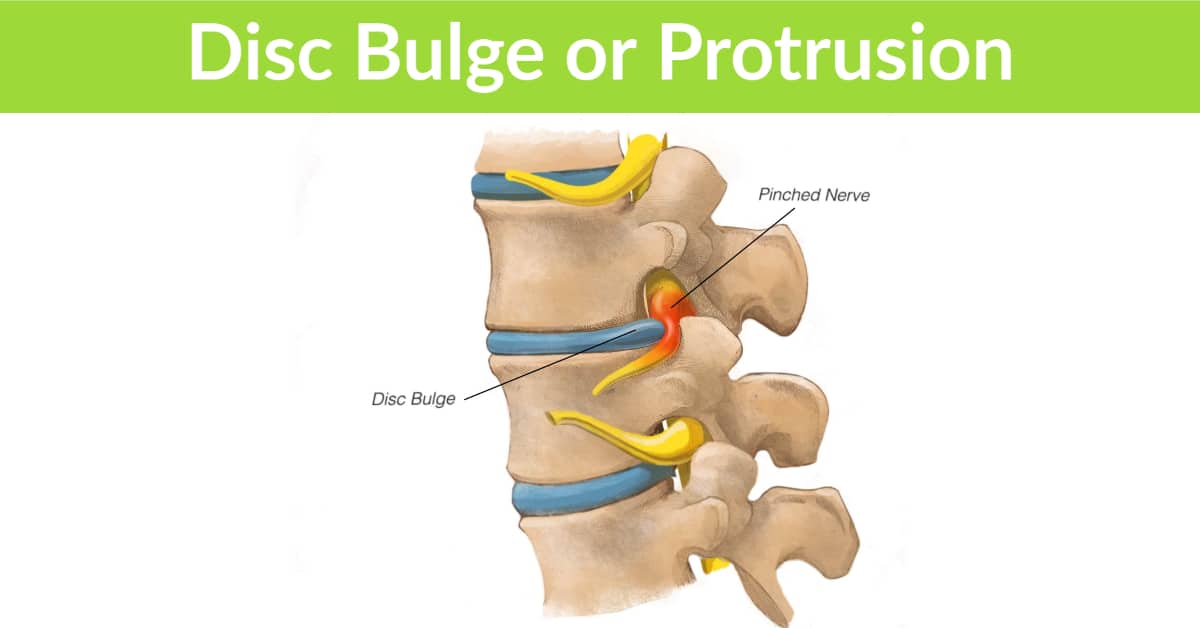
A common worry with back pain is whether the discs are injured. The spinal discs are shock absorbers sandwiched between the vertebrae, and they contribute to the spine’s flexibility. They are a typical source of back pain and, perhaps more than any other spine structure, susceptible to everyday wear and tear.
A disc bulge or protrusion, while painful, is not the same as a disc herniation or tear. Bulges and protrusions are more like sprained ankles – they hurt, but they generally do not require surgery. A bulge is essentially the swelling and inflammation of an irritated, injured disc, where the inner disc gel pushes against the outer wall, which is loaded with sensory nerve endings, becoming a source of pain.
Severity varies depending on which levels of the spine are affected and the size of the bulge. Symptoms range from generalized stiffness and spasms – especially in the morning or after prolonged sitting – to localized neck or low back pain. If a bulge is large enough to encroach into the spinal canal or the nerve exit holes (foramina), it may compress or irritate nerve roots, leading to radiating pain down the arm or leg (sciatica), numbness, tingling, and in extreme cases muscle weakness.
2. Disc Herniation (Tears)
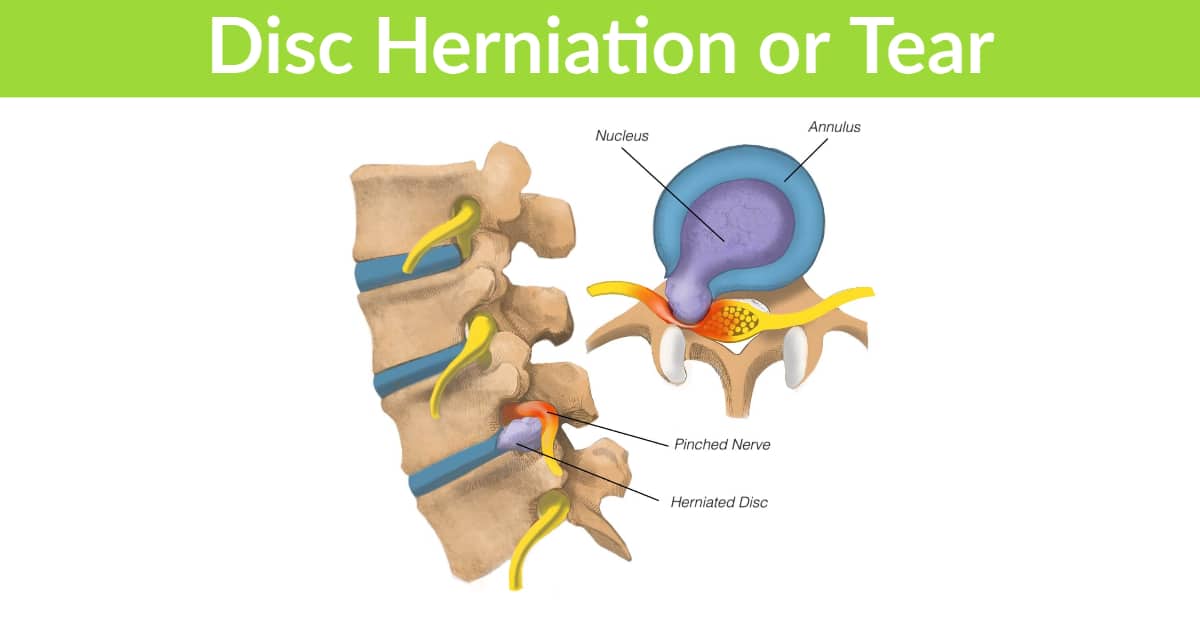
Unlike a bulge, a disc herniation is when the disc actually tears. The outer ring layers rupture, allowing the inner gel and fragments to push outward into the spinal canal. Herniated discs most often begin as bulges that gradually wear down and weaken until the outer wall finally tears.
Many people call this a slipped disc, but the term is misleading – the disc never slips out of position, which also means a single chiropractic adjustment won’t simply pop it back in. When a herniation occurs, only a small area cracks, allowing fragments to escape and migrate toward the exiting nerve roots.
These nerve roots pass through small foramina that get even smaller when filled with disc fragments. The resulting pressure constitutes a nerve impingement, commonly called a pinched nerve. Nerves tolerate compression poorly, and if the pressure becomes too great or lasts too long they can be damaged – producing radiating pain, tingling, numbness and muscle weakness. Pain can also intensify as the nerve root is exposed to the acidic contents of the disc’s inner gel and the inflammatory chemicals it releases.
3. Spine Arthritis (Spondylosis)
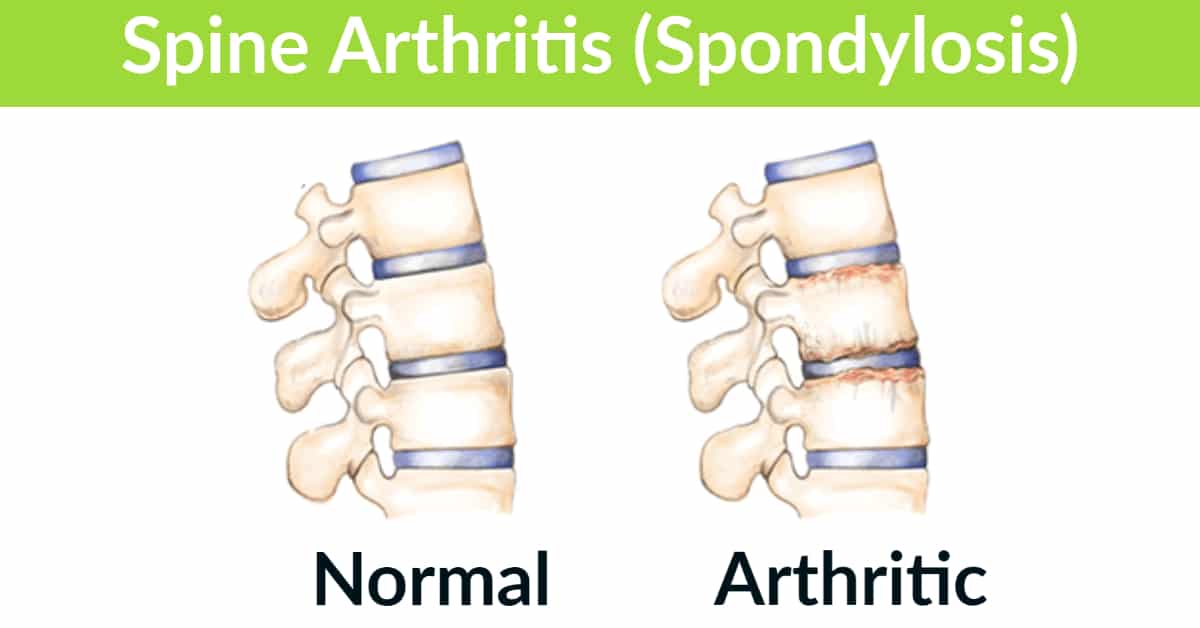
Spondylosis, also known as spinal osteoarthritis, is a general term for degenerative conditions of the spine. It should not be confused with the autoimmune condition rheumatoid arthritis. Just like arthritis in aging knees or hips, the spine’s joints, cartilage, ligaments and bones can wear down, resulting in chronic pain and stiffness. How much arthritis someone develops depends largely on how they have cared for their body over a lifetime.
Spondylosis can occur in any region of the spine but is most common in the neck and lower back, and it is easily detected on X-ray. Flattening of the spinal curves and decreased mobility are common findings. A person of any age can have it: about 14 percent of Americans ages 25 and older have been diagnosed with osteoarthritis, according to the CDC, compared with more than 33 percent of those ages 65 and older.
Pain varies greatly and can occur after prolonged inactivity or during high activity. Symptoms such as intensified pain when flexing or extending the spine give clues to the structures affected and the severity of deterioration. Common factors that can accelerate its progression include:
- Poor posture (slouching)
- Bad body mechanics in daily life (rounding the lower back when lifting)
- Bad body mechanics in sport (high-velocity twisting of the lower spine in golf or tennis)
- Injuries that damage ligaments (whiplash)
- Excess weight, poor nutrition and excessive alcohol
- Genetic spine abnormalities
4. Degenerative Disc Disease
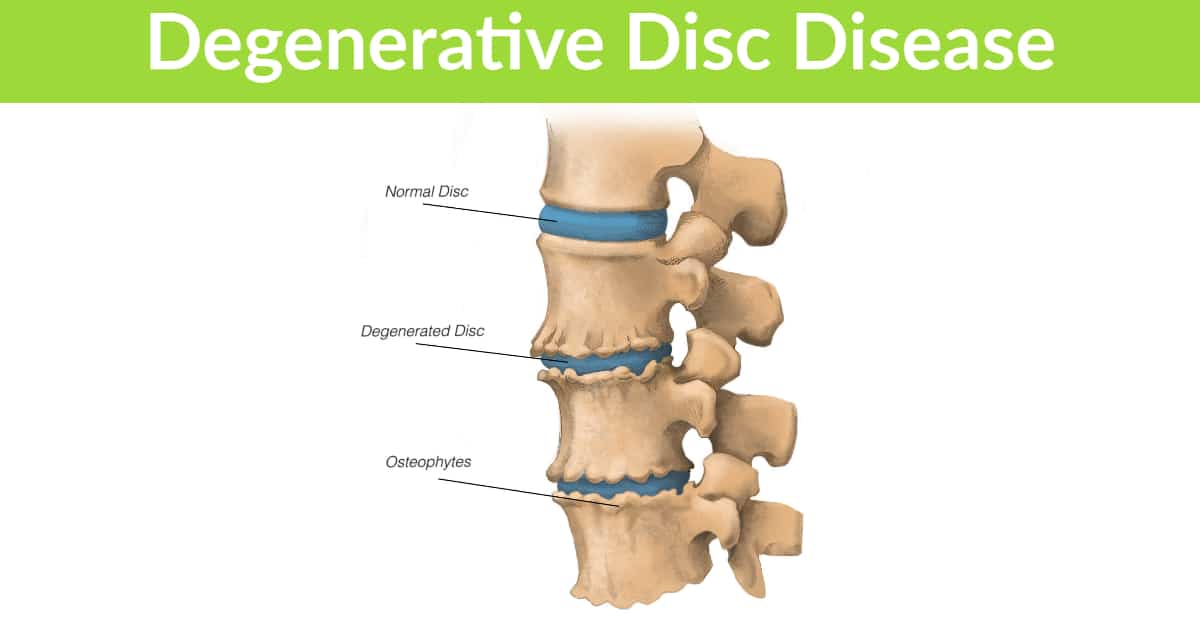
Spondylosis can also affect the intervertebral discs. When the discs are involved, the process is called degenerative disc disease. As people age, gravity and muscle contractions continue to press the vertebrae together and compress the discs. Years of pressure dehydrate them, and they begin to shrink and wear down, compromising their ability to absorb shock.
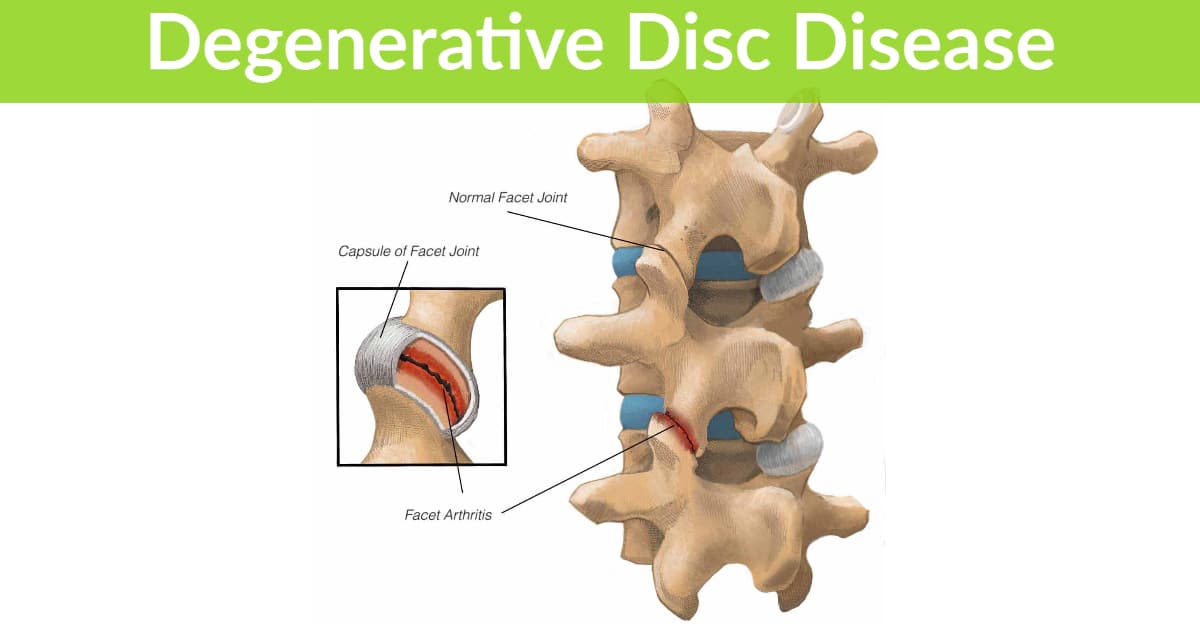
When one part of the spine deteriorates, it directly affects nearby regions. As disc height and function are lost, the vertebral facet joints take on more of the body’s weight. Because these joints are constantly involved in spine motion, they commonly wear down – especially when they begin carrying loads that were once the job of the discs.
5. Facet Joint Syndrome (Arthritis)
Facet joint syndrome, or facet joint osteoarthritis, occurs when the cartilage joint surface wears down and reactive bone formation produces an overgrowth of bone spurs (osteophytes) and an enlargement of the joint. These structural changes, along with arthritis-induced inflammation, often result in pain with spine motion. The neck and low back are most often affected because of their larger ranges of motion.
Symptoms in the neck include pain and stiffness, headaches and referred pain into the shoulder girdle. In the lower back, people may experience pain and stiffness, referred pain to the buttocks and thighs, and pain with movement – especially when trying to stand up straight. Reflex muscle spasms add to the pain and can produce contorted spine positions, including tilts to one side, creating a self-perpetuating cycle.
What to Do About Spine Dysfunctions
Most people are surprised to learn that many spine dysfunctions can be addressed with a combination of posture restoration, corrective exercise and strength training. Think of a suspension bridge or a car’s wheels: each relies on balanced tension and strength in its cables or suspension for the whole structure to be supported. If the suspension is off or the cables weaken, the tires and cables face abnormal load and stress – and eventually break down.
The same is true for the spine, which acts as the bridge or hub, with the body’s muscles, ligaments and tendons serving as the suspension or cables. The muscles that support the spine, especially the core and glutes, need nearly equal strength, tone and endurance to work as a unit. If one group is weaker than the rest, the others must bear extra load, causing spasms and tightness in healthy muscles now under strain – which is why it is often the uninjured muscles that hurt.
Over years, this asymmetrical stress leads to more serious conditions such as disc bulges, herniations and bone spurs. It’s common to see patients with very strong abdominals but weak lateral core muscles, where the strong abs actually drove more load through the spine than if the core had been more evenly balanced.
Balance Is Key
The purpose of chiropractic adjustments is to restore smooth motion of the spinal joints, and the purpose of corrective exercise is to rebuild and re-balance the muscles of the core and glutes while training healthy movement patterns. Lasting change comes with commitment and consistency.
READY TO FEEL BETTER?
Book Your Appointment Today
Same-week appointments are often available. Call 512-347-8881 or request a time online.
Ready to feel better?
If you are new to our office, learn what to expect on your first visit, or see our full range of chiropractic services.