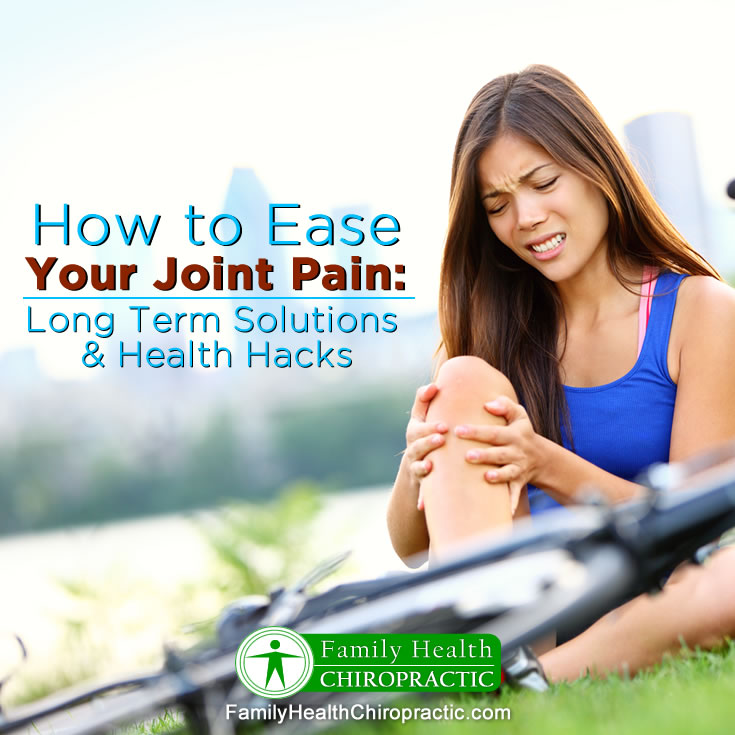
How to Ease Joint Pain Naturally
Joints are the connections that make movement possible, and joint pain can be one of the most frustrating and limiting things to live with. The good news is that many everyday habits genuinely help. This article covers practical, evidence-supported ways to ease and prevent joint pain, along with a clear reminder of when to get checked by a professional.

What Causes Joint Pain
Joint pain has a wide range of causes, which is exactly why getting the right diagnosis matters. The most common categories are injury (to ligaments, tendons, cartilage, or the cushioning bursae, such as a sprained ankle or rotator cuff tear), inflammatory and autoimmune conditions (such as osteoarthritis, rheumatoid arthritis, lupus, or psoriatic arthritis), and infections. Less commonly, joint pain can signal something more serious. Because the cause shapes the treatment, persistent, severe, or unexplained joint pain, especially with redness, swelling, warmth, fever, or locking, should be evaluated by your physician rather than self-managed.
Move Well to Protect Your Joints
The single most reliable way to keep joints healthy is to keep them moving appropriately. Strong evidence shows that exercise reduces pain and improves function in osteoarthritis (Fransen et al., British Journal of Sports Medicine 2015, PMID 26405113; Kraus et al., Medicine and Science in Sports and Exercise 2019, PMID 31095089). A few practical habits go a long way:
- Pay attention to posture and body position throughout the day, since how you load your joints affects how they age
- Stretch regularly and gently, and consider movement-based classes like yoga, pilates, or swimming
- Build strength with good technique, since well-controlled movements like squats and presses help support and protect joints
- Work on joint mobility with gentle range-of-motion exercises and tools like foam rollers
A useful way to think about it: appropriate exercise generally protects joints, while inactivity and poor movement patterns are what tend to cause trouble.
Calm Inflammation Through Lifestyle
Because inflammation drives a lot of joint discomfort, lifestyle choices that lower inflammation can help you feel better. The best-supported levers are a nutritious whole-food diet, with omega-3 fatty acids from oily fish having well-documented anti-inflammatory effects (Calder, Biochemical Society Transactions 2017, PMID 28900017), maintaining a healthy body weight to reduce load on the knees and hips, managing stress, and getting enough good-quality sleep. If you suspect a particular food worsens your symptoms, talk with your provider about a structured approach rather than guessing.
Simple Day-to-Day Relief
For everyday flare-ups, a few gentle measures can provide short-term comfort while you address the underlying cause:
- Light, regular aerobic activity such as walking, swimming, or cycling, which supports circulation and mood
- Resting and gently elevating a swollen joint, and using ice or heat as comfortable
- A warm bath or gentle heat to relax muscles around a sore joint
- Pacing activity so you stay consistent rather than overdoing it on good days
A note on popular remedies: supplements such as collagen, gelatin, magnesium, or turmeric are widely used, but the evidence for them is mixed, so treat them as optional extras rather than proven cures, and check with your provider before adding supplements, particularly if you take other medications.
When to Get Help
Joint pain affects most of us at some point, and the long-term habits above, movement, healthy weight, good nutrition, and stress management, genuinely help prevent and ease it. But these are not a substitute for diagnosis. If your pain is persistent, worsening, or comes with swelling, fever, or loss of function, see your physician. Supportive care, including chiropractic care for musculoskeletal pain and mobility, can then fit into a plan that is right for you.
READY TO FEEL BETTER?
Book Your Appointment Today
Same-week appointments are often available. Call 512-347-8881 or request a time online.
Ready to feel better?
If you are new to our office, learn what to expect on your first visit, or explore the conditions we treat.