
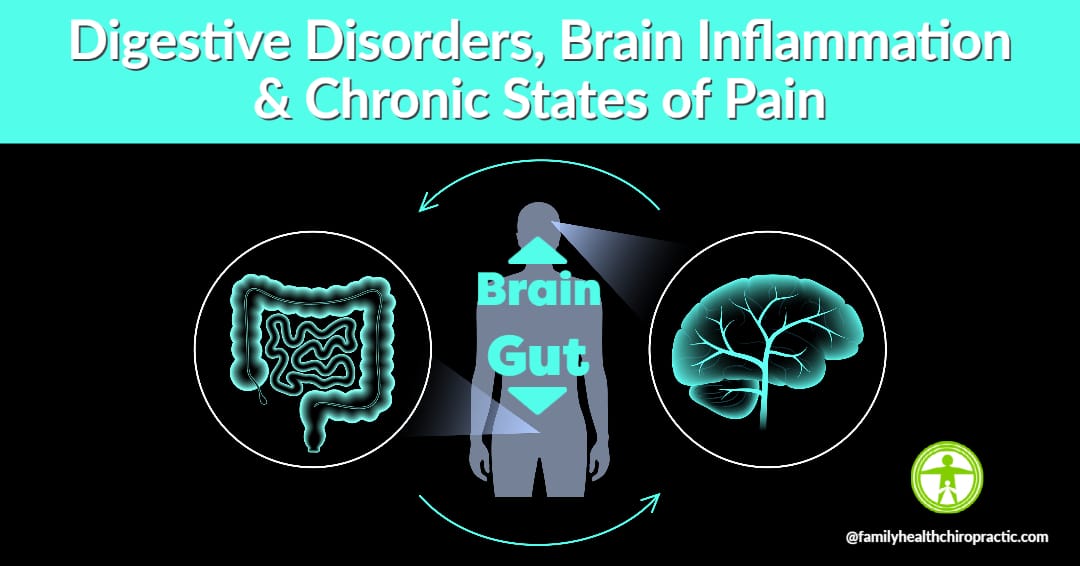
Digestive Disorders, Brain Inflammation and Chronic Pain
Digestive health and brain health are deeply connected, and problems in one system can influence the other. Most people recognize that the central nervous system – the brain and spinal cord – controls every major organ, tissue and cell in the body, which is part of why protecting the spine matters.
What is less obvious is how much the gut contributes to overall health. The digestive tract contains its own extensive nervous system, much of the body’s serotonin is produced there, and a large share of immune function – by many estimates 70% or more – is rooted in the gut. That means your mood, your ability to absorb nutrients, and your immune defenses are all influenced by digestive function. This article outlines seven primary gut dysfunctions that can disrupt the gut-brain axis and contribute to nutrient deficiencies, hormone imbalance, immune dysregulation, brain inflammation and chronic pain.
Chronic Health Conditions Are Connected to Digestive Disorders
Many chronic health conditions are linked to underlying physiological imbalances connected to digestive function. GERD (gastroesophageal reflux disease), for example, is really a description of a symptom – the more useful question is what is driving it, which could include low stomach acid, an imbalance in gut bacteria, food sensitivities, or infection.
This is where a functional and integrative approach is valuable: rather than stopping at a diagnosis, it aims to systematically identify and correct the imbalances contributing to symptoms. Common risk factors for developing digestive disorders include:
- Family history
- Cesarean birth and formula feeding
- A standard Western diet
- Food poisoning
- Antibiotic overuse and certain other medications
- Chronic stress and sleep deprivation
- Physical inactivity
- Hypothyroidism and HPA-axis dysfunction
- Excess alcohol and cigarette smoking
- Environmental toxins
A Brief Overview of Gut Health and Function
The saying “you are what you eat” isn’t quite complete. Eating the right foods is only the first step – fully digesting, absorbing and assimilating those nutrients is what matters most. It is entirely possible to eat well and still miss the benefits because of underlying digestive issues.
The GI tract is essentially a long tube running from the mouth to the anus, passing through the esophagus, stomach and intestines, and supported by accessory organs such as the salivary glands, liver, gallbladder and pancreas. It has two primary jobs:
- Break macronutrients (protein, carbohydrate and fat) down into micronutrients the body can absorb and use for fuel.
- Serve as a protective barrier that keeps foreign substances out of the bloodstream.
The digestive system is also home to a vast community of microbes – by current estimates, at least as many microbial cells as human cells in the body. These microbes support digestion and absorption, help protect against infection, regulate metabolism, influence hormone production, and house a large portion of the body’s immune cells. An altered gut microbiome has been implicated in many chronic inflammatory conditions, and research continues to explore links between gut inflammation and brain-related conditions such as depression, anxiety and cognitive decline.
The 7 Primary Gut Dysfunctions
Seven primary gut pathologies underlie many digestive diseases and symptoms, from IBS and GERD to constipation and inflammatory bowel disease. Understanding them is key to addressing gut health and the system-wide problems that can arise from it.
1. Low Stomach Acid
The stomach produces hydrochloric acid, which helps chemically break down food, supports nutrient absorption, and protects against pathogens. Bile (stored in the gallbladder) and pancreatic enzymes also play major roles in digesting fats, proteins and carbohydrates. When the secretion of acid, bile or enzymes is impaired, problems can cascade through the rest of the digestive tract.
2. Small Intestinal Bacterial Overgrowth (SIBO)
A poor diet, low stomach acid, antibiotic and acid-suppressing drug use, impaired gut motility, constipation, infections, structural abnormalities and immune dysfunction can all contribute to SIBO – an overgrowth of bacteria in the small intestine. It can lead to reduced vitamin and mineral absorption, carbohydrate and fat malabsorption, excess gas and bloating, intestinal permeability and, in some cases, autoimmune reactions.
3. Infections (Parasites, Bacteria, Fungal Overgrowth)
Not everyone carrying a given parasite will have problems from it – much depends on the individual’s health and immune status. Risk factors include contaminated food or water, travel to developing regions, household pets, undercooked foods and antibiotic use. Symptoms are often nonspecific, ranging from fatigue and GI distress to brain fog and sleep disturbance. A notable pattern is cyclical symptoms, where someone feels fine, then unwell, then fine again, reflecting parasite life cycles.
4. Dysbiosis
Dysbiosis is an imbalance between beneficial and harmful microbes. Candida, for example, is a normal gut resident that can become overrepresented when protective microbes are low, promoting low-level inflammation and potentially elevating pro-inflammatory signals. Symptoms range from clear GI discomfort to less obvious issues like low mood, anxiety, brain fog and skin problems.
5. Food Sensitivities and Intolerances
Food intolerances are often a consequence of other issues such as a disrupted microbiome, SIBO or intestinal permeability – but they can also drive permeability themselves, so they need to be addressed on their own. Some reactions are severe; others cause chronic low-grade inflammation over time. One caveat: most food-sensitivity testing depends on immune function, so low immune activity or significant gut infections can make results inaccurate.
6. Intestinal Permeability (Leaky Gut)
Researcher Dr. Alessio Fasano, known for discovering zonulin (a protein that regulates the tight junctions between intestinal cells), has proposed that increased intestinal permeability may be one precondition for autoimmunity, alongside genetic vulnerability and environmental triggers. Increased permeability has been studied in connection with conditions including celiac and non-celiac gluten sensitivity, inflammatory bowel disease and various autoimmune and inflammatory conditions. This remains an active and evolving area of research.
7. Autoimmunity
More than 80 autoimmune diseases are currently recognized, including multiple sclerosis, type 1 diabetes and rheumatoid arthritis, and many thyroid disorders have an autoimmune basis. The gut microbiome and intestinal permeability are among the many factors researchers are studying in these conditions. Risk factors include genetics, smoking, diet, inactivity, obesity, infections, certain medications, chronic stress and sleep deprivation.
The Gut-Brain Axis and Neuroinflammation
The body protects and heals itself in part through inflammation – a defense mechanism against injury and infection that is controlled by the immune system. Because so much of the immune system resides in the gut, the connection between digestive health and brain health is significant.
Inflammation is helpful in the short term but isn’t always good for long-term health. The body can treat certain food additives, environmental toxins and pollutants as threats, prompting a mild inflammatory response, particularly in the gut where these substances are processed. Over time, repeated exposure can contribute to chronic low-grade inflammation, which research has associated with conditions such as depression, anxiety, arthritis and neurodegenerative disease.
The gut is rich in nerve endings that make up the enteric nervous system, which communicates with the brain largely through the vagus nerve. This is the basis of the gut-brain connection. Researchers are increasingly studying how chronic gut inflammation may contribute to neuroinflammation, and how the microbiome may play a role not just in abdominal pain but in other forms of chronic pain, including inflammatory and neuropathic pain and headache. In short, gut health appears to influence not only mood but long-term brain health.
Testing for Underlying Digestive Dysfunctions
Addressing digestive disorders typically begins with a thorough history, functional blood-chemistry or advanced lab testing, and a comprehensive stool test. Many patients instead start with imaging studies such as endoscopy, CT scans or barium swallows. Those are valuable for ruling out serious disease, but they often don’t pinpoint the functional cause or guide an effective treatment plan.
Functional Blood Chemistry Testing
A good functional lab panel evaluates systems including blood-sugar regulation, thyroid, cardiovascular risk, adrenal, kidney, red blood cell, GI, gallbladder, immune, liver and bone health. It can also surface markers for inflammation, oxidative stress, toxic load, macronutrient digestion and absorption, and vitamin and mineral status. Interpreted properly, blood chemistry is a strong starting point for understanding what may be driving health issues.
Comprehensive Stool Testing
Not all microbiome tests are equal, so it is worth using a reputable lab and following the prep instructions carefully. A comprehensive stool panel can quantify the balance of good and bad bacteria, screen for parasitic, fungal and viral infections, assess digestion and absorption, and evaluate immune function and inflammation within the digestive system.
Advanced Digestive Health Testing
For most people, a thorough history, comprehensive blood chemistry and stool testing are enough to address the majority of digestive dysfunctions. If symptoms persist, additional options include food-sensitivity testing, SIBO testing, organic-acid (metabolomic) testing and toxicity testing.
READY TO FEEL BETTER?
Book Your Appointment Today
Same-week appointments are often available. Call 512-347-8881 or request a time online.
Ready to feel better?
If you are new to our office, learn what to expect on your first visit, or explore the conditions we treat.