Why the Curve in Your Neck Is So Important
Here’s a striking statistic: abnormal neck curvatures are roughly 18 times more common in people with chronic neck pain than in people with no pain. Many people have a partial loss, complete loss, or even a reversal of the normal curve in their neck, and most have no idea, because it doesn’t always cause symptoms.
This article explains what a normal neck curve looks like, why it matters, and what happens when that curve is lost.
What Is a Normal, Healthy Neck Curve?
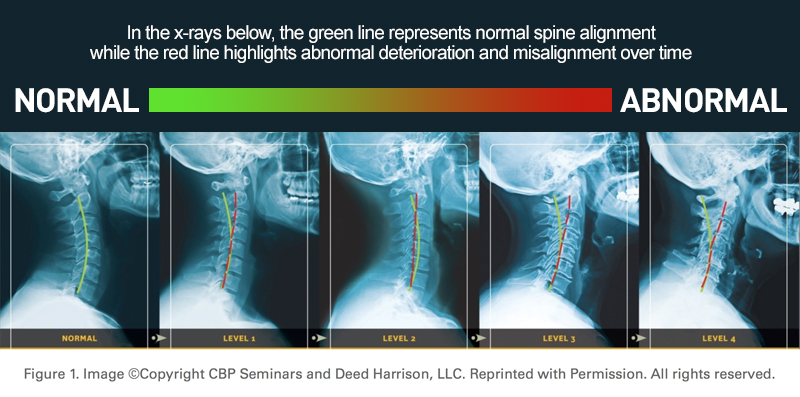
A healthy cervical spine has a gentle C-shaped curve. As that curve is progressively lost, the literature shows a corresponding development of spinal arthritis and disc disease over time. This isn’t a matter of opinion. It comes from the scientific literature, including studies that link cervical curve loss with neck pain and degeneration (J Back Musculoskelet Rehabil 2023, PMID 37545210; Clin Neurol Neurosurg 2024, PMID 39079289).
If you don’t know what your own neck curvature looks like, it’s worth scheduling an evaluation, or seeing a corrective-care chiropractor, to find out where you stand.
The Link Between Neck Pain, Arthritis, and Loss of the Cervical Curve
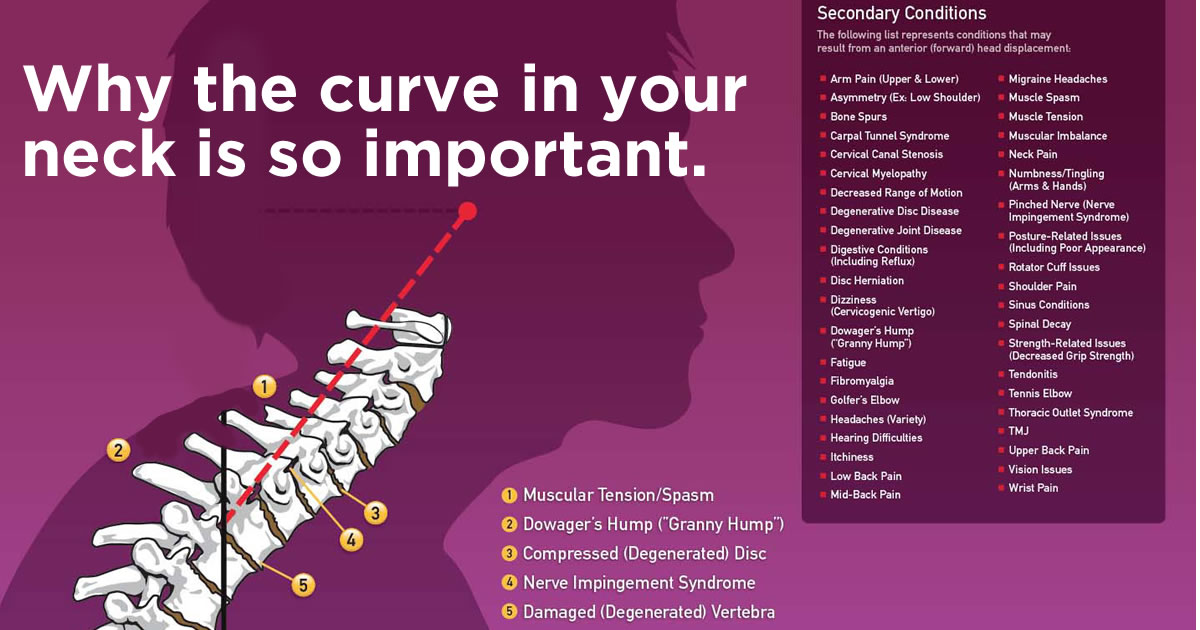
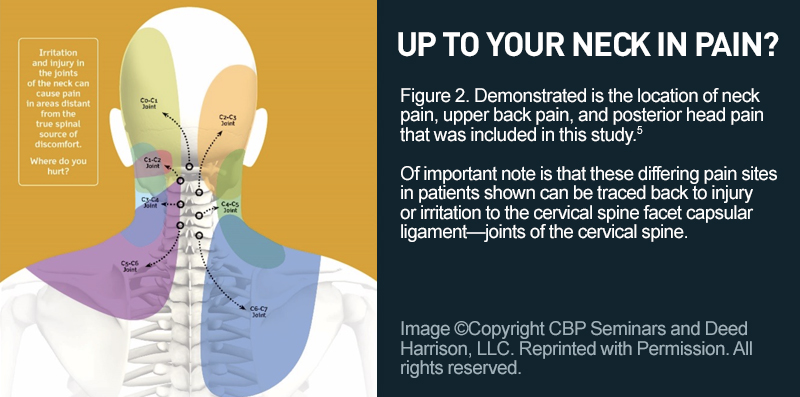
Neck pain is one of the most common symptoms people experience today, often alongside headaches, shoulder-blade and trapezius pain, or numbness and tingling that radiates into the hands. A normal neck has a C-shaped curve of approximately 43 degrees, measured from the second cervical vertebra (C2) to the seventh (C7). Without this curve, the weight of the head tends to tilt forward, creating increased wear and tear on the discs and the bones themselves. In effect, the bones of the neck age faster than normal. Over time this can lead to bony spurs (spinal arthritis), reduced mobility, increased stiffness, and pain.
It’s important to note that some cases are clinically silent: not everyone with cervical degeneration has pain, and not everyone with pain has degeneration. That’s part of what makes imaging alone an imperfect tool for pinpointing the exact source of someone’s pain.
In a notable study, McAviney and colleagues examined 277 subjects, 99 healthy controls and 178 chronic neck pain patients (J Orthop Surg Res 2024, PMID 38169407). Among the key findings: people whose cervical curves were above 20 degrees were about twice as likely to be in the no-pain group, while those with curves below 20 degrees were twice as likely to be in the chronic neck pain group. Subjects with a straightened or reversed cervical curve were about 18 times more likely to be in the chronic neck pain group than the no-pain group. The researchers identified roughly 20 degrees of cervical curvature as the best statistical predictor of who had chronic neck pain versus who did not.
Normal Is Necessary
A normal neck curve allows for normal joint motion, which in turn supports healthy spinal function. The idea of a measurable normal isn’t new: a 1959 study by Borden, Hechtman, and Gershon-Cohen described a normal cervical lordosis that, despite very different measuring methods, looks much like what we’d call normal today. A 2005 study in the Journal of Manipulative and Physiological Therapeutics, “Determining the Relationship Between Cervical Lordosis and Neck Complaints,” found a statistically significant association between cervical pain and lordosis less than 20 degrees, and described a clinically normal range of roughly 31 to 40 degrees.
Abnormal Curvature Often Begins with Abnormal Posture
A subluxation is simply a vertebra that has lost its normal alignment or motion relative to the bones around it. A growing body of research links poor posture and postural deformities to a wide range of health effects. Forward head posture, in particular, along with forward trunk flexion, has substantial peer-reviewed support showing how detrimental it can be to overall health, and notably, many of these effects have little to do with pain itself.
Why Adjustments Alone Can’t Fully Correct the Curve
Chiropractic adjustments are powerful, but correcting a lost cervical curve also requires addressing tissue elasticity, strength, and posture over time. Adjustments can help shift the body from a sympathetic (fight-or-flight) dominant state toward a parasympathetic (rest-and-repair) state, which is associated with reduced stress-hormone activity and a range of positive downstream effects. But an adjustment alone will not restore the curve. It is one part of a structured corrective process.
You Need Accurate, Repeatable Analysis
Correcting neck curvature depends on accurate measurement. There are two main approaches: visual postural analysis and X-ray, with X-ray almost always being the more accurate of the two. A quick X-ray can show exactly where to focus corrective attention, particularly when it comes to tissue remodeling.
Consequences of Abnormal Neck Curvature
Whether or not symptoms are present, an abnormal neck curve tends to lead to:
- Loss of range of motion and flexibility (the ability to turn, rotate, or flex the head and neck)
- Acute and chronic neck pain, including headaches, muscle spasms, “cricks” in the neck, fatigue, and irritability
- Neurological issues such as numbness, tingling, weakness, and radiating or shooting pain
- Degeneration and accelerated aging of the spinal bones, along with disc disease
If you have a neck, this is valuable information, and the good news is that the curve can often be improved with the right combination of corrective care, posture work, and time.
READY TO FEEL BETTER?
Book Your Appointment Today
Same-week appointments are often available. Call 512-347-8881 or request a time online.
Ready to feel better?
If you are new to our office, learn what to expect on your first visit, or see our full range of chiropractic services.