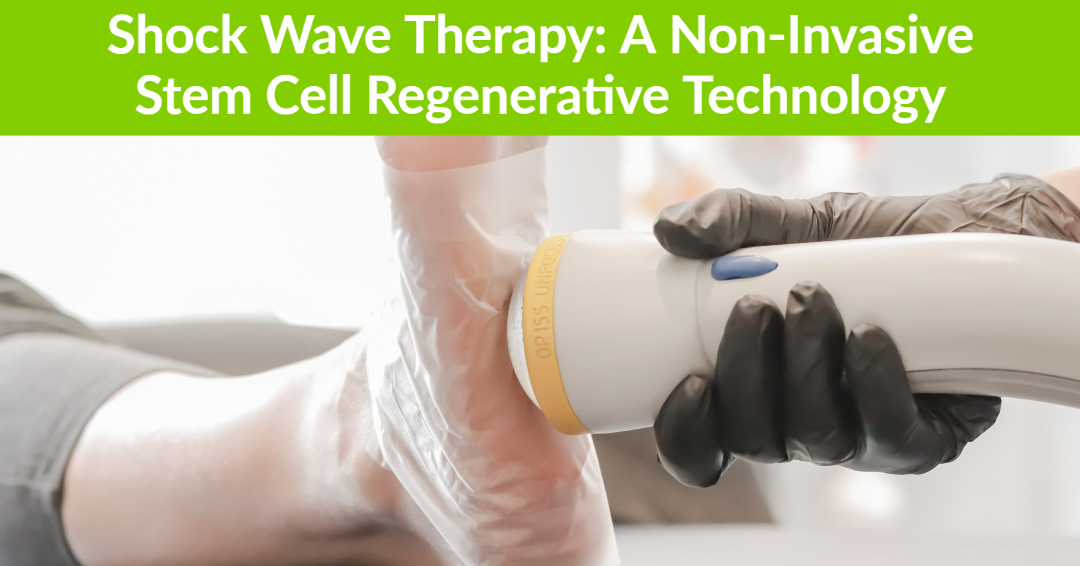
Shock Wave Therapy: A Non-Invasive Regenerative Treatment
The idea of stimulating the body’s own ability to heal and regenerate is fascinating and very much in line with a chiropractic philosophy of health. Successful treatment of joint pain, arthritis and degeneration, muscle injuries, tendonitis, and ligament damage or sprains all involves a combination of active and passive treatments.
Active treatment includes corrective and therapeutic exercise, posture awareness, biomechanical correction and strength training – meaning you have to put in the work to get results. Passive treatment includes manual therapy and massage, dry needling and trigger point therapy, injections and pain medication. Passive treatments are easier to receive but are generally less effective than active therapies over the long run.
One passive therapy worth understanding is Shock Wave Therapy (Extracorporeal Shock Wave Therapy, or ESWT), which offers several advantages:
- It is supported by a growing body of clinical research.
- It is non-invasive, with no needles required.
- It avoids the tissue-damage risk associated with repeated steroid injections.
- It is FDA-cleared for several musculoskeletal conditions.
- It is backed by both basic and clinical science.
What Is Shock Wave Therapy?
Extracorporeal Shock Wave Therapy (ESWT) is a non-invasive treatment that delivers acoustic shock waves to an injured area to promote healing. It works by applying short, frequent, high-intensity bursts of mechanical energy into soft tissue that is injured, scarred, painful, inflamed or contains adhesions, helping to initiate the body’s natural repair processes at the cellular level.
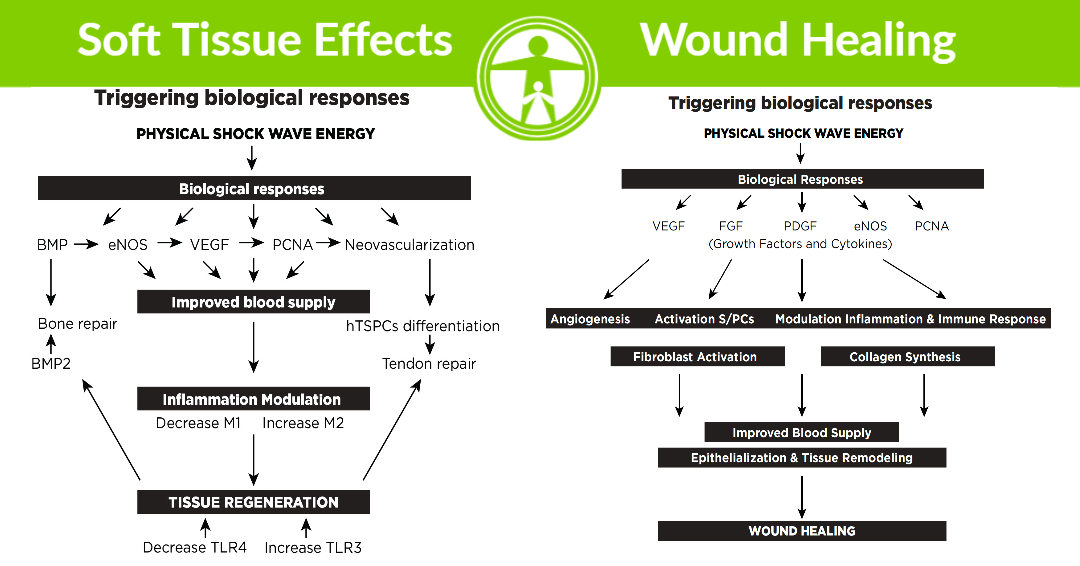
There is now a substantial scientific literature – thousands of published papers – describing the cellular and biological mechanisms behind shock wave therapy. The therapy is generally described as producing three responses in tissue:
- Physical response – the shock waves reach the tissue and generate positive pressure waves.
- Chemical response – those pressure waves mechanically stimulate biochemical reactions that activate cells.
- Biological response – cells are prompted to remodel blood vessels, reduce inflammatory molecules and stimulate the formation of new, healthy tissue such as muscle, ligament and tendon.
What Are the Therapeutic Effects of Shock Wave Therapy?
Shock waves can stimulate new blood vessel formation and the production of healthy connective tissue, helping to relieve pain in joints and soft tissue without needles. Originally known as a treatment for tendinopathies and muscle damage, it continues to be studied across a range of regenerative-medicine applications. Reported therapeutic effects include:
- Pain relief (an analgesic effect)
- Anti-inflammatory action that lowers the pro-inflammatory immune response
- Stimulation of the body’s own growth factors, supporting tissue regeneration
- Angiogenesis – improved blood circulation and tissue supply
- Support for new bone formation in certain conditions
- Stimulation of natural anabolic and repair processes in various tissues
- Activation of the body’s own repair cells, supporting tissue remodeling and regeneration
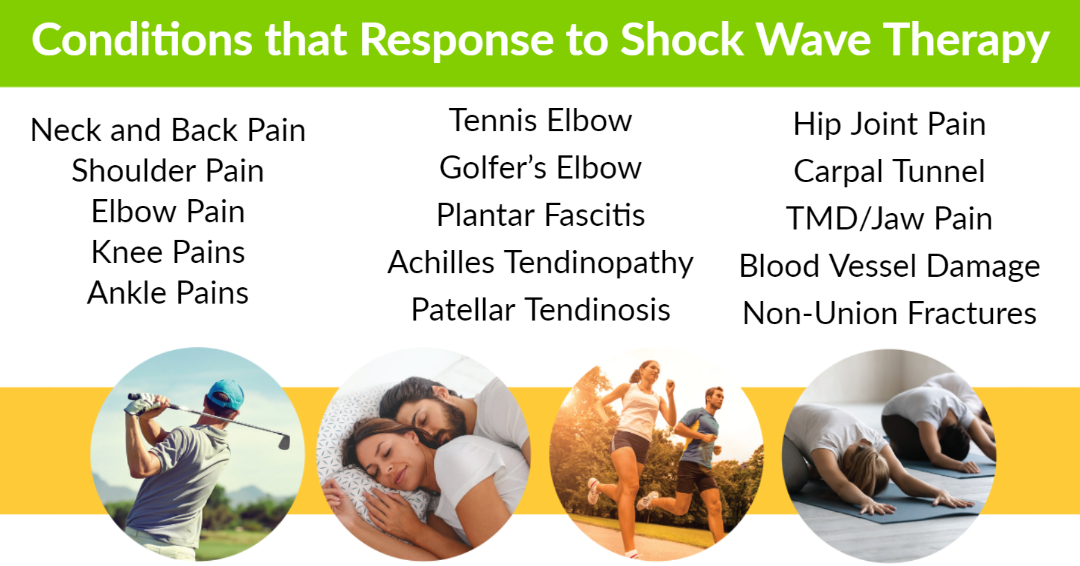
Taking all of this into account, ESWT is used for a variety of musculoskeletal conditions, primarily chronic ones – especially those affecting medium to large tendons and their insertions on bone, such as:
- Upper and lower extremity tendinopathies
- Plantar fasciitis
- Achilles tendinopathy
- Retrocalcaneal bursitis
- Lateral epicondylitis (tennis elbow)
- Medial epicondylitis (golfer’s elbow)
- Calcific tendonitis (such as the supraspinatus tendon)
- Patellar tendinosis (jumper’s knee)
- Morton’s neuroma
- Chronic stress and non-union fractures
What Can You Expect with Shock Wave Therapy?
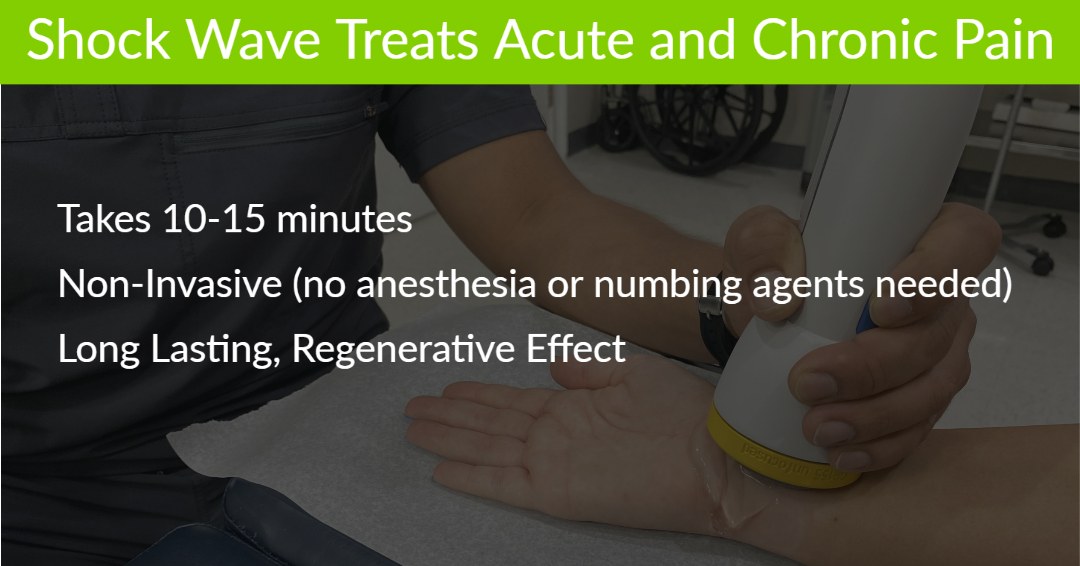
A session averages 10-15 minutes but may run longer depending on the treatment area and diagnosis. A gel (typically ultrasound gel) is applied to the surface being treated, and the applicator delivers pulses as the clinician moves around the area. Communication with the provider during therapy helps identify treatment areas and monitor progress. Many patients describe the sensation as uncomfortable, though this is highly subjective from person to person.
Key features of treatment include:
- Non-invasive
- No anesthesia or numbing creams needed
- Performed the same day
- Generally well tolerated, with any soreness or temporary bruising typically resolving on its own
Shock wave therapy is not suitable in the following circumstances:
- If you are pregnant
- If you have a blood-clotting disorder, including thrombosis
- If you are taking oral anticoagulants
- If you have received a steroid injection within the past 6 weeks
- If you have a pacemaker fitted
- If tumors are present at the treatment site
- If you have an infection or skin abrasion at the treatment site
- If you are under 18 (except in the treatment of Osgood-Schlatter disease)
Next Steps
Many people assume the only options for ongoing tendon or joint pain are surgery or simply living with the symptoms. Shock wave therapy offers another path that may help the body overcome long-lasting, nagging injuries. To learn whether it is appropriate for your situation, call 512-347-8881 or contact our office online.
READY TO FEEL BETTER?
Book Your Appointment Today
Same-week appointments are often available. Call 512-347-8881 or request a time online.
Ready to feel better?
If you are new to our office, learn what to expect on your first visit, or see our full range of chiropractic services.