How to Fix a Short Leg
Have you ever been told you have a short leg, or that one leg is longer than the other? Do you also deal with lower back pain? These two things are often related. One of the most common findings we see in our office is uneven hips or a leg length discrepancy.
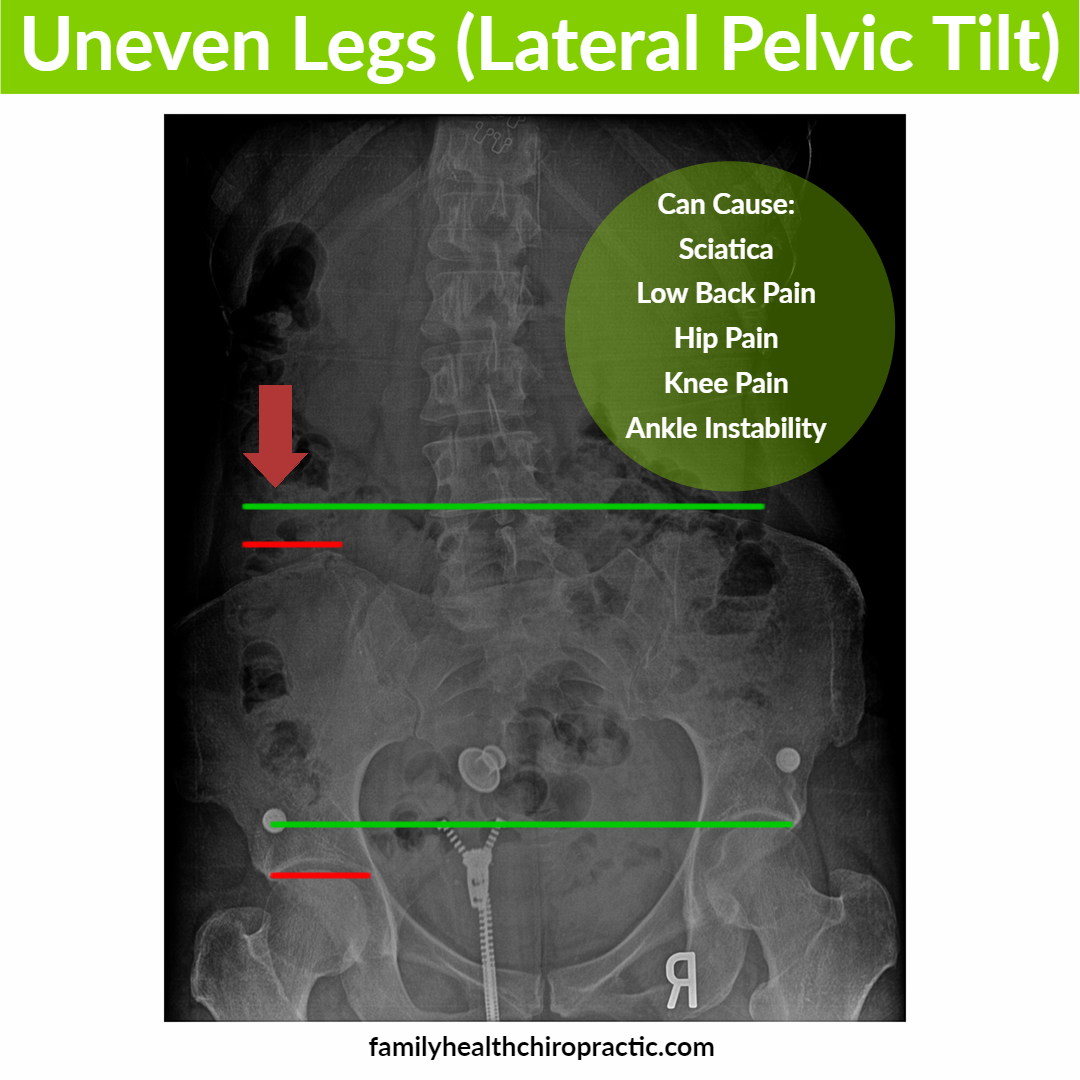
For some people the difference is small and harmless. But a discrepancy greater than 3-5 mm (about ¼ inch) can contribute to lower back pain, and a difference greater than 10 mm is associated with a six-times greater likelihood of eventually needing a knee or hip replacement. Below we’ll walk through the symptoms, causes, and solutions for fixing a short leg caused by a lateral pelvic tilt.
Symptoms of a Short Leg
An uneven leg length or lateral pelvic tilt can cause a range of symptoms, including sciatica, low back pain, hip pain, knee pain, and ankle instability. You might also notice your shoes wearing down faster on one side, or clothing hanging unevenly. Other common signs include:
- One leg visibly appearing longer than the other
- Poor posture
- Problems with gait (the way you walk)
- Balance problems or clumsiness
- Pain in the lower back, hip, knee, or ankle
Beyond one hip sitting higher than the other, a lateral pelvic tilt can affect the entire body – throwing off alignment from the ankles and knees all the way up to the low back and shoulders. That’s why it’s so important to identify and correct it sooner rather than later.
What Causes a Short Leg?
Leg length discrepancies can come from poor posture, pelvic alignment, or one leg being structurally longer than the other. The most common cause, though, is muscular and postural imbalance affecting spinal alignment.
Muscle Imbalances
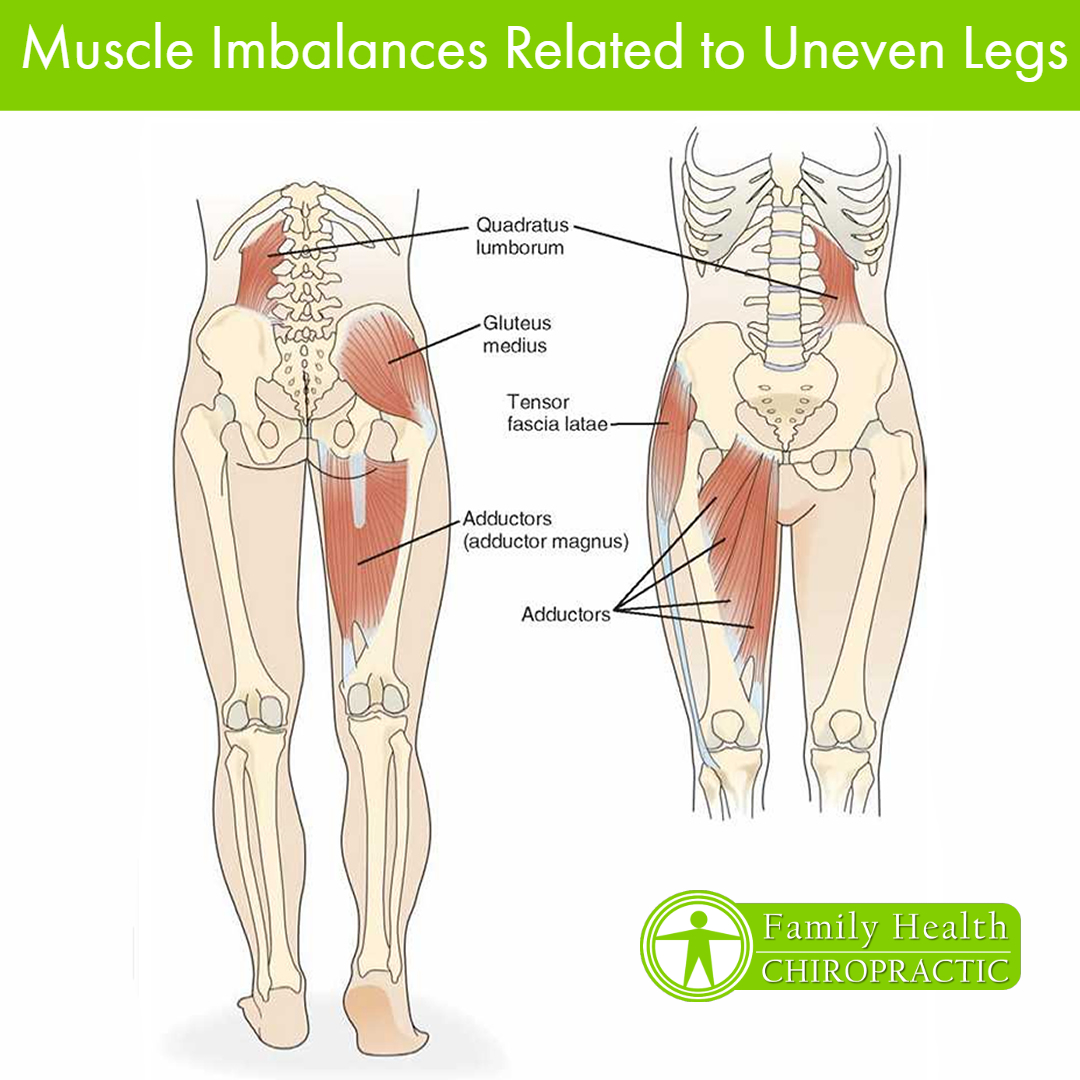
The most common imbalances involve the quadratus lumborum, adductors, and gluteus medius (with the obliques and tensor fascia latae sometimes involved). Generally, the high hip occurs on the side with a weak glute medius and tight quadratus lumborum and adductors, while the low hip occurs on the side with a tight glute medius and weak quadratus lumborum and adductors.
Postural Habits
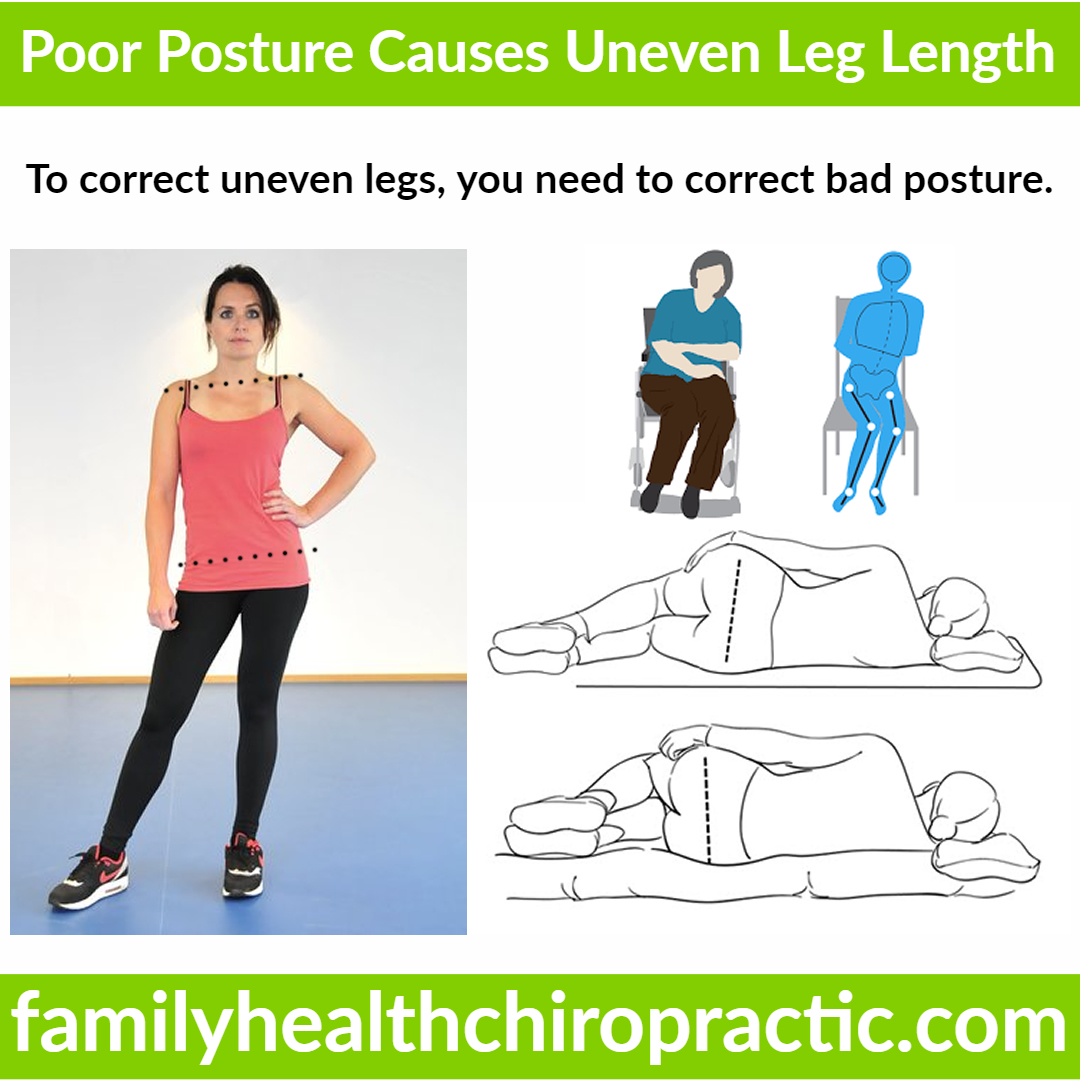
Everyday habits reinforce a tilted pelvis. Do you lean on one leg, sit more on one side, or always sleep on the same side? Over time these patterns pull the pelvis out of balance and create uneven hips and leg lengths.
How to Fix a Short Leg
Leg length discrepancies are either structural (one leg is truly longer, often from developmental issues or trauma) or functional (caused by muscular and postural compensations). A structural discrepancy is best confirmed with an A-P pelvic X-ray and, if greater than 5 mm, can be treated with a heel lift. A functional discrepancy responds to correcting postural habits plus manual therapy, tissue release, stretching, and targeted activation exercises. The number of treatments needed varies from person to person.
Correct Your Postural Habits First
Before any releases or exercises, address the habits driving the imbalance. Sit evenly without leaning to one side, and distribute your weight evenly between both feet when standing (if unsure, stand on two scales – the readings should be within about 3 lbs of each other). Pay attention to your alignment when walking, climbing stairs, lunging, and squatting. Also watch for these common culprits:
- Favoring one leg when standing
- Leaning to one side while sitting or driving
- Always sleeping on the same side (try a small rolled towel under your waist)
- Carrying a child on one hip
Tissue Release Exercises
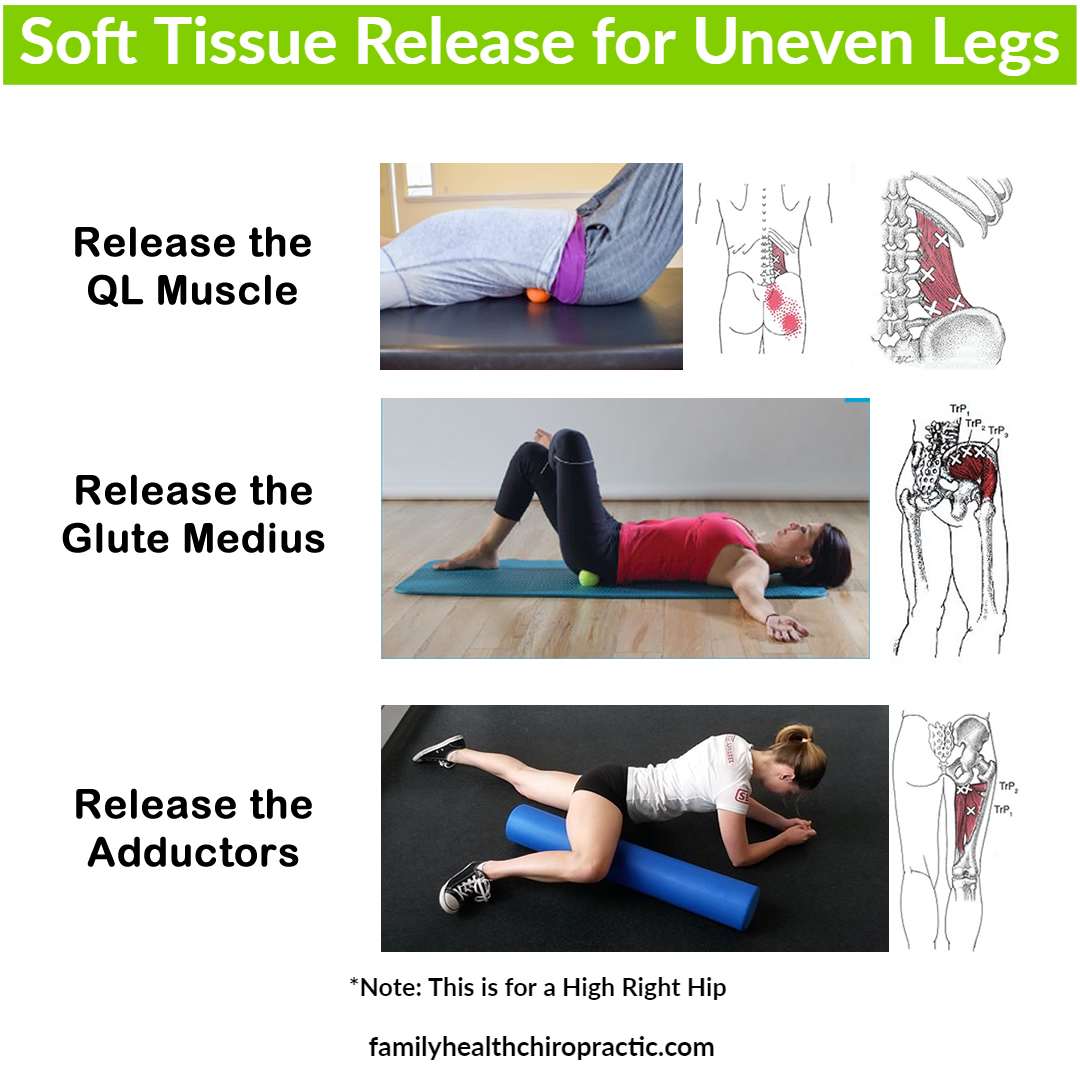
The following releases are described for a right-sided lateral pelvic tilt (right hip higher). If your tilt is on the left, do the opposite side. Aim for about one minute on each.
- Quadratus lumborum – place a massage ball on the QL (right side), apply your body weight, and roll along the muscle.
- Gluteus medius – place a massage ball on the glute medius/TFL (left side) and roll under your body weight.
- Adductors – place a foam roller under the adductors (right side) and roll the full length of the muscle.
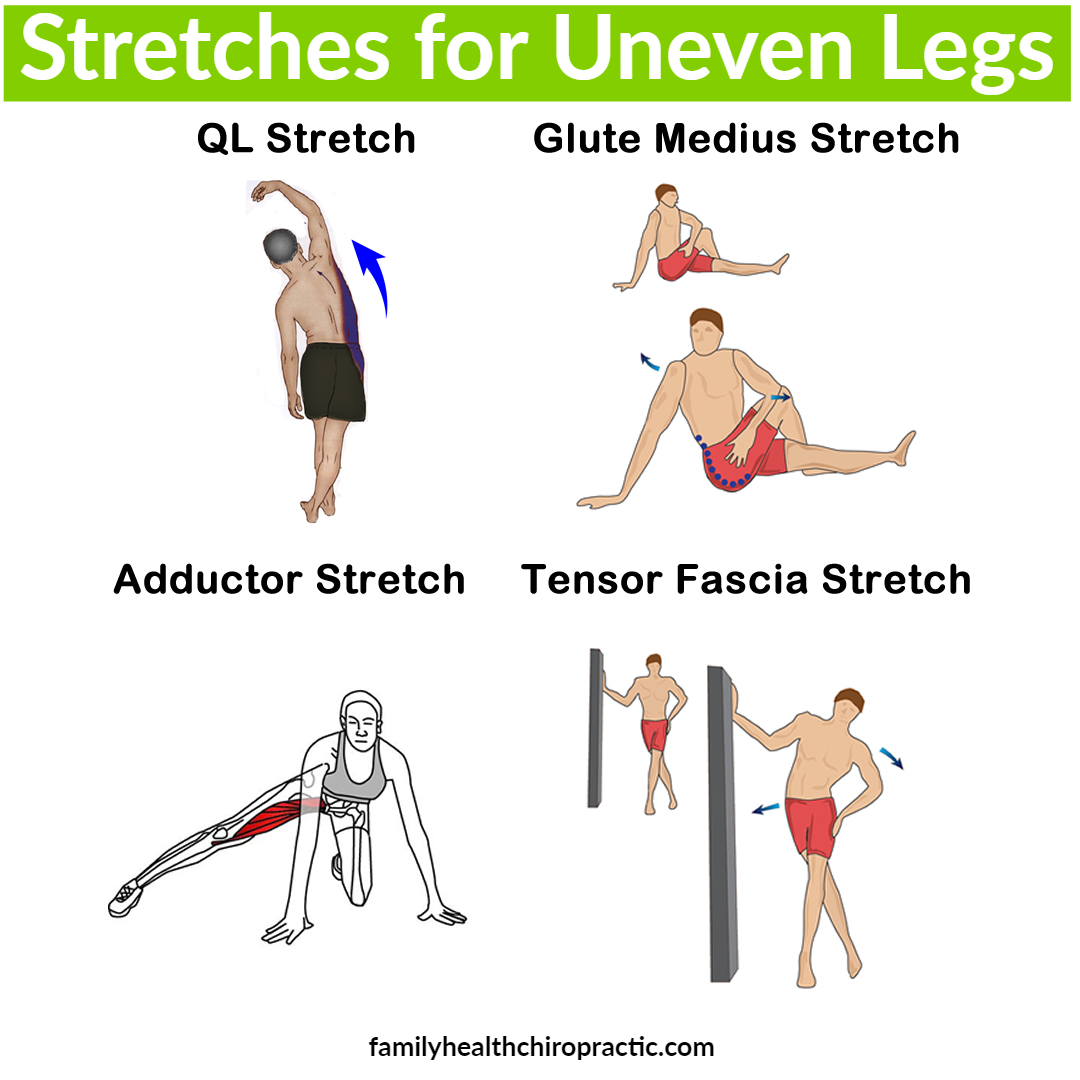
Stretches
- QL / obliques – feet wide, left foot turned out; bend to the left with arms outstretched to feel a stretch on the right side. Hold 30 seconds.
- Gluteus medius – left leg crossed over right, sit tall, pull the left knee toward the right shoulder and rotate toward it. Hold 1 minute.
- Tensor fascia lata – lunge with the left leg back, tuck the tailbone, and lean to the right. Hold 1 minute.
- Adductors – side lunge to the left to feel a deep stretch in the inner right thigh. Hold 1 minute.
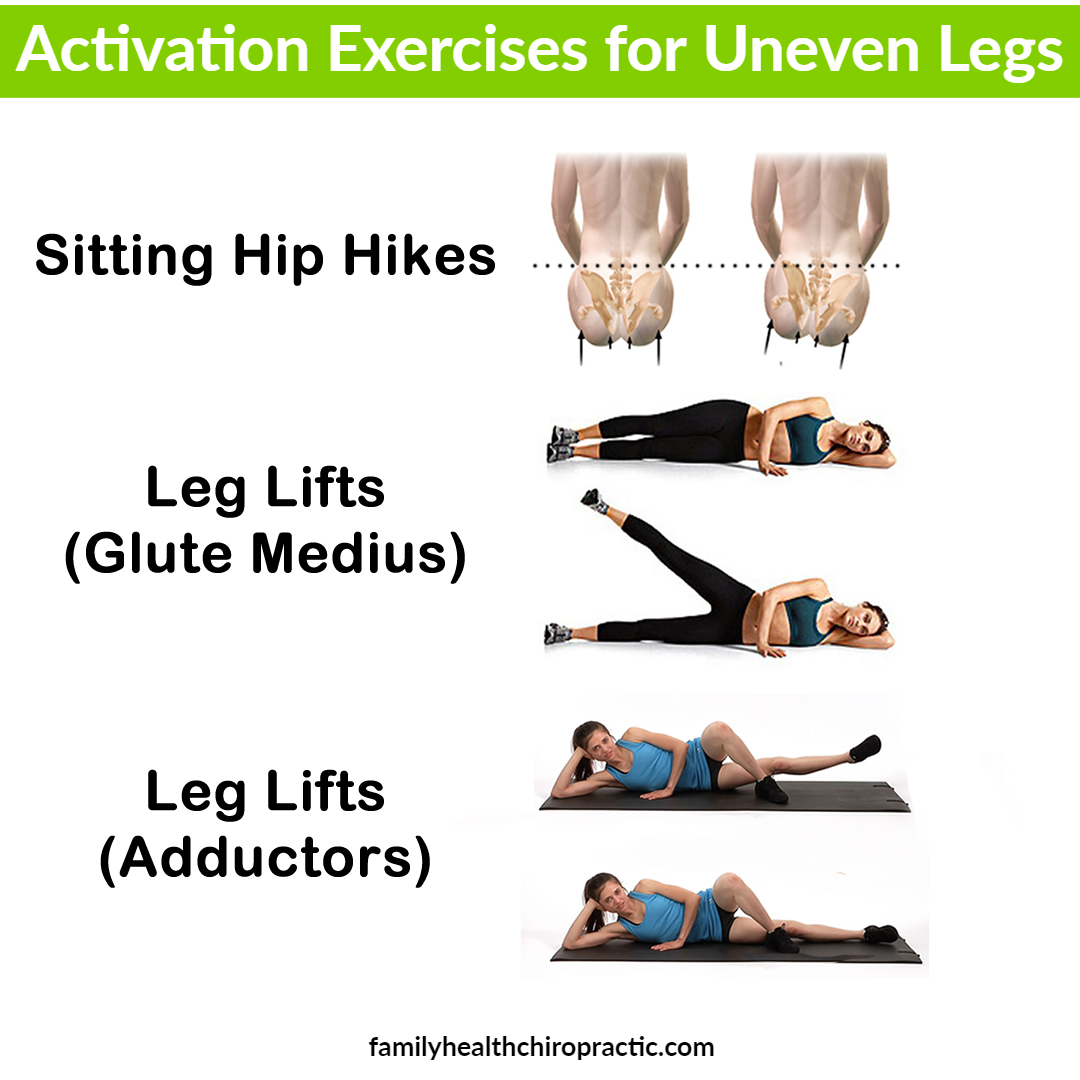
Activation Exercises
- Hip hitching – sit tall, lift your left buttock off the chair, hold 3 seconds to engage the left lower-back muscles. Repeat 10 times.
- Glute medius leg lift – lie on your left side, lift the straight right leg while keeping the pelvis still. Hold 3-5 seconds, 10 reps (add a band to progress).
- Adductor leg lift – lie on your left side with the top leg bent forward; lift the bottom (left) leg toward the ceiling, pelvis still. Hold 3-5 seconds, 10 reps (add ankle weight to progress).
Get Help Correcting Your Short Leg
Self-care goes a long way, but a proper assessment makes all the difference in correcting a lateral pelvic tilt for good. If you’re in the Austin area, Dr. Daniel can evaluate your pelvis and build a personalized correction plan. Call 512-347-8881 to get started.
READY TO FEEL BETTER?
Book Your Appointment Today
Same-week appointments are often available. Call 512-347-8881 or request a time online.
Ready to feel better?
If you are new to our office, learn what to expect on your first visit, or see our full range of chiropractic services.