
Chronic Fatigue and Musculoskeletal Health in Austin, TX
How chiropractic care addresses the physical co-burdens that compound chronic fatigue
Understanding Chronic Fatigue Syndrome
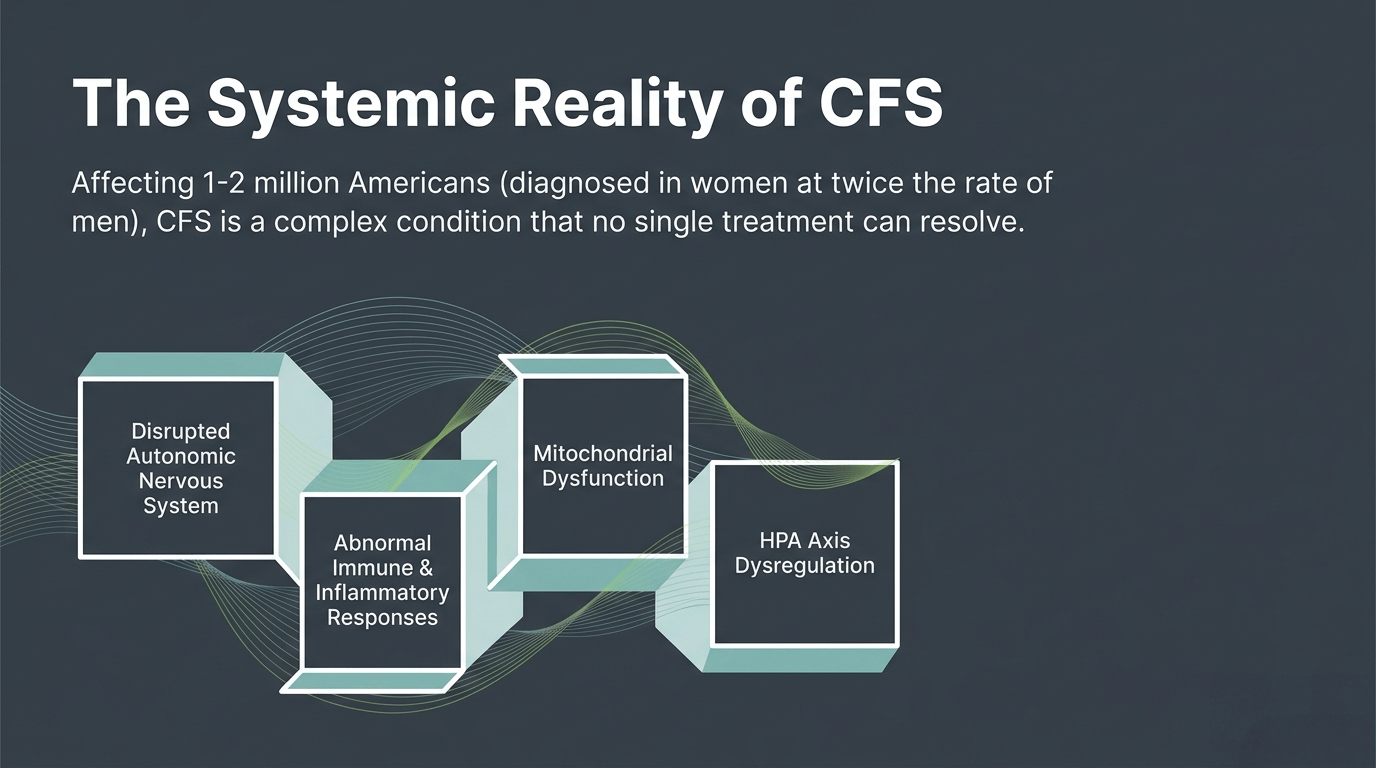
Chronic fatigue syndrome (CFS), also referred to as myalgic encephalomyelitis (ME/CFS), is a complex, poorly understood condition characterized by persistent, debilitating fatigue that is not relieved by rest, along with a wide range of systemic symptoms. It affects an estimated one to two million people in the United States, with women diagnosed at roughly twice the rate of men.
CFS is believed to involve disrupted autonomic nervous system function, abnormal immune and inflammatory responses, mitochondrial dysfunction, and dysregulation of the hypothalamic-pituitary-adrenal (HPA) axis. Because of this complexity, no single treatment resolves CFS, and patients often benefit from a team-based approach addressing different aspects of the condition.
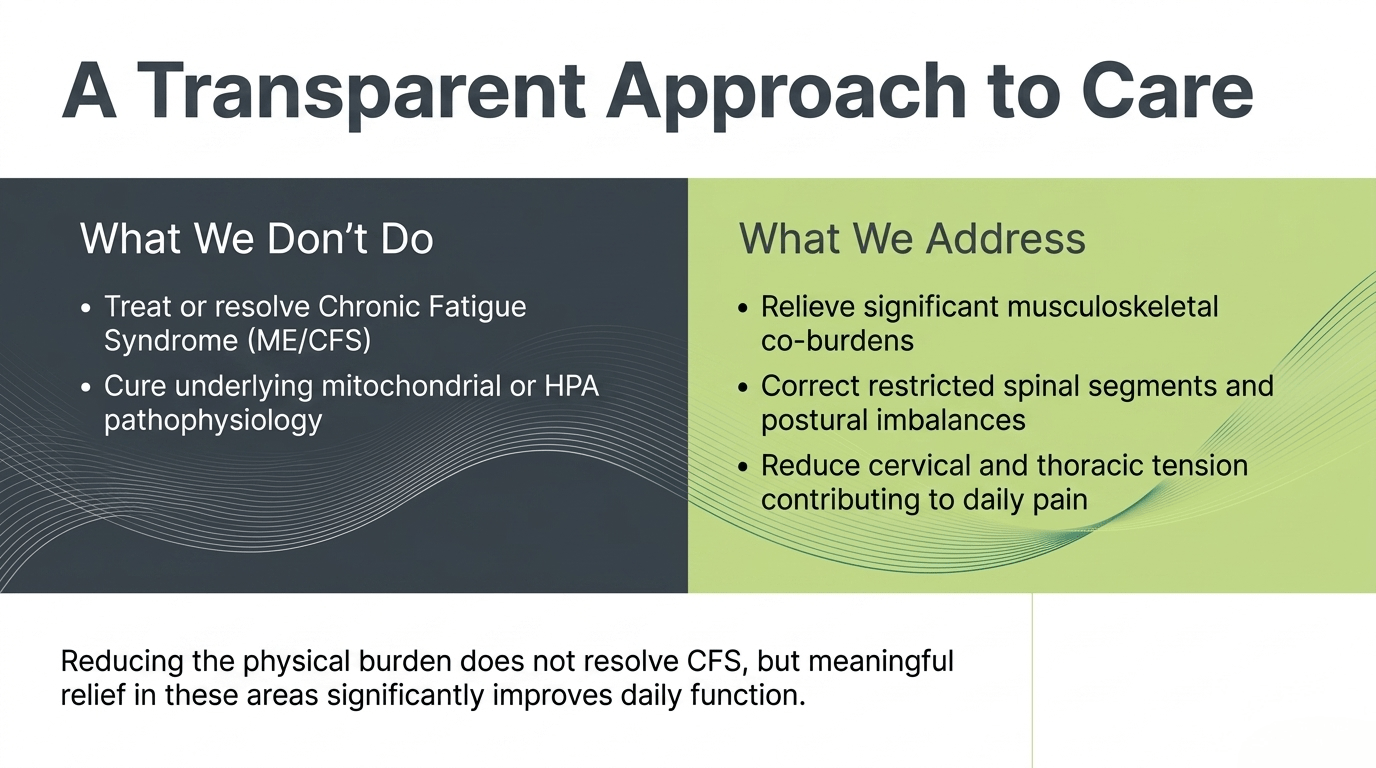
Chiropractic care does not treat CFS or its underlying pathophysiology. What we address are the significant musculoskeletal co-burdens that CFS patients frequently carry, which can compound their fatigue and diminish their quality of life.
The Musculoskeletal Burden in CFS
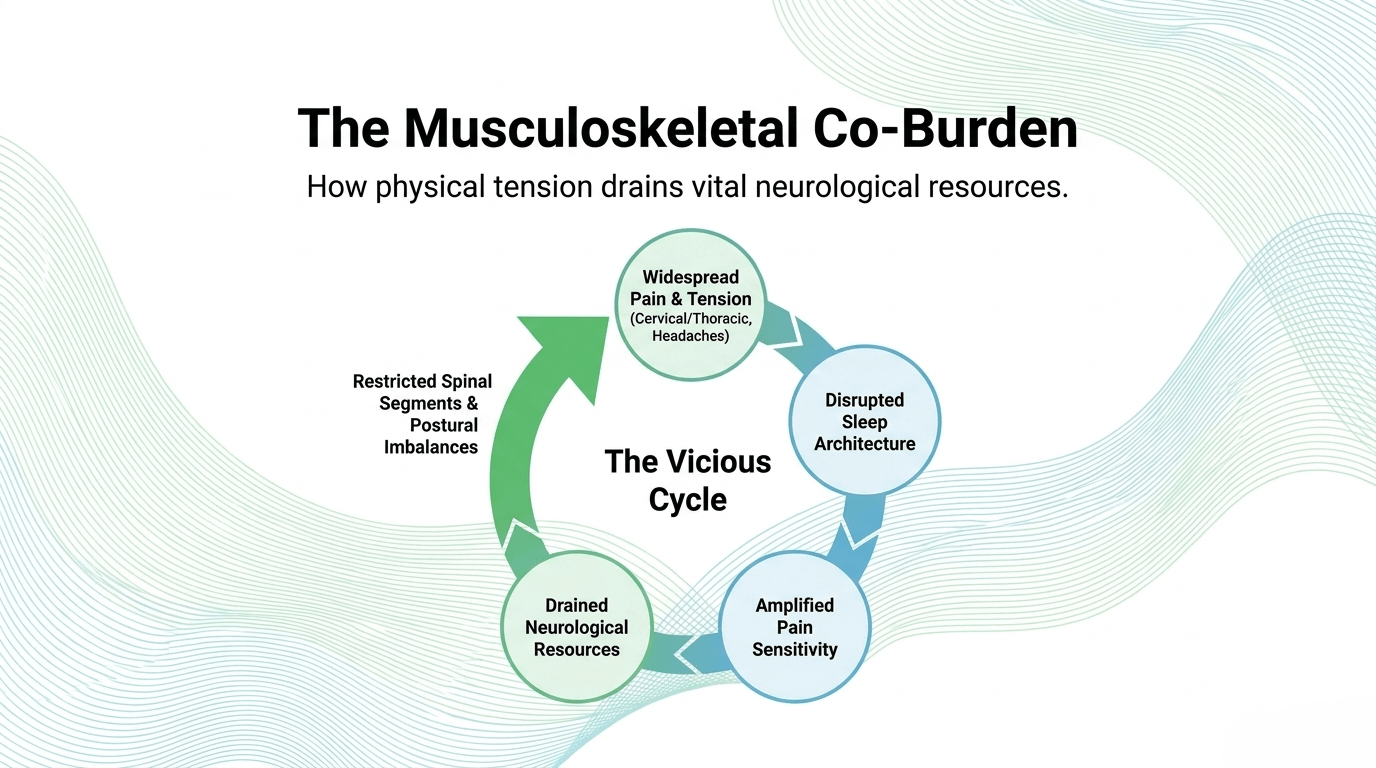
Many patients with CFS experience widespread musculoskeletal pain, cervical and thoracic tension, headaches, and disrupted sleep. These overlapping symptoms create a cycle: pain disrupts sleep, poor sleep amplifies pain sensitivity, and chronic pain demands physical and neurological resources that the body can ill afford when already managing a fatigue condition.
Chiropractic care can directly address restricted spinal segments, postural imbalances, and musculoskeletal tension that contribute to that pain cycle. Reducing that burden does not resolve CFS, but for patients who are also managing neck pain, back pain, headaches, or poor posture alongside their fatigue, meaningful relief in those areas can matter significantly to daily function and quality of life.
Autonomic Regulation and Spinal Health
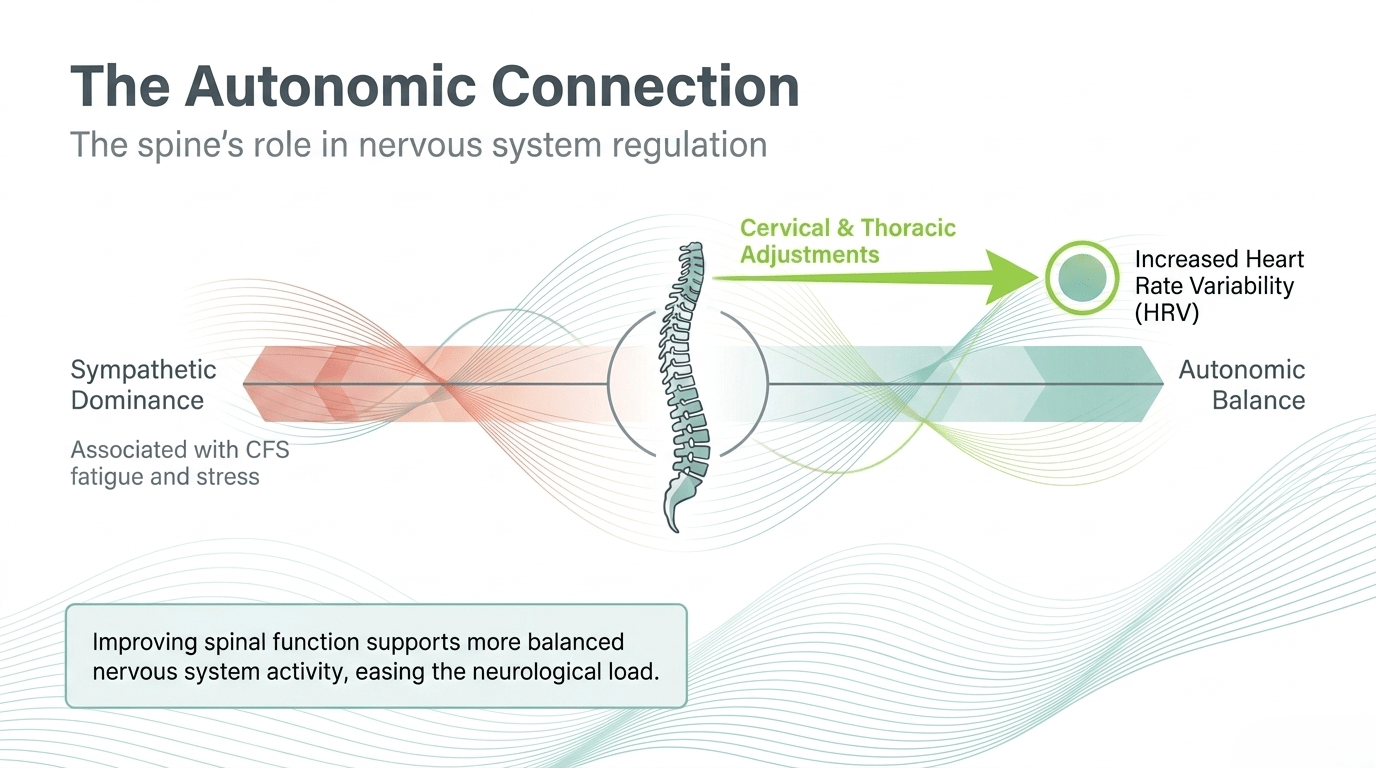
CFS is associated with autonomic dysregulation, particularly reduced heart rate variability (HRV) and an imbalance toward sympathetic dominance. The spine plays a meaningful role in autonomic regulation. Research in spinal manipulative therapy has documented measurable changes in HRV and autonomic markers following cervical and thoracic adjustments, suggesting that improving spinal function may support more balanced nervous system activity.
While no controlled trials have specifically studied chiropractic for CFS, the convergence of musculoskeletal pain, autonomic dysregulation, and disrupted sleep in CFS patients overlaps with areas where chiropractic care has documented effects. We are transparent with CFS patients about what the evidence supports and what it does not, and we approach each case with that honesty.
Our Approach at Family Health Chiropractic
If you are managing CFS and also carrying significant spinal tension, postural problems, or musculoskeletal pain, we would welcome the opportunity to evaluate your spine and discuss what, if any, role chiropractic care might play alongside your broader care team. We conduct a thorough digital posture and spinal examination on all new patients and tailor care to your specific findings and situation.
We work with patients, not against the conditions they are managing. If chiropractic care is not the right fit for your situation, we will tell you that directly.
Questions? We Are Happy to Talk.
Call 512-347-8881 or use the link below to request a visit and discuss whether spinal care makes sense alongside your existing treatment.
Frequently Asked Questions
Can chiropractic care help with chronic fatigue syndrome?
Chiropractic care does not treat or cure ME/CFS. However, it can address the significant musculoskeletal co-burdens that many CFS patients carry, including cervical and thoracic tension, restricted spinal segments, and postural imbalances that drain neurological resources and worsen daily symptoms.
What does Dr. Gonzalez look for in CFS patients?
He evaluates for restricted spinal segments, postural distortions, and signs of autonomic nervous system imbalance that can amplify fatigue and pain. Findings are reviewed honestly, and care is only recommended when there is a meaningful physical component to address.
Can improving spinal function affect energy levels in CFS?
Reducing the musculoskeletal burden on the nervous system may support more balanced autonomic function. Some patients report improvements in pain levels and physical resilience, which can contribute to better daily function, though outcomes vary significantly with CFS.
Do you see CFS patients from the Austin area?
Yes. We serve patients from Austin, West Lake Hills, Rollingwood, Bee Cave, Lakeway, and surrounding communities. Call 512-347-8881 to discuss whether your situation is a good fit for care.
GET RELIEF IN AUSTIN
Ready to Start? Request Your Appointment
Same-week appointments are often available. Call 512-347-8881 or request a time online.